 San Diego Swift
Roots back in the line every spring, a buyer’s scope on a 1920s bungalow, or a backup in a house you’ve owned for decades: in North Park, the sewer lateral is usually as old as the house. San Diego Swift Sewer Line Repair repairs and replaces laterals across North Park, from the bungalows north of University Avenue to the streets around Burlingame.
What sets the neighborhood apart is not the pipe rules, which are the City’s everywhere, but two things your address brings with it: the age of the line, and the chance that the house sits in a designated historic district.
How old is your North Park sewer line?
North Park grew along the streetcar lines in the 1910s, 1920s and 1930s, and the housing still shows it. In the Census Bureau’s American Community Survey, 21.3 percent of homes in ZIP 92104 were built before 1940, more than three times the 6.4 percent share for the City of San Diego as a whole, and 34 percent were built before 1960. Housing age is not a diagnosis, but it does tell you what era of plumbing a lateral is likely to come from.
The City’s Public Utilities lateral fact sheet puts the difference plainly: newer plastic laterals with intact joints can go years without trouble, while older laterals of concrete, clay or cast iron may have root intrusion or deteriorated sections and need regular inspection or more frequent cleaning. Clay pipe was laid in short sections, so a long run from a bungalow to the street has many joints, and every joint is a place where a root can find water or where settlement can open an offset. That is why a North Park scope can show a sound pipe barrel with trouble concentrated at the joints. Our guide to what sewer pipe your house has explains how each material fails.
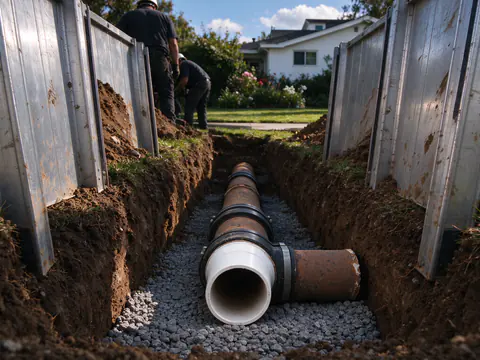
When a lateral like that keeps backing up, the choice is between cleaning it again, lining it, or replacing the worst run. A pipe whose barrel is intact but whose joints let roots in is the classic case for a liner, which seals the joints from inside. A pipe that has sagged or broken needs a dig, a spot repair or a burst first, and a line that keeps filling with roots is a case for root removal only until the joints are sealed. We decide which from the sewer camera inspection.
Is your house in a historic district?
Most single-family sewer repairs in the City use the Simple No-Plan plumbing permit, $264.25 for a residential repair or replacement. Development Services limits that simple path to properties that are not historic. North Park has two designated City historic districts, North Park Dryden (136 parcels, built from 1912 to 1941) and Burlingame (188 parcels, from 1912 to 1952), and the City has been processing more potential districts from the North Park survey, including Altadena, Park Boulevard and Kalmia Place.
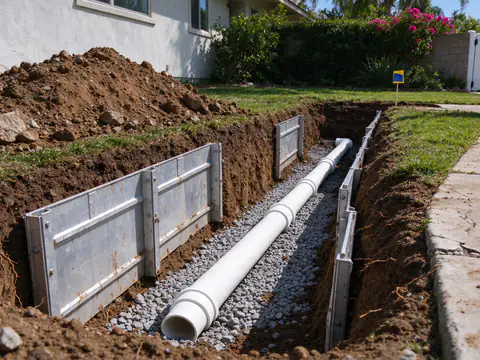
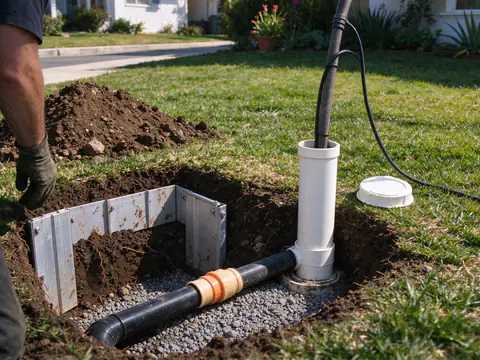
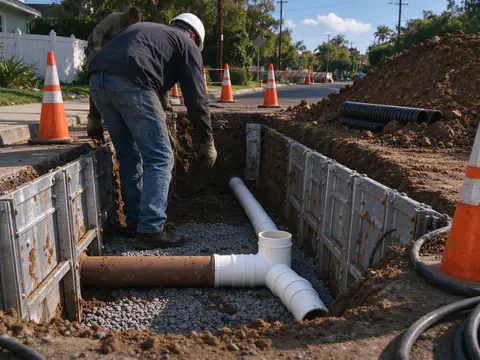
If your house is inside one of those districts, or designated on its own, the practical effect is time and sequence. We confirm the permit path before the scope is final, and we weigh the method partly by what it disturbs on the surface. A trenchless repair that reaches the line through a cleanout and a small pit leaves less of a historic front walk, porch step or retaining wall to restore than a trench from the house to the sidewalk.
None of this changes what the camera finds or what the pipe needs. A collapsed section in a historic district still has to be dug or burst. It just means the paperwork is part of our plan from the first visit, not a surprise after the price is agreed.
Is the break under your street?
North Park follows the same City rule as every other San Diego neighborhood: the lateral is yours all the way to the connection at the City main, under the sidewalk and street included. When the camera shows a break or collapse past the property line, the City’s guidance is for the licensed plumber to call the sewer emergency line and file a Plumber’s Report; the City acts on the right-of-way section only when all sewer service is lost, and it bills the owner when roots or grease caused the stoppage.
Replacing the street section needs a Right-of-Way Permit with a construction plan, a City inspection of the open trench before the connection is made, traffic control on the block, and trench resurfacing to the regional standard drawings. On a street that was resurfaced recently, the Street Preservation Ordinance can require a moratorium waiver and a full-lane repave. Our street sewer lateral repair page covers that process end to end, and our guide to who is responsible for the sewer lateral sets out where the City’s part begins.
North Park’s neighbors to the west, Mission Hills and the rest of Uptown, share the same pre-war housing and the same historic-district question, while the canyons that cut between the neighborhoods are where some laterals connect to mains in easements rather than in the street. A connection in an easement changes access: the City repairs only at the connection to the main, after the owner has excavated and exposed the pipe, with shoring if the trench is 5 feet or deeper.
How we run a North Park job
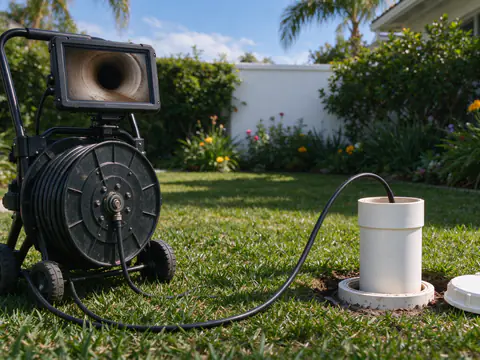
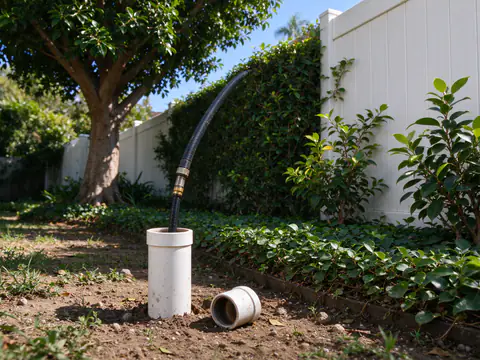
We start at the cleanout, if the house has one. On an older house the cleanout may sit near the foundation rather than at the property line, and a camera run from there shows the full length to the main. If there is no usable access, we put a cleanout in first. We measure the footage, locate the line on the surface, and check the address for historic status before we write the scope.
From there the work splits by what the camera found: a liner for a continuous line with leaking joints, a spot repair for one bad section, a burst or trench replacement for a line that has failed along its length. Our permit guide explains how each method is permitted. Your scope lists the private-side permit, any right-of-way work and the restoration separately, so the street never hides inside one number. Our typical range for lining is $80 to $250 a foot and for a spot repair $1,500 to $5,000, and your final price comes from a written quote after we see the job. A final camera run through the finished line closes the job.
North Park address and a scope report?
Send both and we'll tell you what the footage shows and what the permit path looks like.