 San Diego Swift
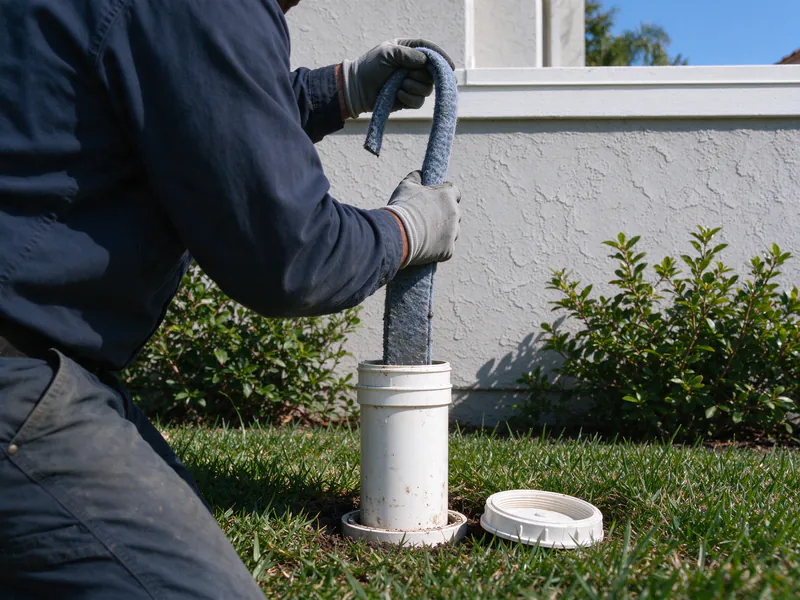
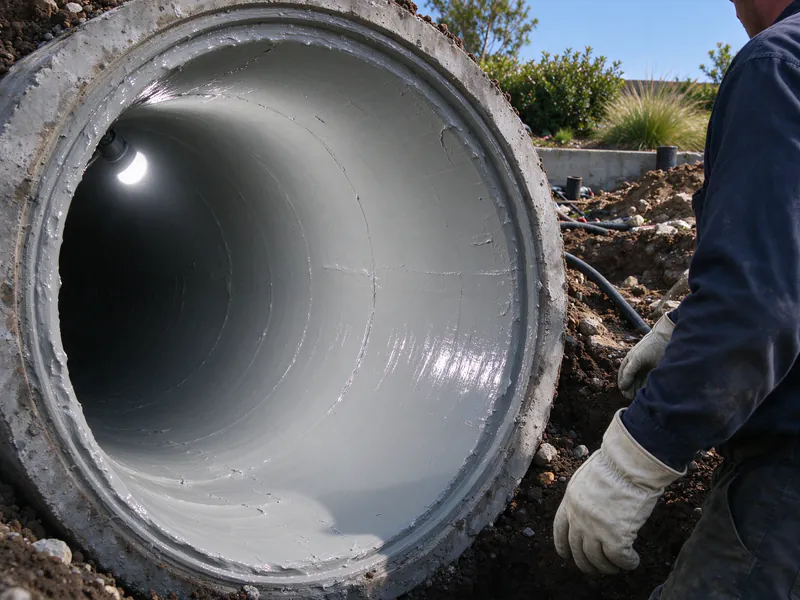
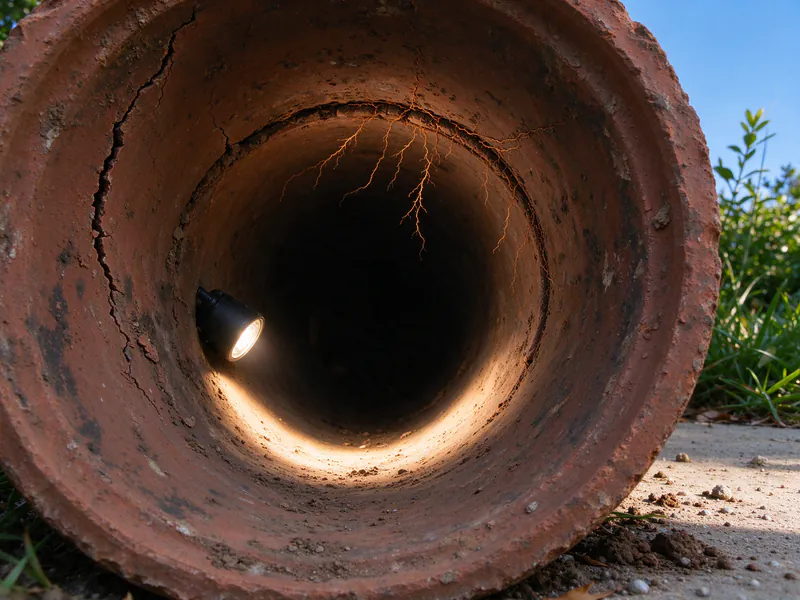
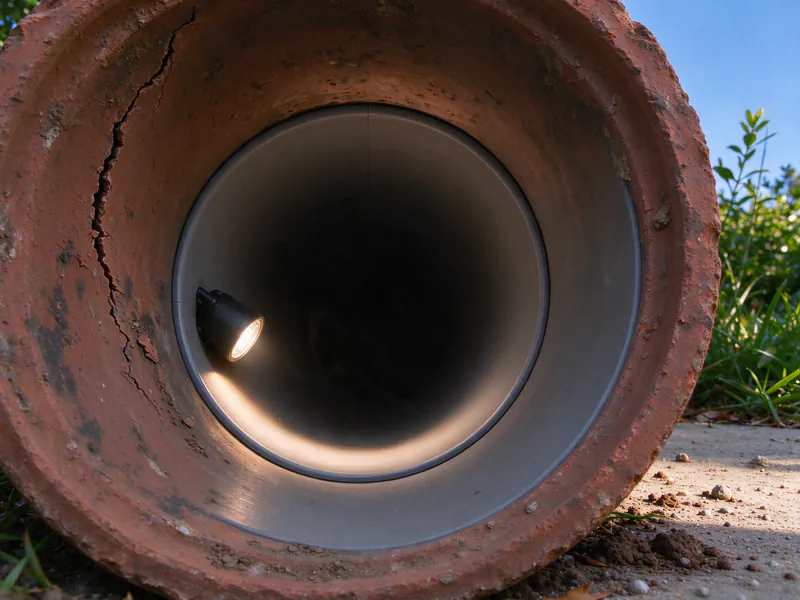
Roots back in the line every year, a scope that shows cracked clay joints, or a lateral that runs under a driveway you don’t want torn up: those are the problems lining solves. Sewer pipe lining puts a new pipe inside your old one. We put a flexible tube soaked in resin into the lateral, press it against the old pipe wall, and cure it into a hard, jointless pipe that seals the cracks and open joints behind it. San Diego Swift Sewer Line Repair installs full-length cured-in-place pipe (CIPP) and short sectional liners in laterals across San Diego.
Lining is often the least disruptive way to fix a lateral that leaks, admits roots or keeps cracking, but only when the host pipe is still good enough to form a liner against. Most of this page is about how we tell those pipes apart.
Can your sewer line be lined?
Your lateral suits lining when the camera shows a continuous pipe that keeps its round shape and holds its slope, with defects such as hairline cracks, open joints, root entry or moderate corrosion. Lines with a collapse, a belly that holds water, a badly offset joint or flattened sections need those spots fixed before, or instead of, a liner.
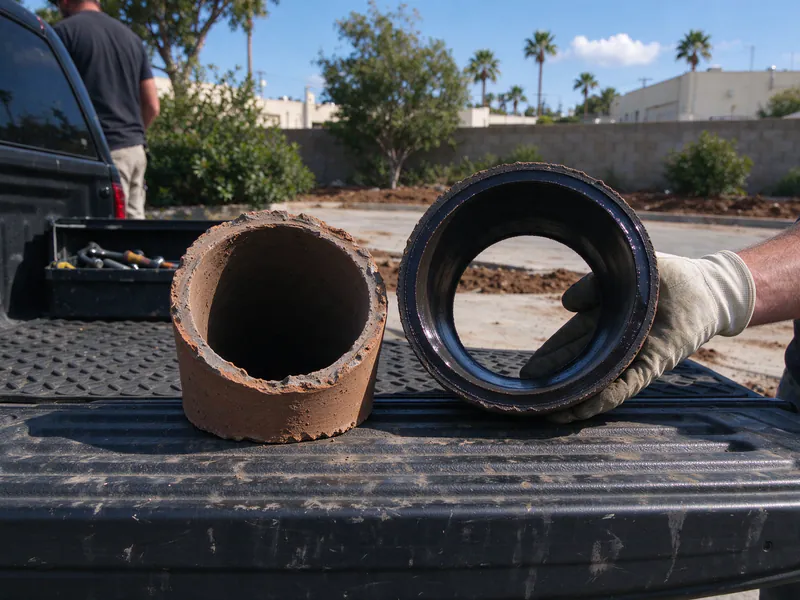
The pipe material shapes the answer. Vitrified clay, which is still common in San Diego ground, has a strong barrel and weak joints laid every few feet, so roots and infiltration concentrate at the joints and the barrel between them tends to be sound. That is close to the ideal lining case: the liner bridges every joint at once. Cast iron tends to fail from the inside, with scale narrowing the bore and corrosion thinning the bottom of the pipe, so the question is how much wall is left once we cut the scale away. ABS and PVC laterals rarely need lining unless they have been cracked by settlement or damage. Our guide to what sewer pipe your house has shows how each looks on camera.
Geometry is the other half. A liner copies the host pipe, so a sag stays a sag and a route under a later addition stays under it. Sharp bends can wrinkle a liner, and a change from a 3-inch line under the house to a 4-inch line in the yard may need a liner built for the transition or a different plan. For grade problems, see sewer belly repair; for broken sections, sewer spot repair.
How we line a lateral, step by step
1. Clean the host pipe. We take out roots, grease and debris first, by cutting and hydro jetting, so the liner bonds to bare pipe. Cast iron may need descaling with chain or abrasive cutters. Cleaning here is preparation, not the repair: it restores flow for the moment and gives the liner a clean wall.
2. Scope and measure. We run the camera again after cleaning to confirm the pipe is liner-ready and to measure the length, the diameter, every bend and every branch connection. If cleaning exposed a broken section that wasn’t visible through the roots, we change the plan here, before any resin is mixed.
3. Wet out the liner. We cut the tube, felt or fiberglass, to length and saturate it with a measured amount of resin. Too little resin leaves dry spots; too much is wasted or pools.
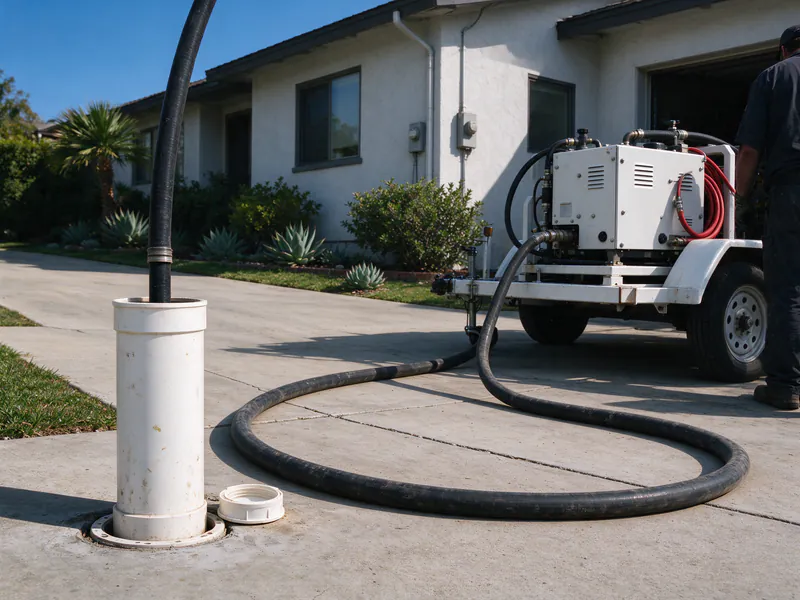
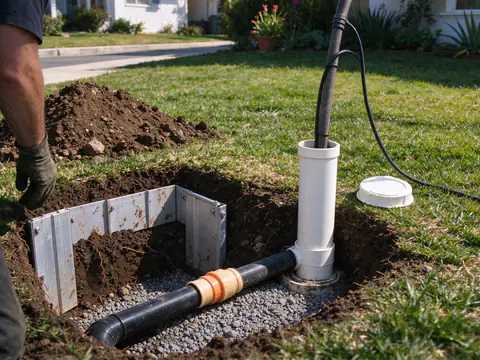
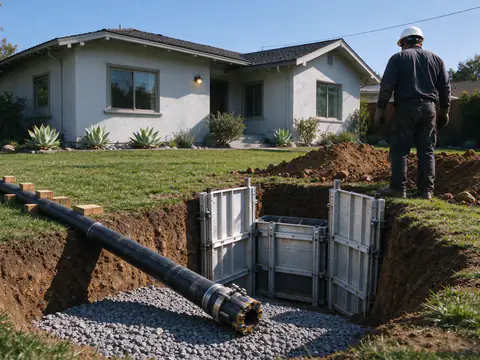
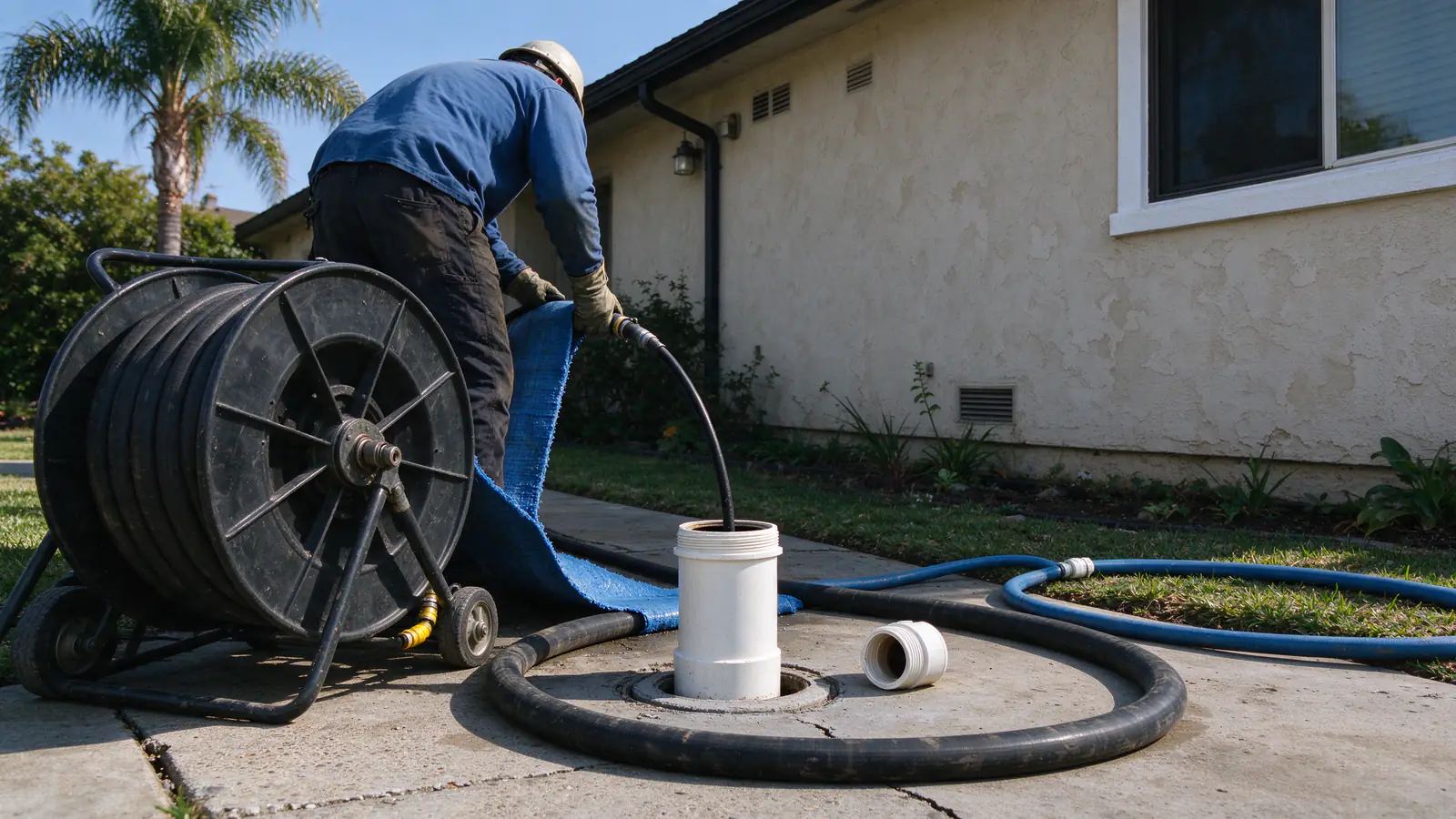
4. Install. The liner goes in through the cleanout or an access pit, either inverted (turned inside out by air or water pressure so the resin side meets the pipe) or pulled into place and inflated with a bladder.
5. Cure. The resin hardens under controlled conditions, with hot water, steam or ambient cure depending on the system. Uneven cure is one of the main causes of a weak liner, which is why your scope lists the curing time and temperature.
6. Reinstate and inspect. Where a branch joins the lined section, we reopen it with a cutter robot. A final camera run shows you the liner from end to end, including how it meets the house drain and the far end.
Already have footage from a scope?
Send it over with the address, and we'll give you a plain read on whether the pipe can be lined.
Only one bad joint?
Where your lateral has one bad joint or one cracked section and is sound everywhere else, a sectional liner (also called a point liner) can be the better fit. We wrap a short resin-saturated sleeve around an inflatable packer, push it to the defect using the camera’s footage count, inflate it against the pipe and hold it there until it cures. It seals that spot and nothing else, so the camera has to confirm the rest of the line really is sound. We price a sectional liner per job, from the number and type of defects, the pipe size and how much cleaning comes first; the trade-off against an excavated repair is laid out on our spot repair page.
What permit does lining need in San Diego?
On your side of the property line, lining is a repair of sewer piping, and the City’s Simple No-Plan plumbing permit lists sewer piping repairs among the work it covers for single-family and duplex buildings that are not historic. A property in a designated historic district or on a historic site may need historic review, which can apply in North Park and other older neighborhoods. We confirm the permit path for your address before the work is booked.
The section under the sidewalk and street is still your lateral in the City. Where lining reaches that section, we take the question of right-of-way permits and inspections to Development Services for the address, and the City’s Public Utilities sewer construction page publishes approved materials, including approval letters for lining products, which matters for any work on the public side. Our street sewer lateral repair page covers the right-of-way process.
What lining costs
Our typical range for lining is $80 to $250 a foot, or $4,000 to $15,000 for a full residential lateral. Your final price comes from a written quote after we see the job. Length, diameter, the number of bends and branch reinstatements, how much cleaning or descaling the pipe needs, and whether we have to add a cleanout first all move the number. A pipe that needs a spot excavation before lining carries that cost too. The trenchless repair cost guide compares lining with bursting, and pipe lining vs pipe bursting covers when each makes sense.
If you’ve had the line scoped, get an estimate with the footage, or call us, and the first thing we’ll tell you is whether the pipe can take a liner at all.