 San Diego Swift
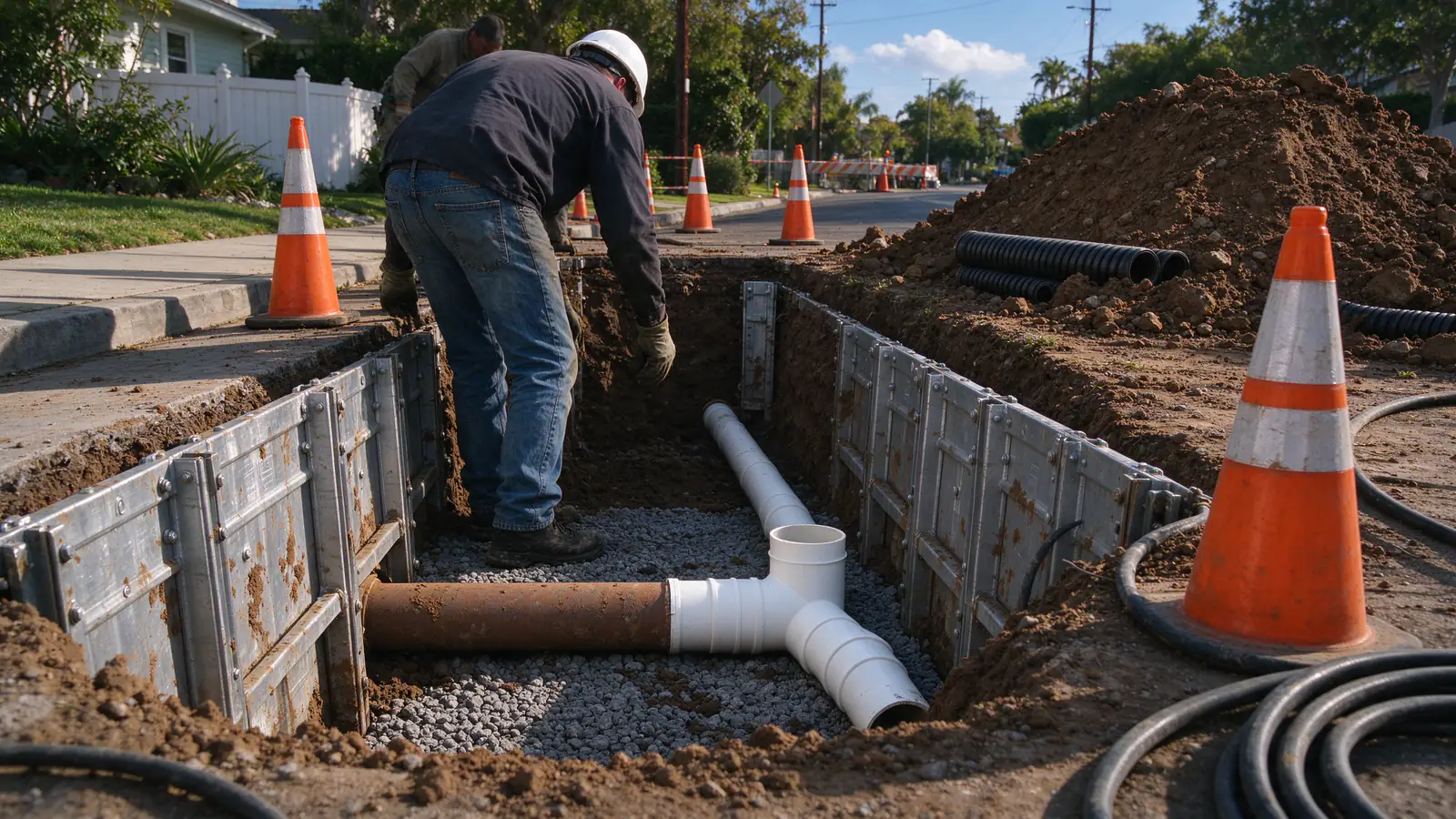
The camera report says the break is past the property line, under the sidewalk or out in the street, and you assumed that part was the City’s. In the City of San Diego it isn’t: the part of your sewer lateral that runs under the sidewalk and street is still your pipe, right up to the fitting where it joins the City main. San Diego Swift Sewer Line Repair repairs and reconnects that street section, and we plan the excavation, permits and traffic control around the City’s own rules, which set most of the sequence.
Owners first hear about the street section from a camera report: the footage counter passes the property line, and the defect sits somewhere under the curb, the parking lane or the travel lane. Where it sits matters more than almost anything else on this page. A break 3 feet inside the lot is a yard repair. The same break 3 feet past the property line brings in a second permit system, a City inspector and a traffic plan. If your line has not been scoped yet, start with a sewer camera inspection and a locate; our guide to reading a sewer camera report explains how the footage counter maps onto the street.
Where does your pipe end?
The City’s Public Utilities Department says the owner maintains the lateral “from the property all the way to the connection with the sewer main,” and that the connection may be in the street, on an easement or in a canyon. The City owns and maintains the main itself. There is no point at the curb where ownership flips, which is what catches people out: the curb is where the permit changes, not where the bill changes.
Development Services can tell you where a property’s lateral meets the main, from its maps and records, but the City keeps no drawings of the private run across the lot. The records show the connection point and nothing upstream of it. So we plan the street work from two sources: the City’s record of the tap, and our locate tracing the camera head from the house to the curb. Our guide to who is responsible for the sewer lateral sets out the ownership rules in full.
When does the City repair the street section itself?
Only in one situation: all sewer service to the house is lost, and a licensed plumber or drain cleaner finds the blockage or break beyond the property line and phones in a Plumber’s Report. The report is free. The City then may clear or repair the right-of-way section at no charge, unless the cause was a lack of routine maintenance.
The conditions are narrow, and they are written into City operations policy. The City will not work on a problem inside the property line, will not work where a private structure such as a block wall blocks access, and “will under no circumstances dig on private property.” When roots or grease caused the stoppage, the owner is billed the full cost of the City’s response, labor, materials, equipment and overhead included. A line that is cracked or sagging but still flowing does not qualify at all; for that, the City’s fact sheet points owners to sending the plumber’s video to Public Utilities Construction Support at 858-614-5742. The office may ask for that footage on a physical thumb drive, and the next steps after submission are not always spelled out, so keep your own copy of everything.
There is also no limit on how many times you pay to clear a lateral before it becomes the City’s problem. Repeated cleaning never shifts responsibility, and the City does not reimburse plumbing costs. If the house has lost its sewer entirely, our emergency sewer repair page covers the first calls to make.
What permits does street work need?
The Right-of-Way Permit
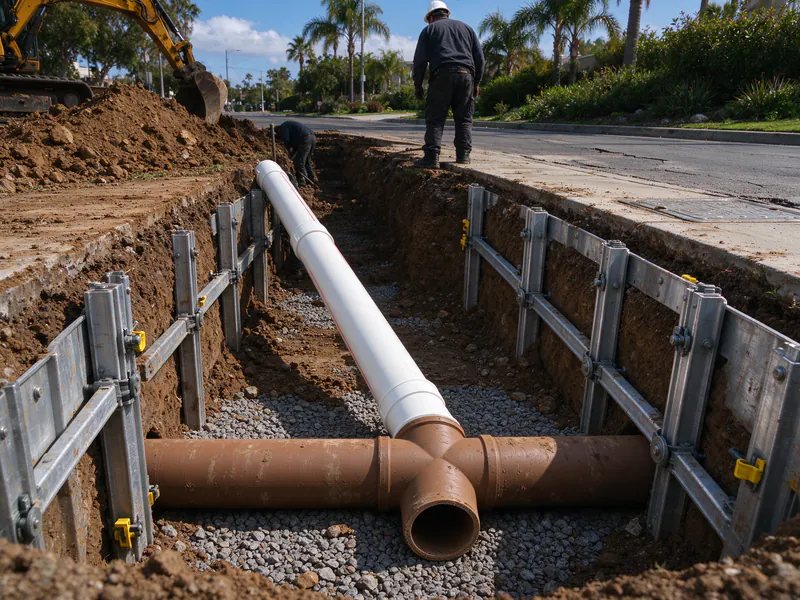
Any work in the public right-of-way or a water or sewer easement needs a Right-of-Way Permit with a construction plan, under Development Services Information Bulletin 166. The City no longer sends its own wastewater crews to install laterals: its sewer construction page tells owners to obtain a public improvement permit and contract with a Class A licensed contractor. Bulletin 166 also fixes the connection details. The minimum lateral is 4 inches; a 4 to 6 inch lateral joins the main with a wye or a saddle, and a saddle is allowed only on a clay main. The trench is inspected after it is dug and before the connection is made, and again at final.
Rapid Review or full plans
A lateral with a direct wye or saddle connection to the main qualifies for Minor Right-of-Way Rapid Review under Bulletin 165, which takes up to three Rapid Review items per plan set and also covers curb, gutter and sidewalk replacement up to 150 linear feet. A connection at a manhole leaves Rapid Review and goes in with full plans, which is the usual case for the larger laterals covered on our commercial sewer line repair page. Projects that are not cleared by the third review cycle pay an added hourly fee, which is one reason a clean first submittal matters.
Traffic control
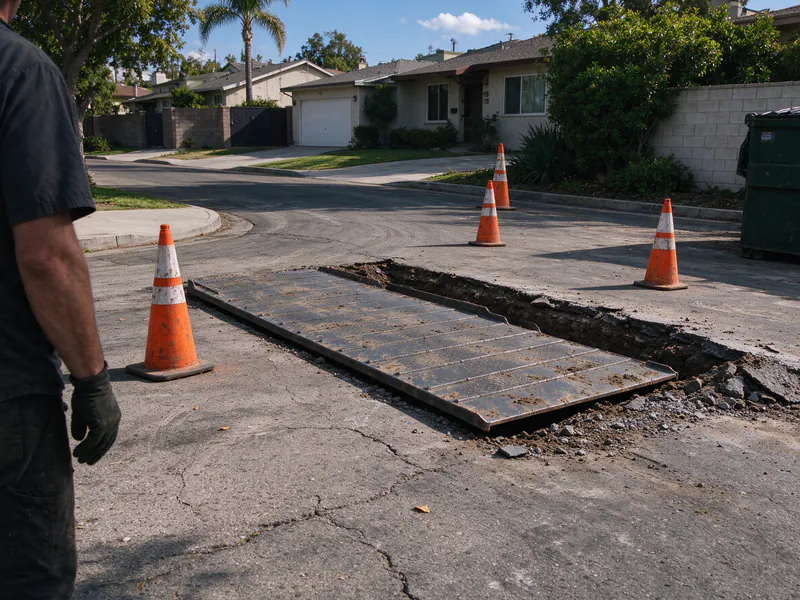
Opening a lane usually means a traffic control plan and a separate Traffic Control Permit under Bulletin 177. The plan shows the cones, signs and lane closure for the block, and the permit is priced per block for an initial period, with extensions charged by the week. A dig that runs long can therefore cost more in permits as well as labor.
What does a street connection cost?
We price the street section as its own line in your quote, from the physical work it needs, and your final price comes from a written quote after we see the job. The City’s own fees sit on top, and these are the figures from its published bulletins:
| City fee | Amount | Source |
|---|---|---|
| Right-of-way inspection | $1,412.54 per sewer lateral | DSD Information Bulletin 502 |
| Right-of-way plan check, when plans are required | From $3,179.40 for up to five sheets | Bulletin 502 |
| Traffic control plan review | From $353.13 | Bulletin 502 |
| Traffic control permit | $131.52 per block for up to three weeks | Bulletin 177 |
| Easement or encroachment lateral inspection | $25 | Public Utilities Water and Sewer Fees bulletin |
What moves the cost of the work is physical: how deep the main sits under the lane, and therefore how deep the trench and shoring go; whether the cut crosses asphalt or concrete; how many lanes the trench crosses before it reaches the main; gas, water and telecom lines in the way; whether the street is under a moratorium; and whether we can renew the section from the ends, by pipe bursting or lining from a pit at the curb, which can shrink the cut in the lane, though the permit, the inspection and the connection at the main still have to be planned for. Our cost guide shows how these lines stack up, and how to compare sewer repair quotes shows why two street quotes so rarely describe the same job.
Two street quotes that don't match?
Send both with the footage; we'll show you which parts of the right-of-way each one includes and leaves out.
Was your street just repaved?
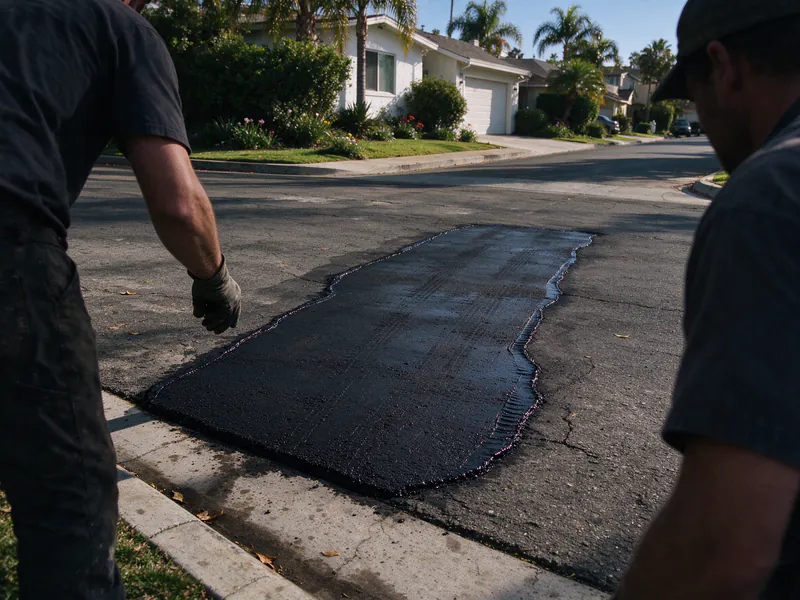
We don’t close a street trench with a cold patch. The City’s wastewater review requirements call for trench resurfacing to San Diego Regional Standard Drawing SDG-107 on asphalt streets and SDG-108 on concrete streets, with Schedule J paving under SDG-113 in the right-of-way and public easements.
The bigger variable is the street’s paving history. The Street Preservation Ordinance, updated effective January 1, 2024, puts newly treated streets under an excavation moratorium: three years after an asphalt overlay and one year after a slurry seal. Opening one requires an approved Excavation Moratorium Waiver first (SDMC 62.1207, form DS-350). Most trenching and restoration must be finished within 180 days, and a Street Damage Fee applies, waived if the excavator resurfaces the full width of the affected lane, or restores curb to curb on a moratorium street. A City memo defines a moratorium section as new pavement from intersection to intersection and curb to curb, so “the street” can mean the whole block. Our post on the Street Preservation Ordinance and sewer laterals walks through the waiver.
Can you move the connection?
San Diego Municipal Code section 64.0402 says that where a lateral already serves a lot and the street has been paved, that lateral must be reused unless the City grants an exception. In practice your repair goes back to the existing tap on the main rather than cutting a new one somewhere more convenient. When a property does end up with a lateral it no longer uses, Bulletin 166 requires it to be capped at the property line.
The standards also decide whether a rebuilt street section stays a standard public lateral. Bulletin 166 expects 5 to 7 feet of cover at the property line, at least 2 percent slope, a perpendicular connection and no vertical bends between the cleanout and the drop to the main. A lateral that misses those marks, or sits within 10 feet of a tree or 3 feet of a driveway edge, becomes a private encroachment lateral with an Encroachment Maintenance and Removal Agreement. Our guide on how deep a sewer line is explains why depth at the property line drives so much of this.
Does your line connect in a canyon or easement?
Not every lateral reaches a main under the street. On canyon-edge lots, and on blocks where the main runs behind the houses, the connection can sit in an easement or down a slope. The City runs canyon sewer cleaning and long-term maintenance programs for its own mains there, but the lateral is still yours. Under the City’s easement and encroachment policies the owner pays to locate the problem through a licensed plumber, excavate and expose the pipe, shore the trench to Cal-OSHA specifications at 5 feet or deeper or in poor soil, and backfill in 12 inch lifts. The City makes its repair only at the connection to the main, and only after that excavation is done. Access, not pipe, is the hard part: working down a slope or across a neighbor’s yard needs a plan for both. Canyon-edge streets in older neighborhoods such as Mission Hills are where this comes up.
Is your street near the water table?
Some streets sit close to the water table. City-filed geotechnical work puts groundwater at about sea level in the Mission Bay fill and records it about 7.8 feet down in one Mission Valley boring. A trench that fills with water has to be pumped, and pumping into the sewer needs a Groundwater Discharge Permit from Public Utilities, issued before any discharge. We apply for that permit early, alongside the right-of-way paperwork.
How we run a street lateral job
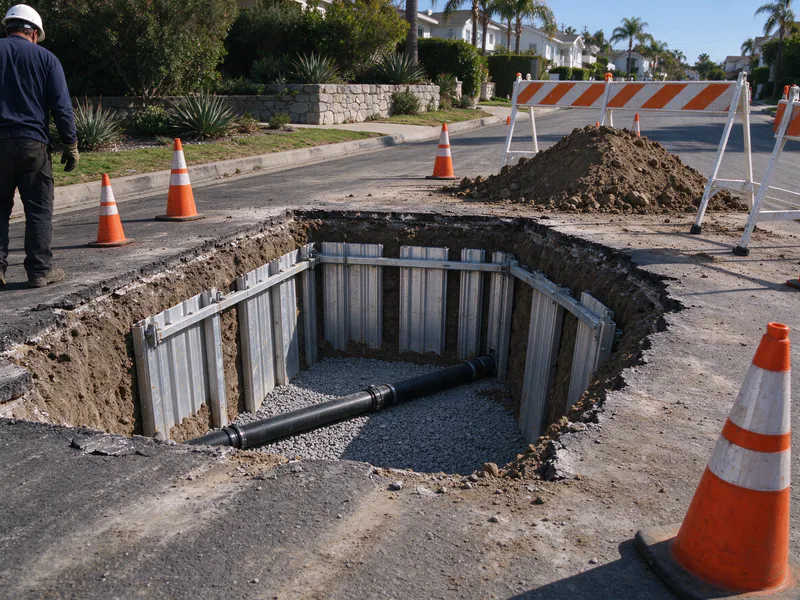
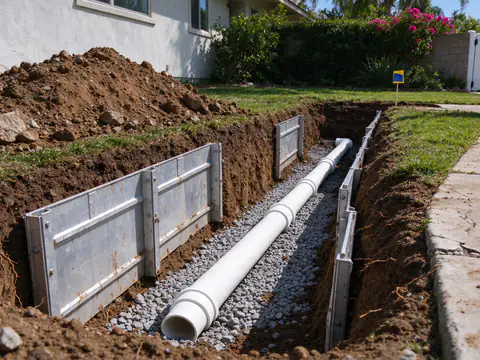
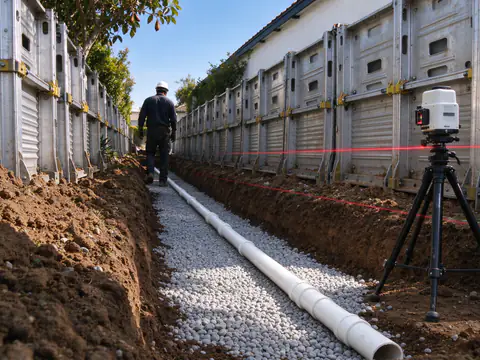
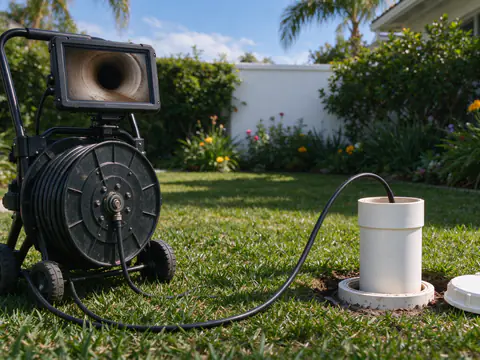
We run the camera and locate first, so we measure the defect against the property line. We confirm the connection point against City records. The permit route follows from the connection type, Rapid Review for a wye or saddle, plans for a manhole, and we check the street’s moratorium status before we promise you a schedule. Traffic control goes up on the permit dates, we cut and shore the trench, and the inspector sees it open before we connect the new section. Backfill, compaction and resurfacing to the standard drawings close it out, and a final camera run confirms the line is clear from the house to the main.
When the street section turns out to be sound and the trouble is on the lot, we move the work to sewer line replacement or an excavated repair instead. Our permit guide covers the private-side permit, and you can get an estimate by sending us the address and footage.