 San Diego Swift
Your old clay or cast iron lateral is cracked and full of roots along much of its length, and it runs under a driveway or garden you’d rather not tear out. Pipe bursting replaces a sewer lateral without digging it up. We pull a steel head through the old pipe, it splits the pipe apart and pushes the pieces into the surrounding soil, and a new HDPE pipe follows right behind it in the same path. San Diego Swift Sewer Line Repair bursts laterals across San Diego, and we treat it as one option among several, not a default.
It is a replacement, not a patch. When we finish the burst, the old pipe is gone and a new continuous pipe is in its place, which is what separates bursting from sewer pipe lining, where the old pipe stays and a new wall forms inside it.
How we burst a line
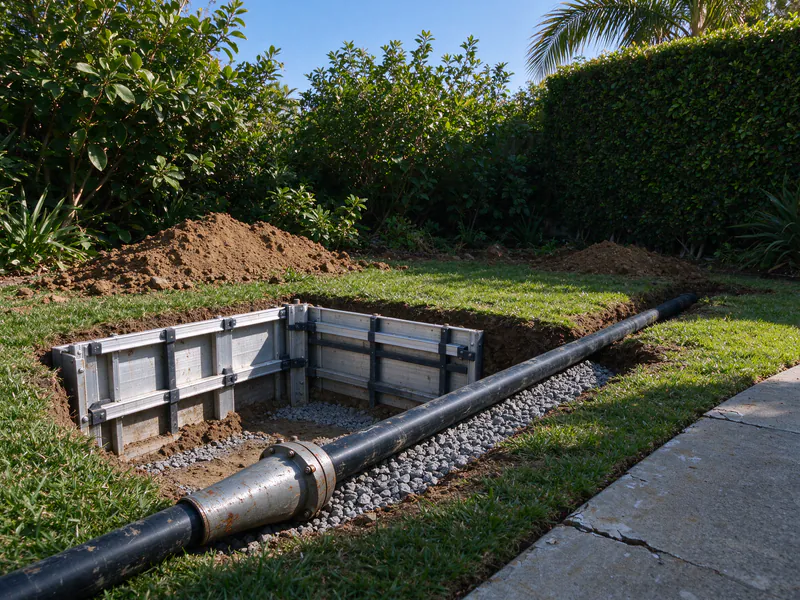
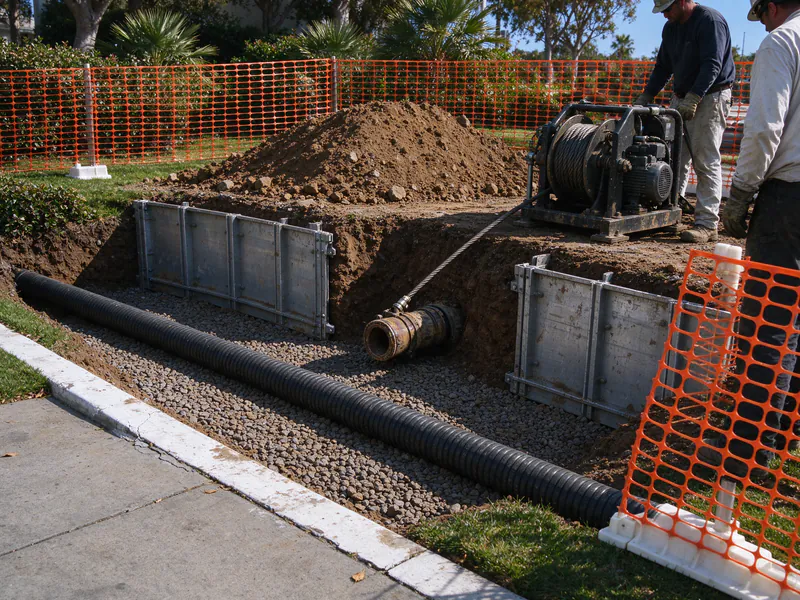
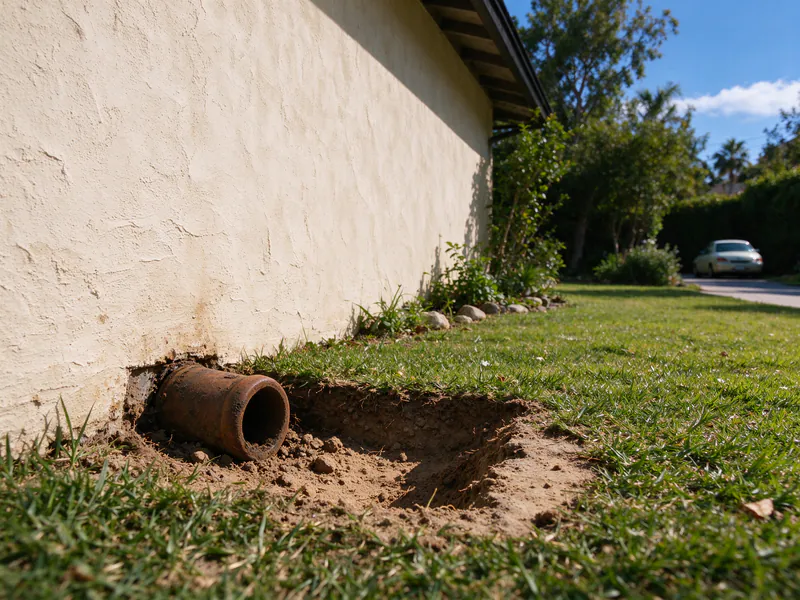
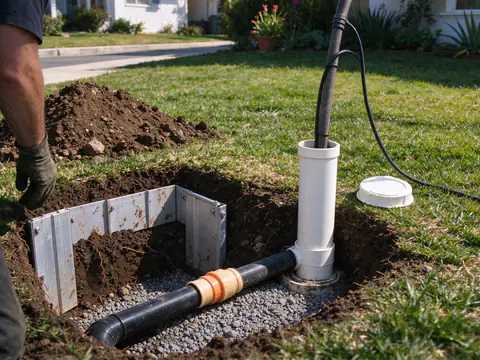
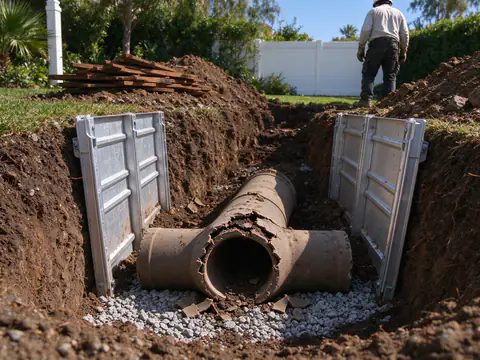
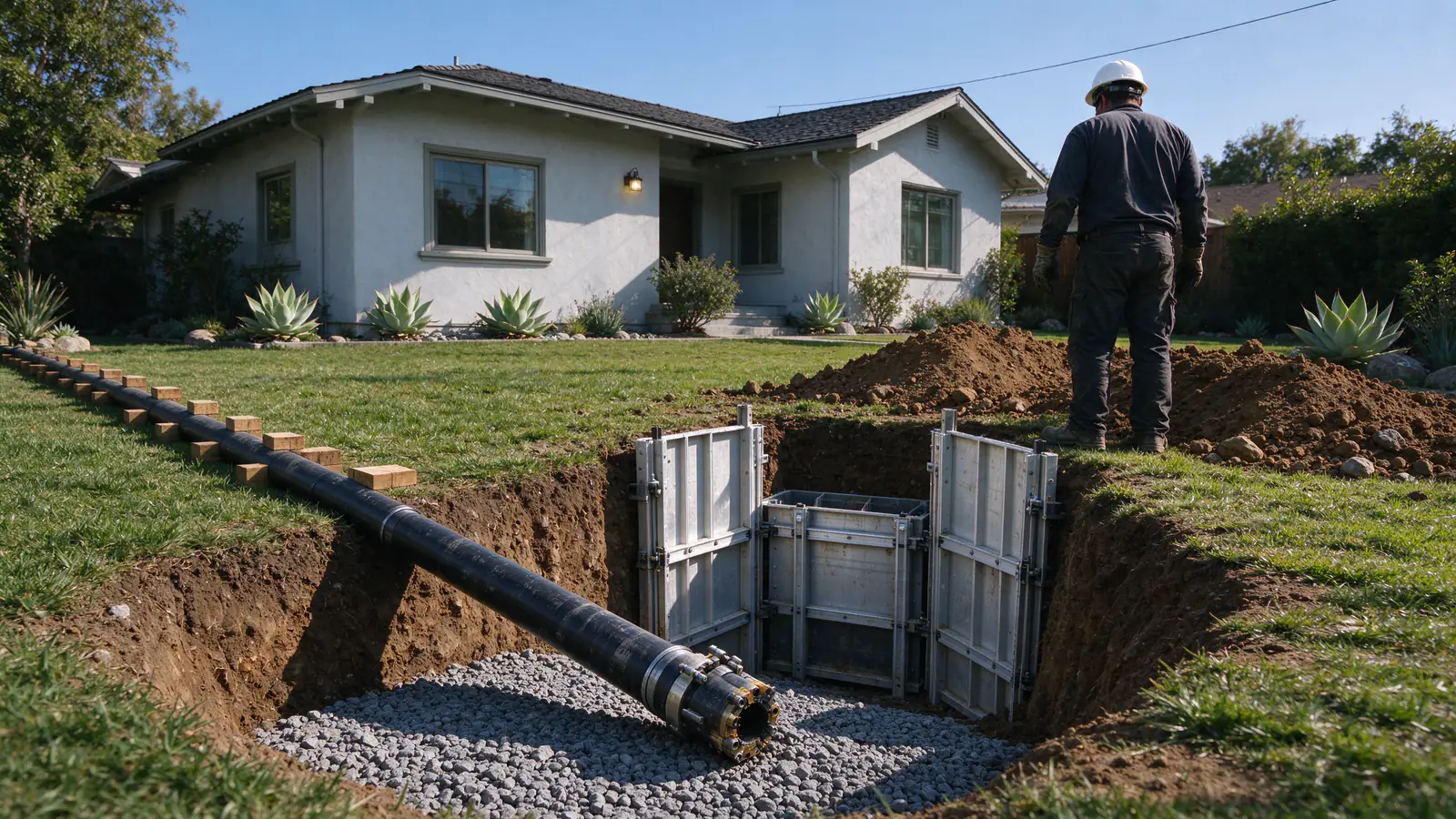
The job starts at two points. We dig a launch pit at one end of the run, often near the house or a cleanout, and a receiving pit at the other, often near the property line or the connection. We feed a cable or a string of steel rods through the old pipe from one pit to the other and attach it to the bursting head.
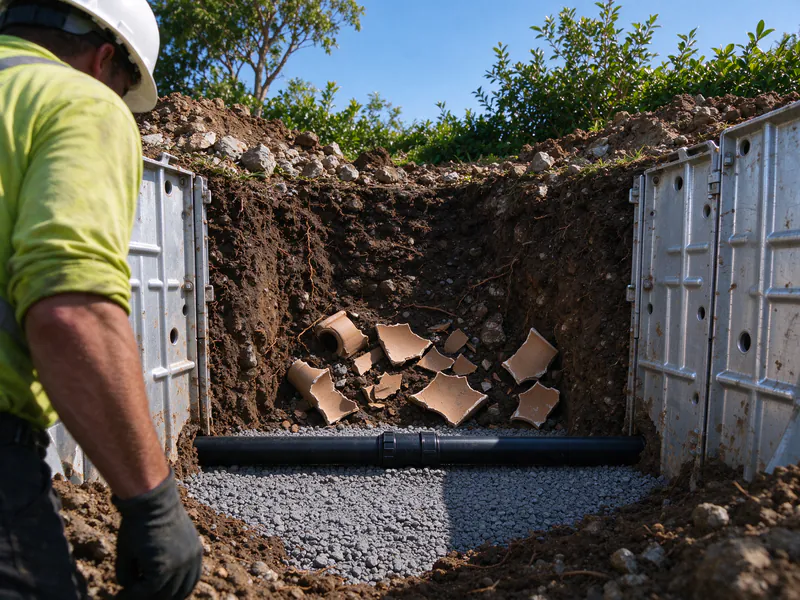
The head is a cone, slightly wider than the old pipe, sometimes followed by an expander. In static bursting, a hydraulic unit in the receiving pit pulls the head through steadily. In pneumatic bursting, an air-driven hammer inside the head adds a percussive blow while a winch keeps tension. Either way, brittle pipe such as clay or cast iron fractures along its length, and the fragments are forced outward into the soil.
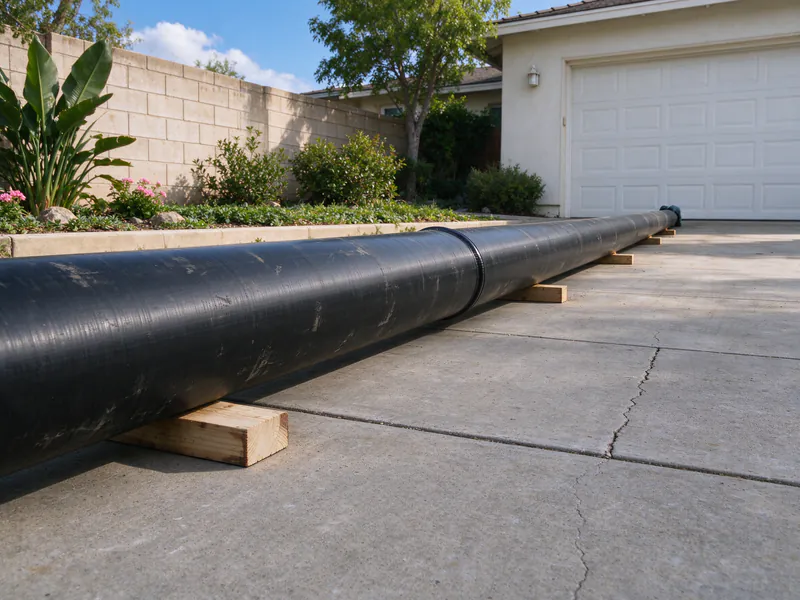
Behind the head comes the new pipe: high-density polyethylene, joined beforehand into one continuous length by heat fusion, so there are no joints along the run for roots to find. Once it reaches the receiving pit, we cut it, connect it at both ends with listed transition couplings, and check it with a sewer camera inspection.
Is pipe bursting right for your line?
Bursting fits a lateral that is broken or root-riddled along much of its length but still follows a usable, fairly straight path, with other utilities at a safe distance. It suits lines under driveways or landscaping that a trench would destroy, and fits poorly where your line has lost its slope, turns sharply or runs beside other pipes.
Old clay laterals and cast iron lines are the usual candidates, because both break cleanly under the head. We settle most cases with three questions:
Is the path usable? The new pipe follows the old one. If your old lateral runs under a later room addition, too close to a tree, or with several tight bends, bursting carries those problems forward. An extra pit at a bend can help; a route that is simply wrong needs an open trench.
Does it still drain? Bursting can ease a shallow sag, because the head tends to ride a slightly straighter line, but it cannot rebuild a lost fall. A lateral with a long belly that holds water needs excavation at the low section, or along the whole run.
What else is in the ground? The fragments and the expanding soil push outward. A gas line, water service or cable running alongside, or crossing just above, can be damaged. Public utilities are marked through the 811 one-call locate request, but private lines such as irrigation, landscape lighting or a feed to a detached garage are not, so we check the path carefully before the head moves.
Want to know where the pits would go?
Share the address and the line's route if you know it, and we'll give you a straight answer on bursting.
How San Diego soil and pit depth affect a burst
Soil changes how a burst behaves. USDA soil sampling at points around the metro area found high shrink-swell clay subsoils in places such as Encanto, Mira Mesa, Lemon Grove, Spring Valley and Escondido, and loose sand in Mission Valley. Those are single sample points, not lot surveys, but they show why one burst pulls easily and another fights the ground. Dense clay resists the expander and can transmit movement further; loose sand flows back around the new pipe and can let the surface settle over the path.
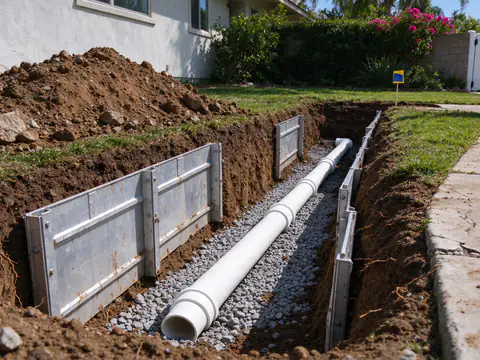
The pits are excavations with the same safety rules as any trench. A pit 5 feet or deeper needs a protective system, such as shoring or a trench box, under Cal-OSHA rules. City standards put a public lateral at 5 to 7 feet of cover at the property line, so a receiving pit near the sidewalk is often deep enough to need it. Our guide on how deep a sewer line is explains what sets that depth. Nobody should step into an unshored pit, and homeowners should never dig toward the line themselves.
Reconnecting at the main and at the house
The ends are where bursting jobs succeed or fail. At the house, we connect the new HDPE to the building drain, often a different material and sometimes a different size, through a listed transition coupling. At the far end, it either meets the old lateral at a sound point or continues to the City main.
In the City of San Diego, the lateral is yours all the way to the main, and the minimum lateral size is 4 inches. A 4- to 6-inch lateral connects to the main by a wye or a saddle, and a saddle is allowed only on clay mains. Work in the right-of-way or a sewer easement needs a Right-of-Way Permit with a construction plan, and a City inspection after the trench is dug and before the connection is made. When the receiving pit is in the street, traffic control and resurfacing come with it; our street sewer lateral repair page explains that sequence.
What pipe bursting costs
Our typical range for pipe bursting is $60 to $200 a foot, and your final price comes from a written quote after we see the job. We price the whole job from the length of the run and the pits, which drive so much of the total: their depth, whether they need shoring, what has to be restored on top, and whether one lands in the street. Permits and inspections add to it. The trenchless sewer repair cost guide shows how bursting and lining compare, and pipe lining vs pipe bursting explains which defects favor each.
If you’ve had a quote for bursting and want a second read, or the camera has just found a broken line, get an estimate with the footage and the address, or call us. If bursting is the wrong tool for your pipe, we’ll tell you that first.