 San Diego Swift
When your house loses its sewer, the drains stop being a nuisance and become a health problem: sewage has nowhere to go but back up through the lowest fixture in the building. San Diego Swift Sewer Line Repair handles emergency sewer repair across the City of San Diego and nearby San Diego County, from clearing the line to the camera work and the repair.
An emergency call has two separate jobs. The first is getting the house draining again. The second is finding out why it stopped, and that second job is where the real decision gets made. Mixing the two up is how owners end up agreeing to a large repair while sewage is still on the floor.
What should you do first when the house loses its sewer?
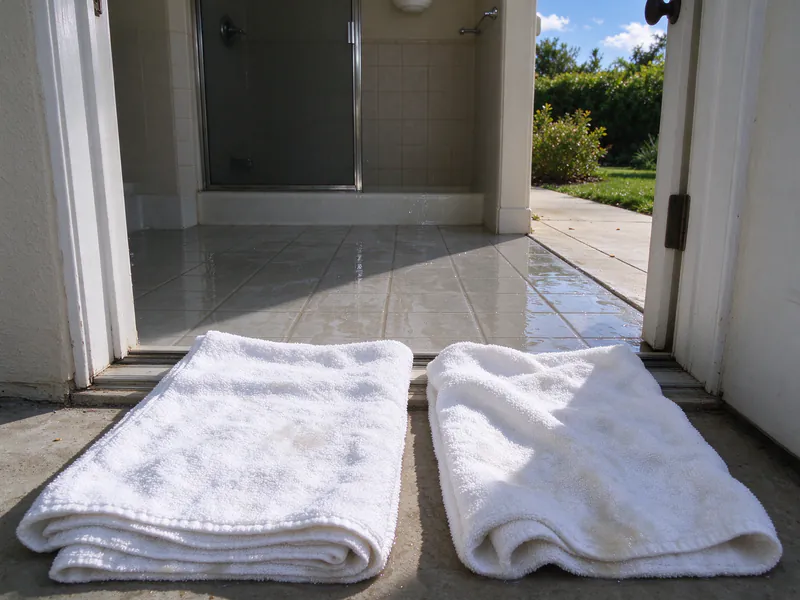
Stop running water anywhere in the building, including the washer, dishwasher and any running toilet, because every gallon added has to come back out somewhere. Keep people and pets away from any sewage. Then work out which drains are affected, because that tells us whether the problem is one fixture or the whole line.
If only one sink or one toilet is backing up, the blockage is probably in that fixture’s branch, not the lateral. If several drains are slow at once, if a toilet gurgles or rises when the washer empties, or if water comes up in a shower or floor drain on the lowest level, the building drain or the lateral is blocked downstream of all of them. Knowing where your cleanout is speeds the next step; our guide to finding the sewer cleanout shows where to look, and what to do when your sewer backs up covers cleanup and the first hour in more detail.
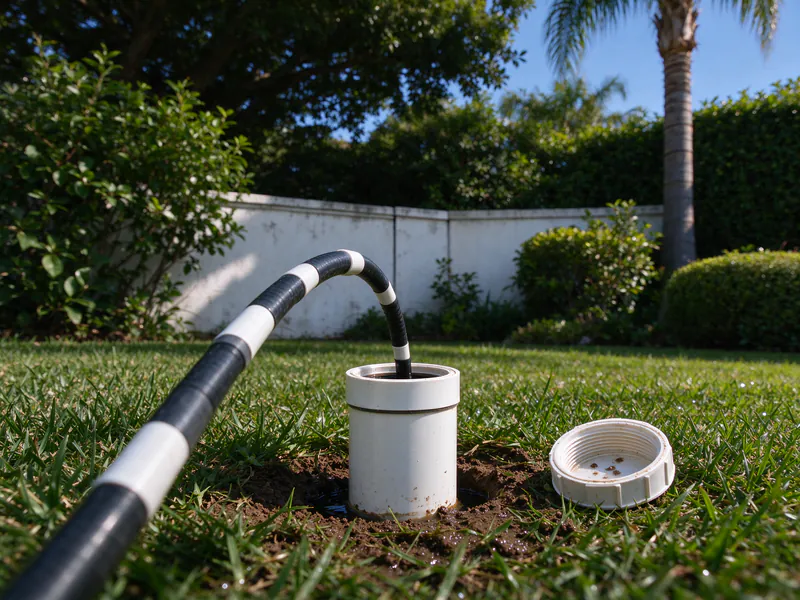
Leave the cleanout cap on. A lateral that is full of backed-up sewage can push out hard when the cap comes off, and that is a job for the person clearing the line, with the right gear and a plan for where the water goes.
Is it your line, or the City main?
Symptoms alone can’t tell you. A blockage in the private lateral and a blockage in the City main can look the same from inside the house: everything backs up at the lowest drain. Roots, a collapsed section, a sag that has collected solids, grease, or something flushed that should not have been can all stop a line. The signs of a broken sewer line guide covers what each pattern suggests, but none of them proves a cause.
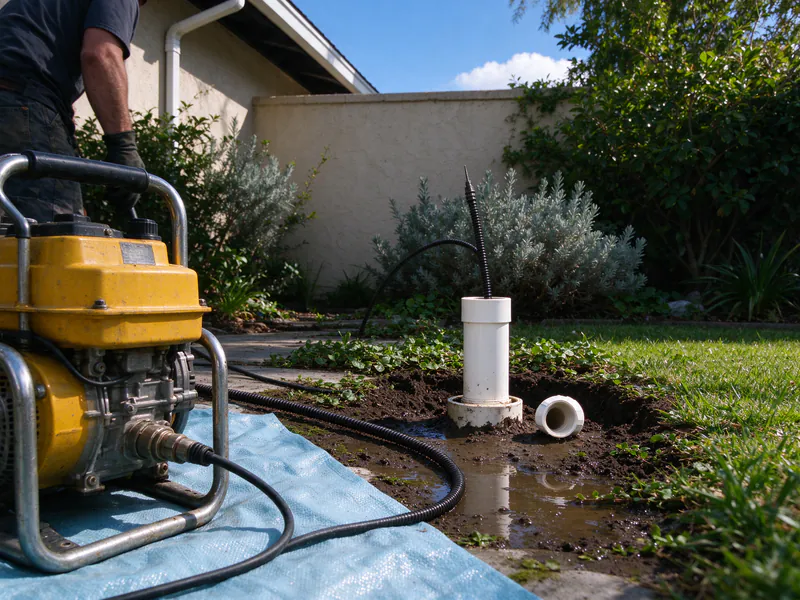
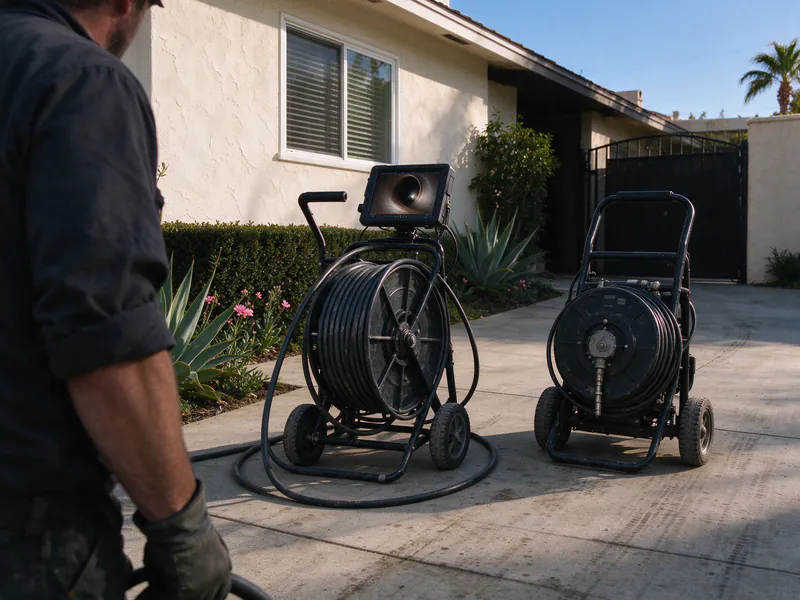
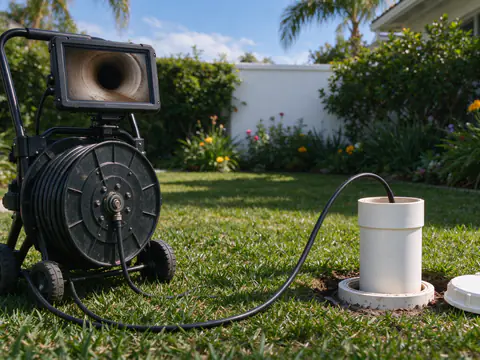
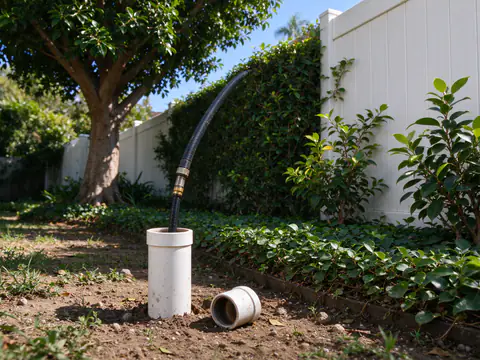
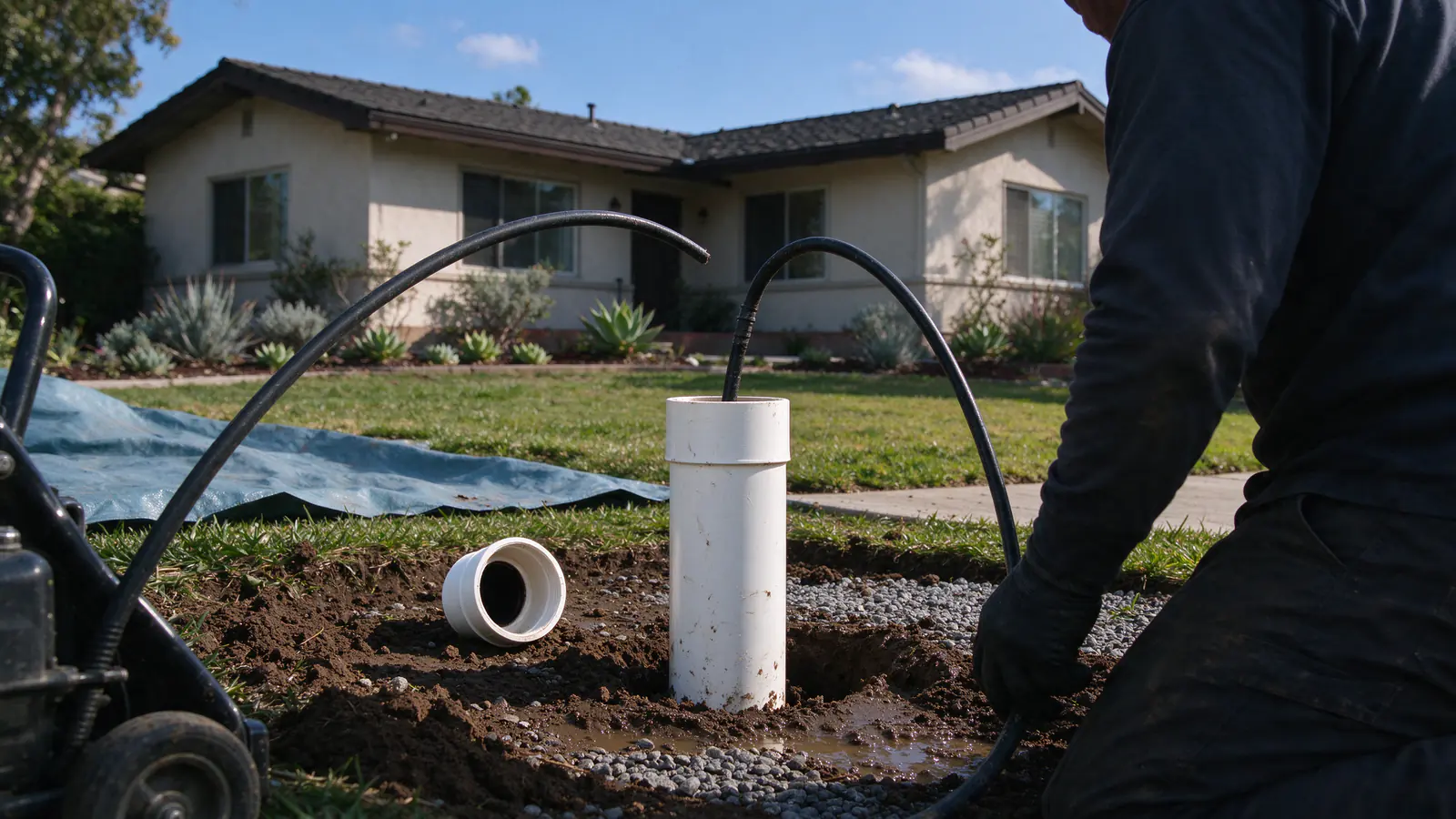
What settles it is clearing the line and looking. We go in through the cleanout with a cable or jetter, and when the blockage gives way we note how far out it was. A camera run after the line is flowing shows what caused it and where it sits relative to the property line. That distance decides who acts next.
Is sewage running into the street?
If sewage is spilling out of a cleanout and running toward the gutter, the City asks owners to call its sewer line at 619-515-3525. City crews clean up the right-of-way, because what reaches the gutter can end up in the storm drain, a separate system from the sanitary sewer that was never meant to carry sewage. The City is clear about the bill, though: the owner “will be held responsible for the City’s response costs” when the spill came from a blockage or break in the section of lateral under the property. The City cleans the street; the lateral is still yours to clear and repair.
Will the City fix the line?
Only when all sewer service is lost and a licensed plumber or drain cleaner finds the break, collapse or blockage beyond the property line. The plumber phones in a Plumber’s Report on the City’s sewer emergency line, at no charge, and the City investigates. It may then clear or repair the right-of-way section at no expense to the owner.
The limits are firm. The City does nothing inside the property line, and nothing where a private structure such as a wall blocks access to the pipe. If the stoppage came from a lack of routine maintenance, roots or grease, the owner is billed in full for the response. A line that is damaged but still flowing doesn’t qualify for this process; the street sewer lateral repair page covers that route.
What does a plumber’s report do?
A Plumber’s Report is a phone report from the licensed plumber who found the problem, telling the City that the failure is past the property line. It gets the City to look at its side. It does not transfer ownership of the lateral, does not make the City pay for the private section, and does not cover cleanup inside the house.
What protects you is the record behind it: the footage, the distance at which the blockage was cleared, and a written note of what the camera showed. Keep a copy. If the City later fixes the street section and you still need work on the lot, or if you file a claim, that record is the evidence.
Did the City main cause the backup?
Sometimes the camera shows the lateral is clear and the stoppage was in the main. Then the City’s claims policy for sewer backups, Council Policy 400-10, can apply where the owner was not at fault. It can cover emergency cleanup, damage to the house and belongings (with depreciation), extra living expense if the home is unfit to live in, and reasonable plumbing bills tied to finding the problem, once a main stoppage is confirmed. Lateral stoppages, “roots from any source”, lost rent, personal labor and general damages are excluded.
Claims have to be in writing, most of them within six months of the incident, through the City’s Public Liability claims portal or form RM-9, with an estimate and photos for property damage. Take photos before cleanup starts. Your own policy may also apply; our guide to whether homeowners insurance covers sewer line repair explains the usual split between damage in the house and the line itself.
What happens once the line is flowing?
Clearing is not a repair. A cable or jetter cuts through roots and pushes past debris; it does nothing to the open joint the roots came through, the sag where solids settled or the cracked section that let soil in. That is why we treat the camera run after clearing as more important than the clearing itself. Our root removal page explains what cleaning can and can’t do.
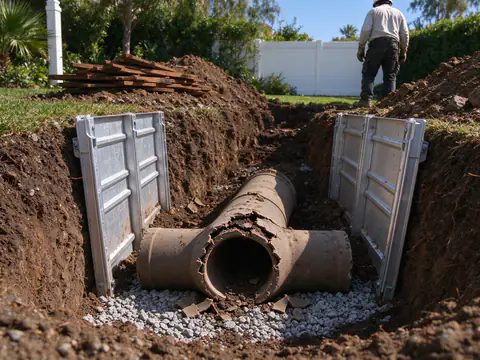
If the footage shows a sound pipe with a one-off blockage, the job may end there. If it shows a defect, the next step is our written scope: a spot repair for one bad section, lining or pipe bursting for a line that has failed along its length, or excavation for a collapsed line or a lost grade. Those repairs go through the usual permits; a single-family or duplex repair on the lot uses the City’s no-plan residential plumbing permit, $264.25 under Bulletin 103, and anything in the street needs a right-of-way permit as well. Our typical ranges are $350 to $600 for clearing by hydro jetting, $100 to $500 for the camera inspection and $1,500 to $5,000 for an excavated spot repair; your final price comes from a written quote after we see the job.
With the toilet out of action, it is easy to feel pushed into signing a single large quote. You don’t have to. Once flow is restored, the house can be used carefully while we write the scope, and where it can’t, a temporary toilet buys time to compare options. A scope you can read, with the footage behind it, is worth the short wait; our guide to comparing sewer repair quotes shows what to check.
Line cleared, but no cause found yet?
Send the footage or the plumber's notes, and we'll tell you what the camera shows and what a permanent fix would involve.
Outside the City of San Diego?
The first-call rules change outside the City of San Diego. In Poway, the City cleans the lateral from the property-line cleanout to the main at no charge if the house has a property-line cleanout. In Escondido, the City inspects its main free when a backup is reported. Lemon Grove’s sewers belong to a separate sanitation district, and unincorporated areas such as Spring Valley follow County rules. The Poway, Escondido and Spring Valley pages set out who to call in each. Wherever the house is, the sequence is the same: stop the water, get the line cleared, put a camera down it, then decide.
Get an estimate for the permanent repair once the camera has run, or call us and describe what is backing up.