 San Diego Swift
When the line backs up again and again, roots keep returning through joint after joint, or a camera shows the pipe broken in more than one place, patching stops making sense. Sewer line replacement in San Diego means putting a new lateral between your house and the City main, and in the City of San Diego that whole length is yours, the section under the sidewalk and street included. San Diego Swift Sewer Line Repair replaces laterals by open trench or pipe bursting, and sometimes we replace part of a line and line the rest.
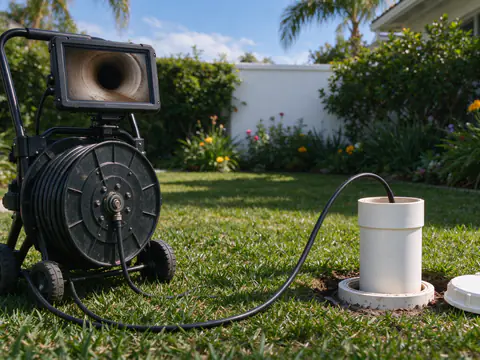
The method is the decision that matters most, and we take it from the camera, not from a preference. A sewer camera inspection shows us where your line runs, how deep it sits, what it is made of and where it has failed. Those four facts settle whether the pipe can be lined, burst or has to come out of the ground.
What we do on the first visit
We start at the cleanout. We run a camera down the line with a footage counter and record each defect by its distance from the cleanout: a root mass at a joint, an offset where two sections have shifted, a sag where water sits, a crack or a collapse. Then we follow the camera head from the surface with a locator and mark the path and depth of the line on the ground, so your scope is measured rather than guessed.
The other half of the visit is your property. Where does the line leave the house? Is there concrete, a driveway, mature trees or a block wall over its path? Where is the property line, and does the lateral cross the sidewalk and street to reach the main, or does it connect in an easement behind the house or down in a canyon? The City’s own Public Utilities page warns that the connection may be in the street, in an easement or in a canyon, and each of those changes the permit and the access.
When there is no usable cleanout and the job needs one, we add one first, because it gives the camera and any later lining a way in. Our cleanout installation page covers how that works.
Trench, bursting or lining: which one fits your line?
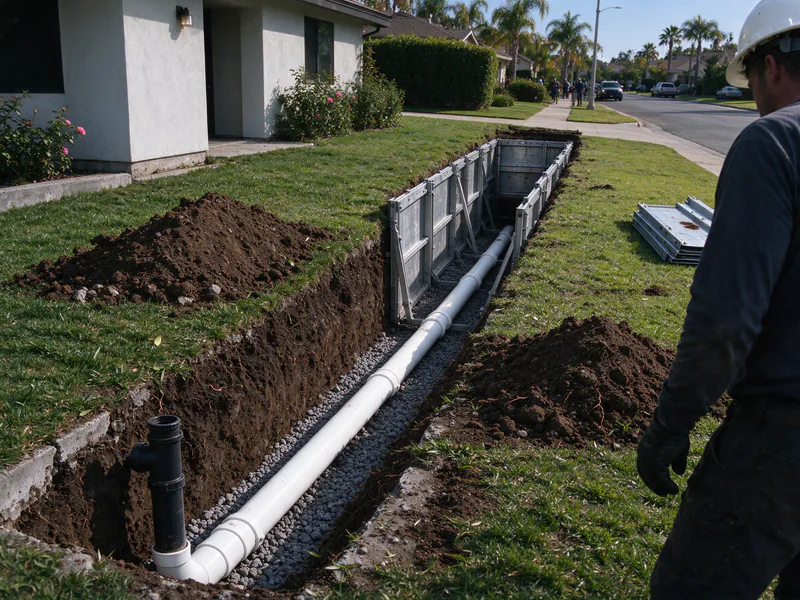
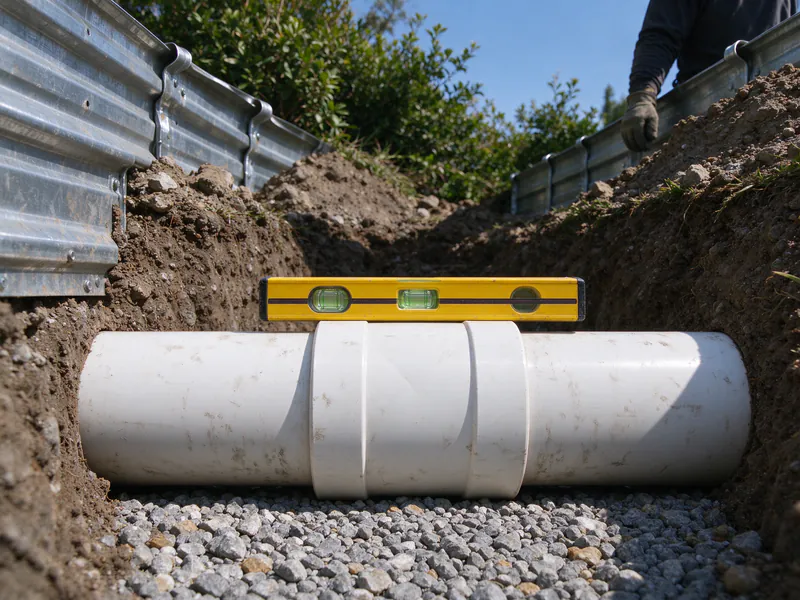
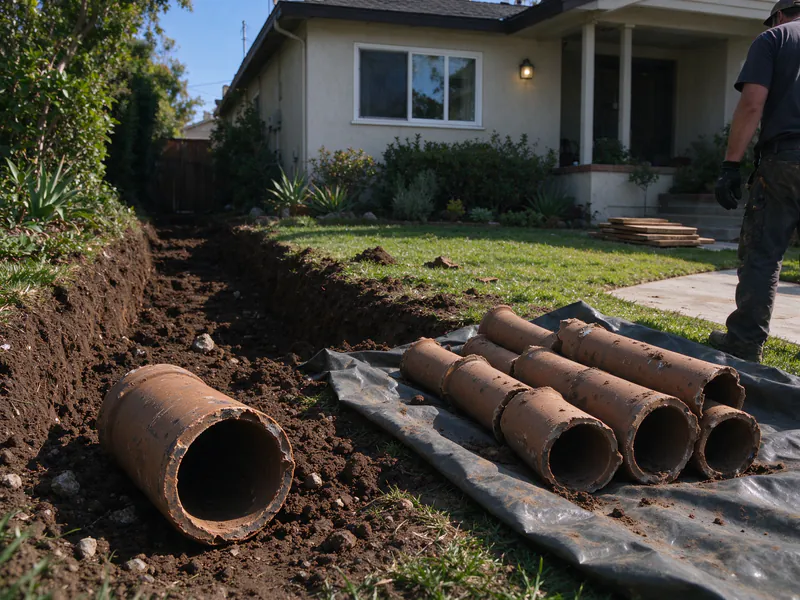
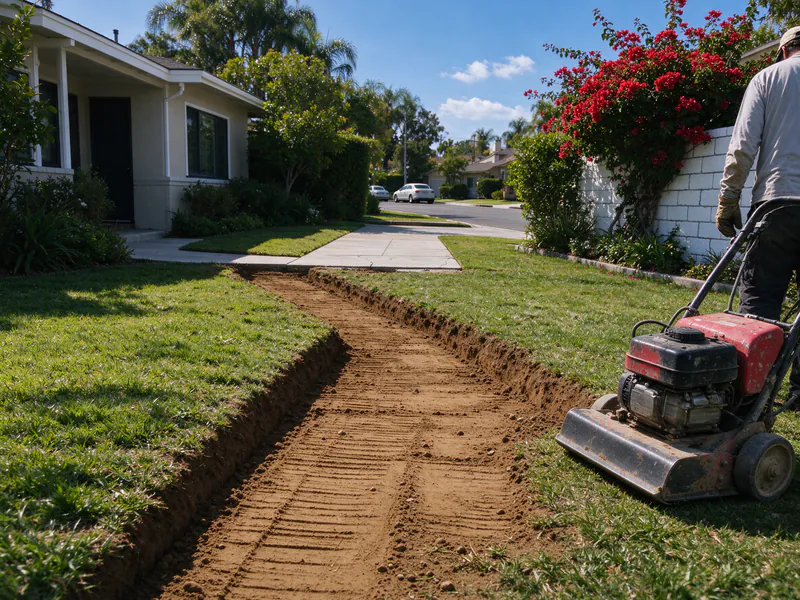
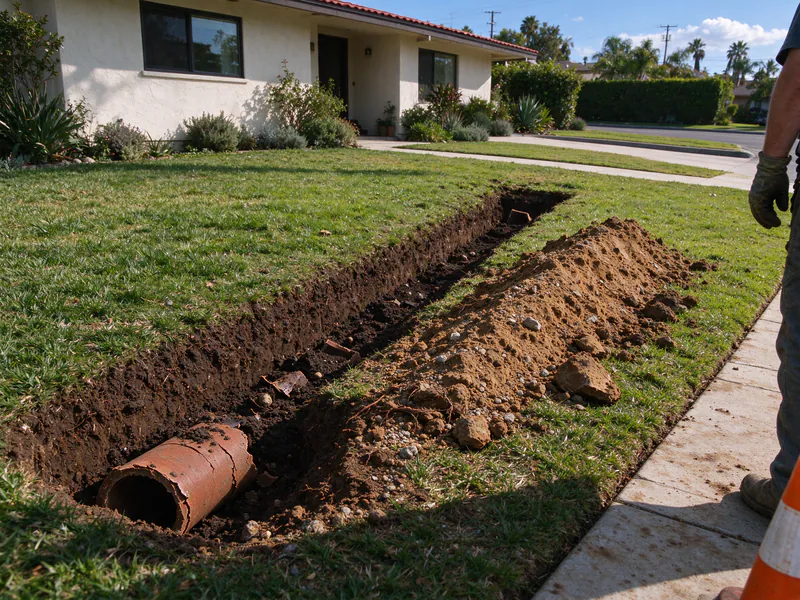
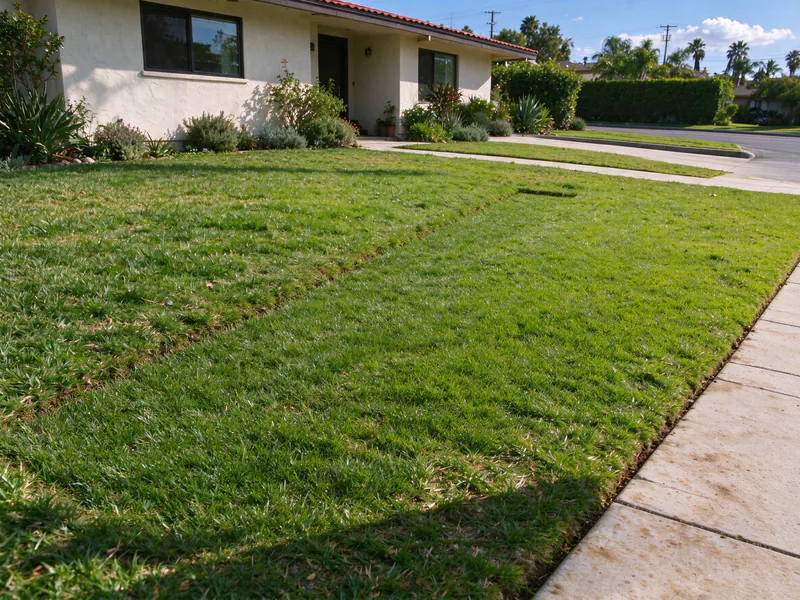
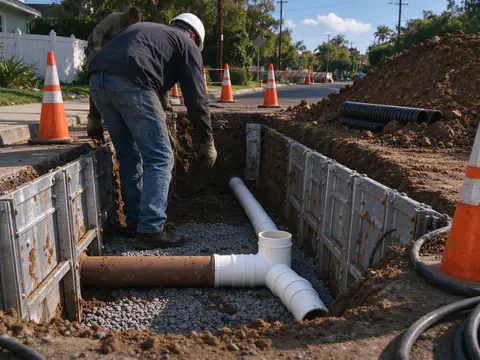
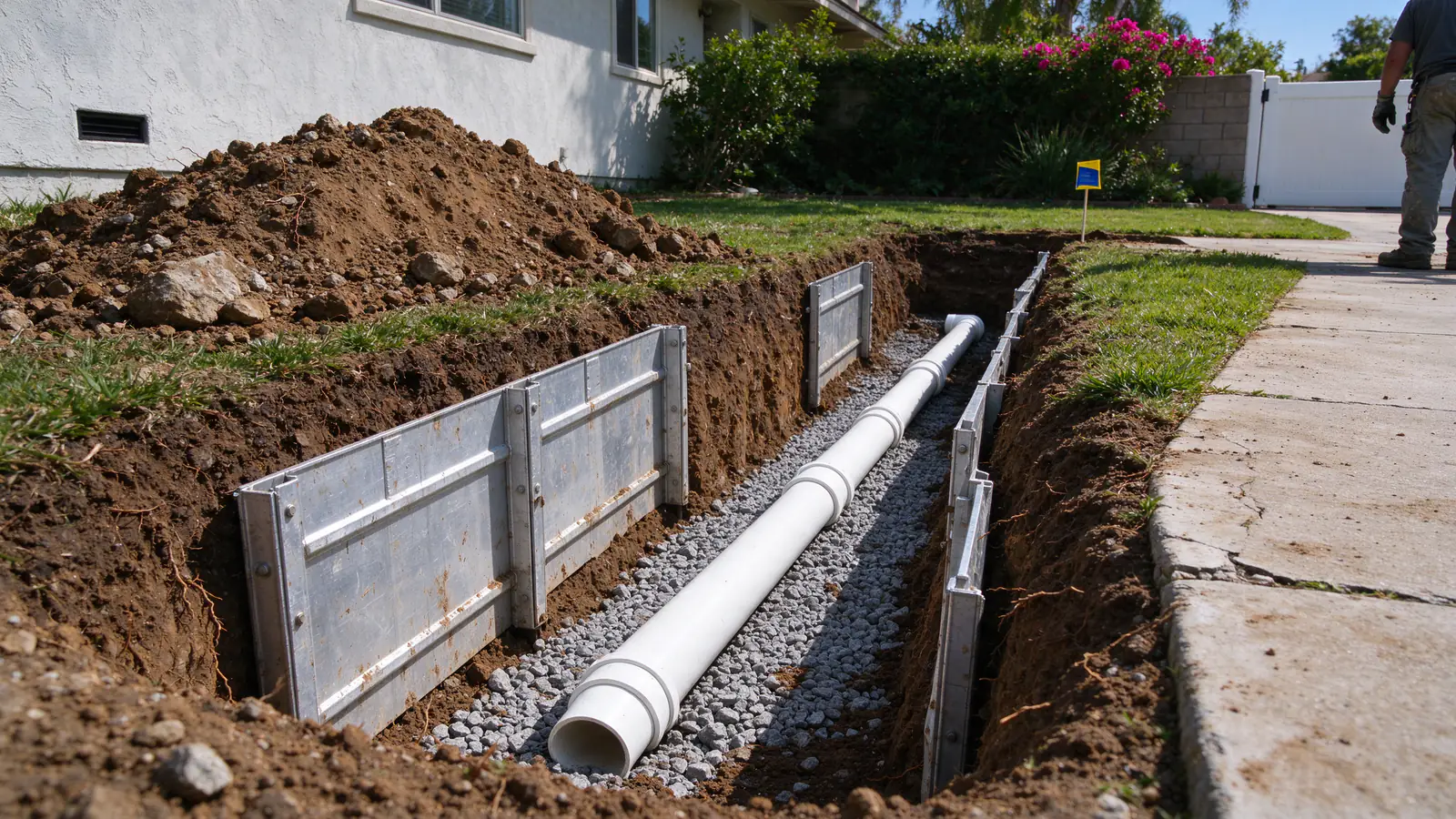
Open-trench replacement means we dig the line out and lay new pipe, usually PVC, on gravel bedding at a set slope. It is the only method that fully resets the grade, so it is the answer, often by sewer line excavation, when your lateral has bellied and holds water, runs too shallow, takes a poor route or has collapsed in several places. Its cost lives in what sits on top of the line: lawn is easy to restore, a stamped-concrete driveway is not. In San Diego, a trench 5 feet or deeper also needs shoring to Cal-OSHA standards, which the City’s own easement-lateral policy spells out.
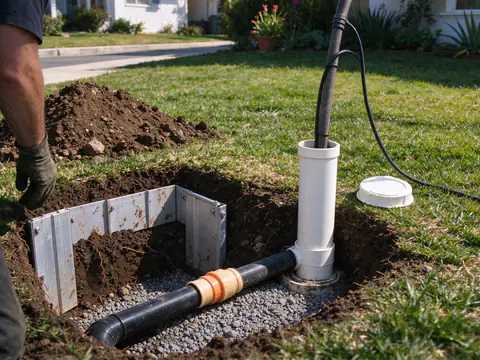
Pipe bursting means we pull a bursting head through the old pipe from one pit to another, breaking it outward while it drags a new HDPE pipe in behind it. It replaces the pipe with very little digging between the pits, which makes it a strong fit when your old line is broken but follows a usable path under concrete or landscaping. It follows the existing route, so it can ease a shallow sag but cannot fully correct a line that has lost its fall. Before we burst, we check the path for gas, water and other lines nearby.
Lining is technically a rehabilitation, not a replacement: we set a resin-saturated liner inside the old pipe and cure it into a new pipe wall. It needs a continuous host pipe that holds its shape, and it takes on that pipe’s geometry, sags included. We cover it fully on the trenchless sewer repair and sewer pipe lining pages, with pipe bursting on its own page. It belongs in the comparison because plenty of San Diego “replacements” are a combination: we burst or dig out the broken run under the yard and line a sound run under the street.
Is the break under the street?
This is where San Diego differs from many cities. You are responsible for the lateral all the way to the connection at the City main, and the City no longer installs laterals with its own crews: its sewer construction page tells owners to get a public improvement permit and contract with a Class A licensed contractor. Work in the right-of-way needs a Right-of-Way Permit with a construction plan (DSD Information Bulletin 166), and a lateral with a direct wye or saddle connection to the main can go through Minor Right-of-Way Rapid Review under Bulletin 165.
The City’s fee schedule (Bulletin 502) puts the right-of-way inspection for a lateral at $1,412.54, and a traffic control plan review starts at $353.13, with a traffic control permit of $131.52 per block (Bulletin 177). We resurface the trench to the San Diego Regional Standard Drawings. If your street was resurfaced recently, the Street Preservation Ordinance applies: excavation moratoriums run three years after an asphalt overlay and one year after a slurry seal, opening a moratorium street needs an approved waiver, and restoration can mean resurfacing the full width of the lane. Our street sewer lateral repair page walks through that process in detail.
One rule surprises owners: where a lateral already serves the lot and the street has been paved, San Diego’s municipal code requires that lateral to be reused unless the City grants an exception. So a replacement reconnects at the existing connection point rather than cutting a new one. Our permit guide lists each permit by situation.
How deep is your line, and what does the City check?
City standards put a standard public lateral at 5 to 7 feet of cover at the property line, at a minimum 2 percent slope, connected perpendicular to the main with a drop to the main. A lateral outside those limits, within 10 feet of a tree, within 3 feet of a driveway edge, or with its cleanout on private property becomes a private encroachment lateral that needs an Encroachment Maintenance and Removal Agreement. These details matter on older lots where the original line was laid before today’s standards, and they are part of why we write your scope after the locate, not before.
On your side of the property line, most single-family and duplex replacements use the City’s Simple No-Plan plumbing permit, $264.25 for a residential repair or replacement under Bulletin 103. Properties in a designated historic district or on a historic site may need historic review instead, which matters in older neighborhoods such as North Park and Mission Hills.
What will it cost, and who pays?
Our typical range for open-trench replacement is $50 to $250 a foot and for pipe bursting $60 to $200 a foot, before permits, restoration and any street work. Your final price comes from a written quote after we see the job. Most homeowners policies cover sudden damage inside the house and exclude the lateral itself, so replacement is usually your expense unless a separate service-line endorsement applies. The City of San Diego doesn’t list a lateral rebate (Public Utilities can confirm for your address), and its 2013 lateral fact sheet states that there is no reimbursement for plumbing costs. The service line warranty the City promotes is a private plan with its own terms, so read the coverage limits before counting on it.
A replacement often comes up during a home sale, after a buyer’s sewer scope. The City’s Public Utilities page recommends that buyers get a licensed plumber’s report on the lateral, but no point-of-sale lateral ordinance applies in the City of San Diego. When a scope turns up a problem, the footage is the evidence both sides negotiate from, and our written quote with the method and the price is what turns it into a number. Our guide to what a sewer line replacement costs breaks that number down.
Have the scope report from a sale?
Send the footage and the address; we'll tell you what it shows and what replacement would involve.