 San Diego Swift
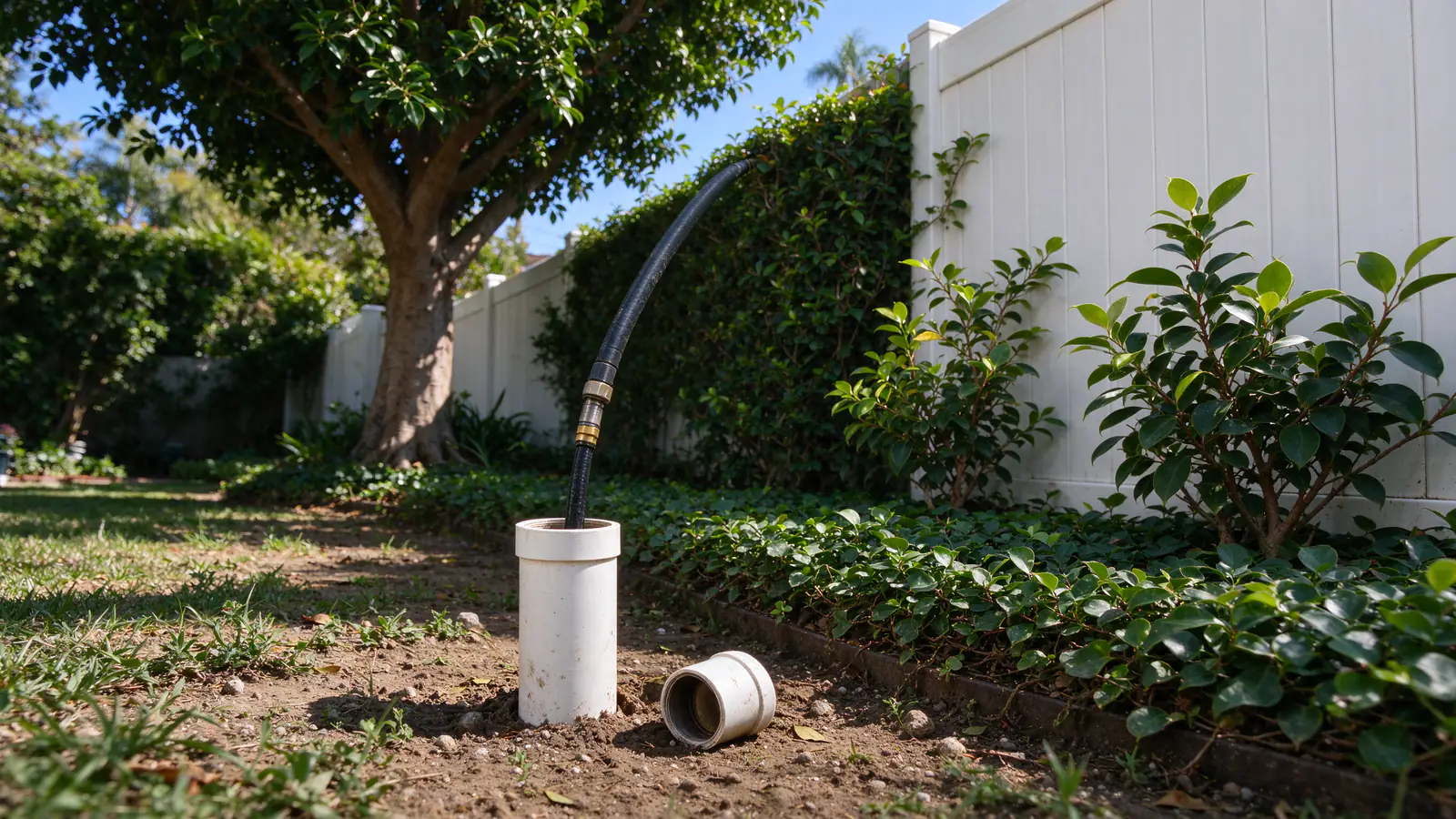
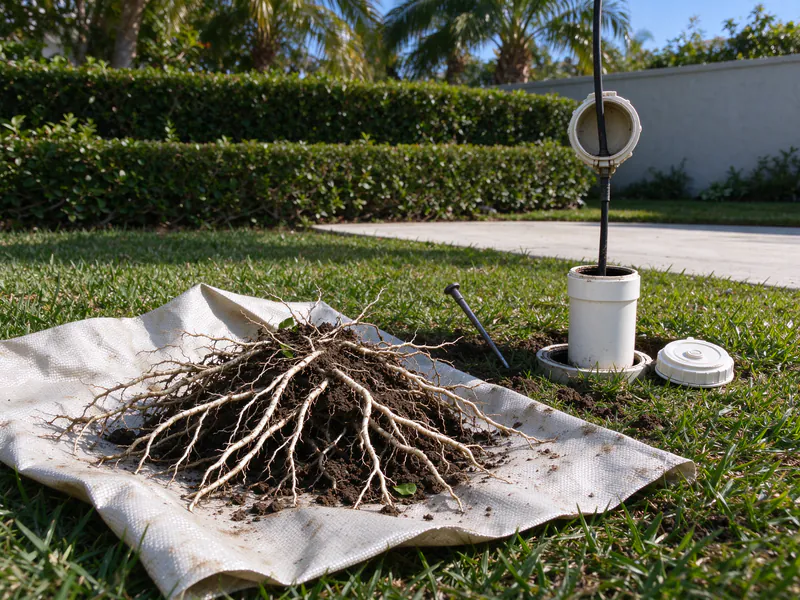
The line backs up, someone clears it, and a year later the roots are back. Roots in a sewer line point to a pipe with a way in: an open joint, a crack or a failed seal. San Diego Swift Sewer Line Repair clears roots by cable or hydro jetter, and then we look at the openings they used.
Clearing and repairing are different jobs, and this page is mostly about the gap between them. Clearing restores flow today. Repair closes the openings that let roots in. We decide which one your line needs from a camera inspection after the roots are cut, not from how bad the backup was.
How did roots get into your line?
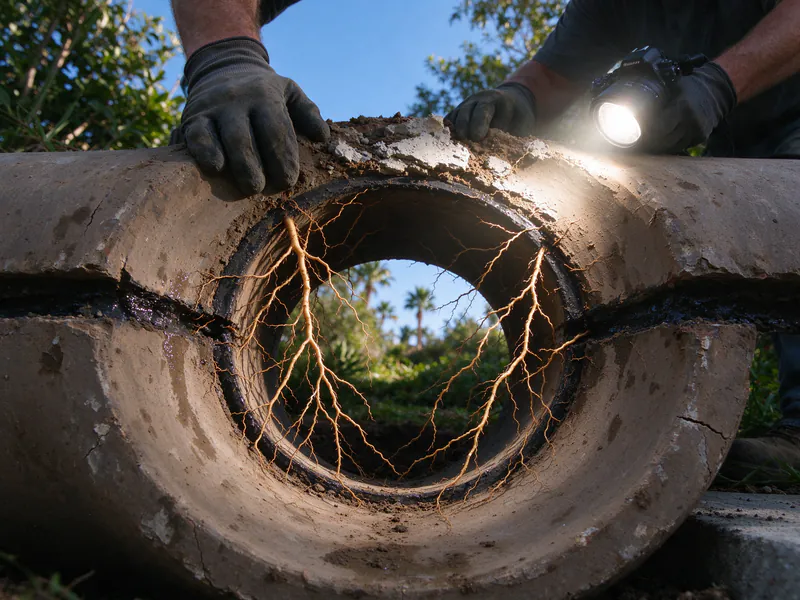
Roots grow toward moisture and nutrients, and a sewer lateral offers both. Older pipe was laid in short sections, and each joint is a seam where a little water vapor escapes into the soil. A hair-thin root finds the seam, enters, and then grows inside the pipe where water and nutrients are constant. Over months it becomes a mat that strains paper and solids out of the flow until the line clogs.
Clay joints are the classic entry point, followed by cracked or corroded sections of cast iron and the joints of older fiber pipe. Solvent-welded PVC with intact joints resists roots well, though a cracked fitting or a poorly made joint can still let them in. The City’s lateral fact sheet makes a similar point: newer plastic laterals with sound joints may go years without problems, while older clay, concrete and cast iron lines are more prone to root intrusion.
Grease works the same way from the other side. It cools and clings to the pipe wall, narrowing it, and a root mass downstream of a greasy stretch catches far more debris. Roots and grease tend to work together.
Should we cable it or jet it?
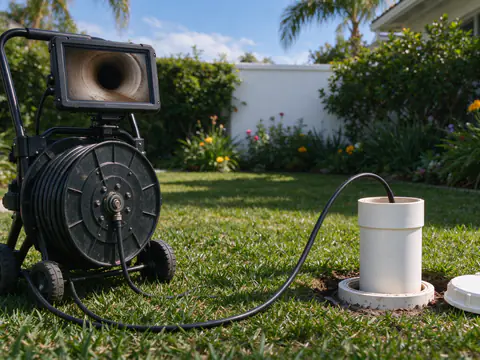
Both restore flow. A cable with a cutting head opens a path through the roots, is the simpler of the two, and is a reasonable first clearing on a sound line. Hydro jetting scours the full pipe wall, removing root fibers, grease and sludge that a blade leaves behind, which makes it the better choice before a camera inspection or a lining job.
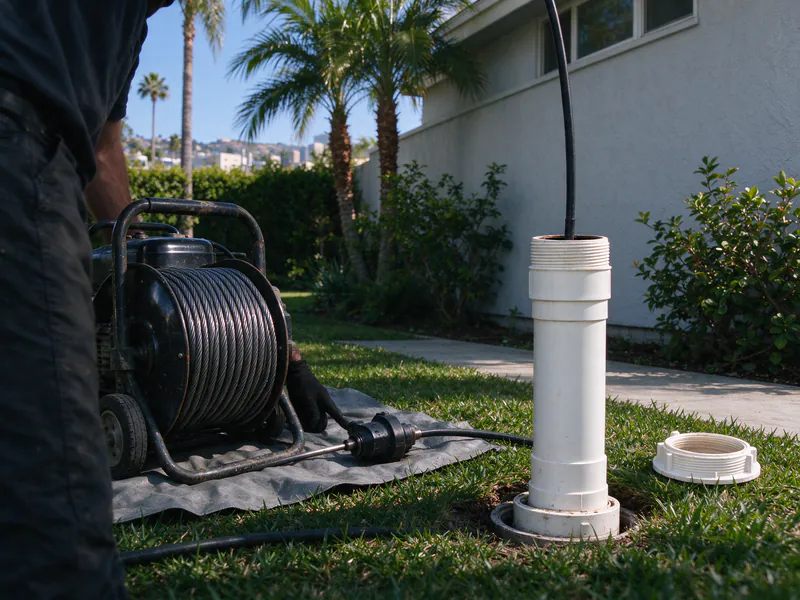
Mechanical cleaning means we feed a spinning steel cable through the cleanout. The cutting head chews through the root mass and the line drains again. It leaves stubs at each joint, which regrow quickly, and does little about grease coating the wall.
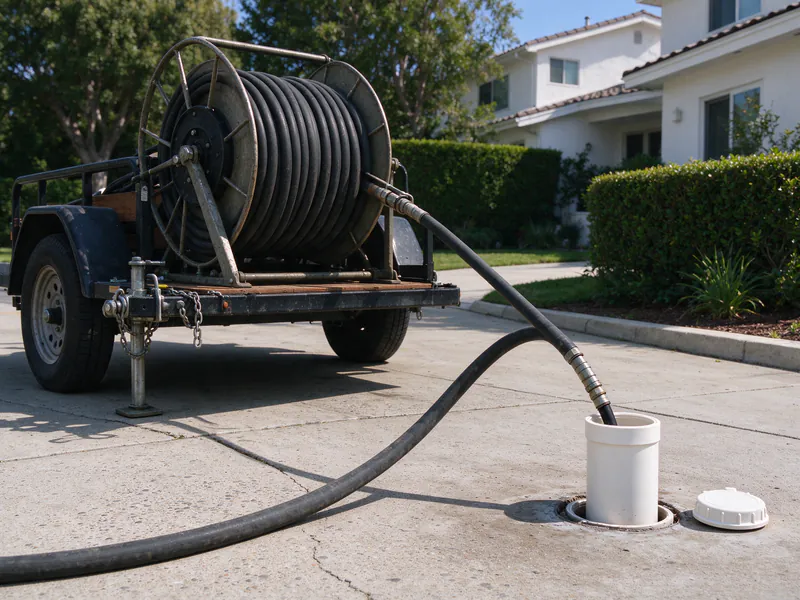
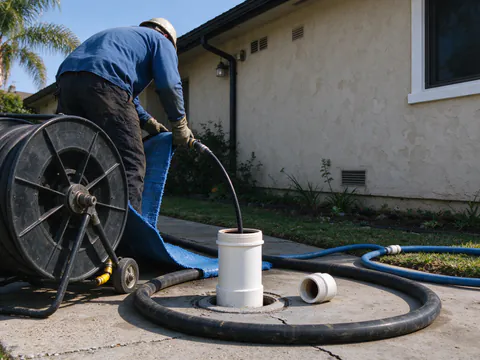
Hydro jetting sends water at high pressure through a hose with a nozzle whose rear-facing jets pull it forward and scour the pipe as it goes. Root fibers, grease and sludge wash downstream. The trade-off is pressure: on a pipe with open cracks, missing pieces or cast iron worn thin, the jet can enlarge a defect. That is why a short look with the camera before jetting is a sensible habit on an old line. Our guide comparing hydro jetting with sewer repair goes further into that choice.
Our typical range for hydro jetting or root clearing is $350 to $600 a job. Access, the length of the line and how heavy the roots are move it, and your final price comes from a written quote after we see the job.
When does clearing stop being enough?
Root removal treats the symptom. The cause is the opening, and the opening stays after the cut. That’s why clearing alone eventually stops being the cheaper path.
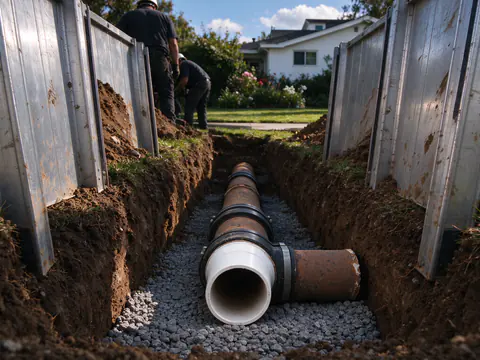
The camera after clearing answers the deciding question: how many joints are letting roots in, and are they still aligned? A line with one or two entry points and otherwise sound pipe is a candidate for a spot repair or a short sectional liner at those joints. A line with roots at joint after joint, from house to street, is a candidate for lining or replacement. Where roots have pushed joints out of line or cracked the pipe, the damage is structural, and cleaning will keep failing. Our guide on how to get rid of roots in a sewer line lays out each option and its limits.
Watch the interval between clearings. If your line went three years after the first cleaning and eight months after the last, the openings are getting larger or more numerous.
Clearing the same line every year?
Send the dates of the last few clearings and any footage, and we'll say what the pattern suggests.
Is a tree over your line?
San Diego’s rules treat trees and laterals as poor neighbors. The City’s Wastewater Review requirements say no trees or shrubs taller than 3 feet at maturity may be planted within 10 feet horizontally of a sewer main or lateral. Under DSD Information Bulletin 166, a new lateral installed within 10 feet of trees has to be a private encroachment lateral with an Encroachment Maintenance and Removal Agreement. The Public Utilities Department’s spill-prevention advice is simpler: plant trees and bushes away from the lateral connection.
Those rules govern new work, but they explain old problems. Plenty of established San Diego yards have a mature tree within a few feet of a lateral laid decades before the rule. When you plan a new planting, a locate of the line’s path shows where the 10-foot setback falls.
Who pays when roots stop the line?
In the City of San Diego, roots are the owner’s problem. Council Policy 400-10 makes periodic rodding to remove roots from any source the owner’s responsibility, and the City’s operations policy bills the owner for a City response if the stoppage could have been prevented by owner maintenance. The fact sheet adds that there’s no limit on how many owner-paid cleanings a line can need before the City takes over, and no reimbursement of plumbing costs. Clearing the line again and again does not shift responsibility.
A backup caused by a blockage in the City’s main is different, and the City’s claims policy may cover cleanup and damage; our guide on what to do when your sewer backs up explains how to tell the two apart in the first hour.
How do you keep roots from coming back?
There is no permanent cure short of closing the openings. Between clearings, keep grease and wipes out of the drains, keep the cleanout accessible, and plant new trees well away from the line. In County sanitation areas such as Spring Valley, the County suggests yearly professional cleaning and a camera every three to five years. When the interval keeps shrinking, get an estimate with the footage and clearing history and we’ll tell you what the pattern means; the signs of a broken sewer line can help you decide how urgent it is.