 San Diego Swift
Repair a sewer line when the camera shows a defect in one place and the rest of the pipe is sound; replace it when the defects are spread along the line, the pipe has lost its grade, or the material is failing the same way from end to end. Most decisions are not close once the footage is in, because the pattern of the damage does the deciding.
What makes it feel close is price. A single repair costs less today, and San Diego Swift Sewer Line Repair prices both options when the footage leaves room for either. This guide explains what tips the balance: the pattern of defects, the material, the grade, the history of the line and, in San Diego, the street section.
What counts as a repair, and what counts as replacement?
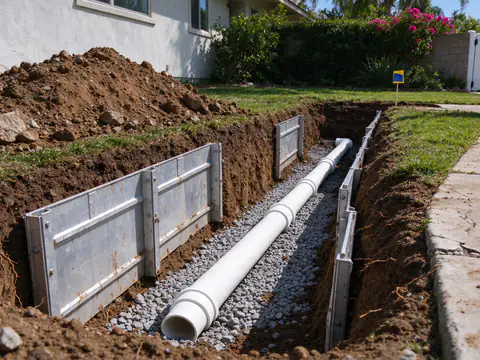
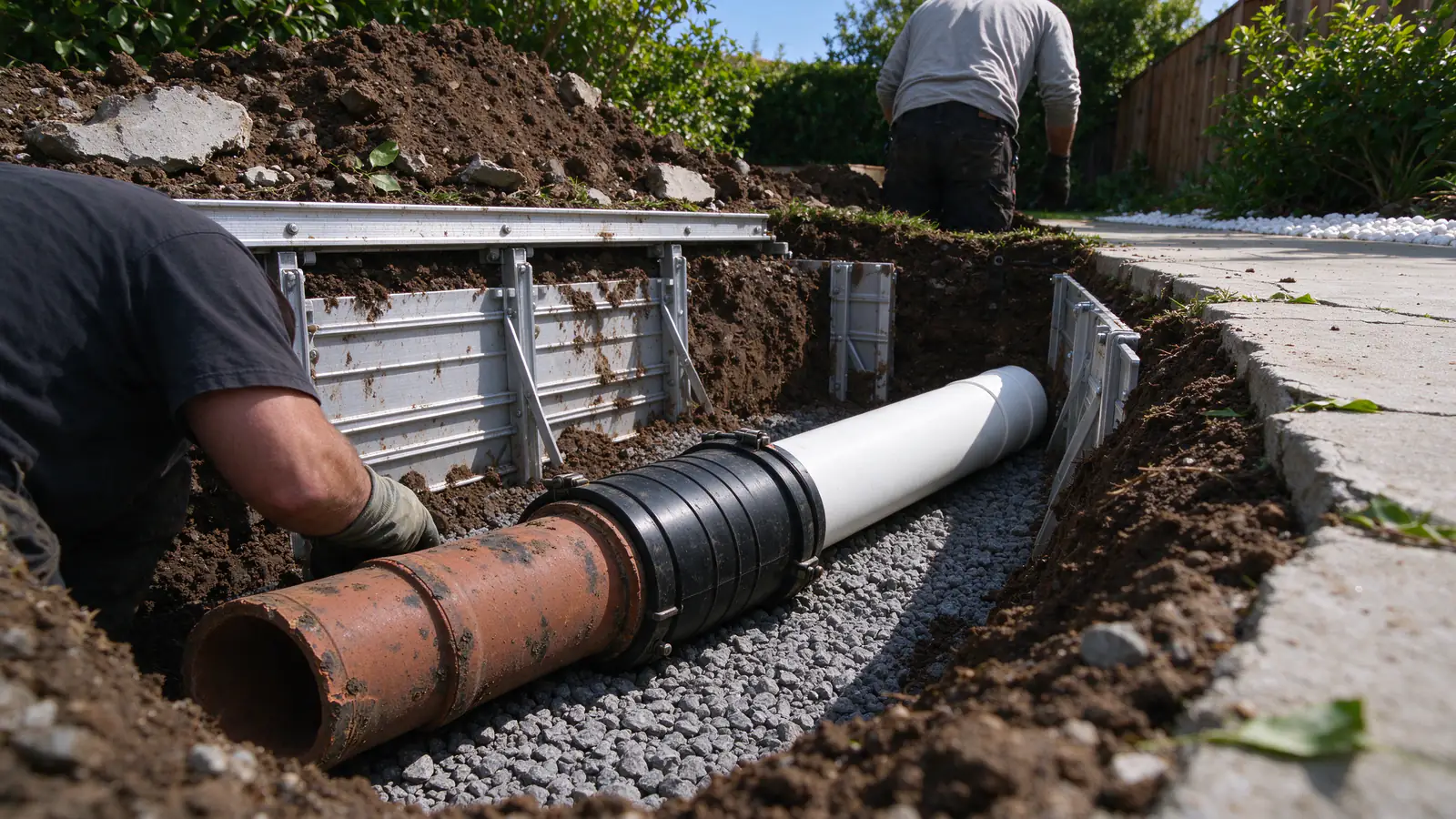
A repair fixes one defined length of an existing lateral, either by digging out and replacing that section or by setting a short sectional liner over it. Replacement gives the whole lateral, or the whole of one side of the property line, a new pipe wall, by trench, bursting or full-length lining. Cleaning is neither: it restores flow without changing the pipe.
That last line matters because it is where owners lose money. Cutting roots or jetting grease is maintenance, and it is the right first step for a stoppage, but it does not close the joint the roots came through. A line that needs clearing every few months has a structural problem that cleaning is paying around, and the City of San Diego is clear that there is no limit on owner-paid cleanings and no reimbursement for them. Our page on root removal covers what cleaning can and cannot do.
When a repair is enough
- One defect, sound pipe either side. A single crack, a broken section from a fence post or a lone offset joint, with the camera showing round, open pipe on grade before and after it. This is what a spot repair is for.
- Newer pipe with an installation fault. A PVC lateral with one poorly made joint or a damaged section is a repair case; the rest of the pipe has decades of the same material around it.
- A bad transition. Where an earlier repair joined new pipe to old with a mismatched coupling, the fix is often that one connection.
- An accessible location. Our typical range for an excavated spot repair is $1,500 to $5,000, and it sits at the low end when the defect is shallow and under soil.
When replacement is the better decision
- Defects spread along the line. Roots at joint after joint, cracks at several points or offsets the length of a clay run mean the pipe is failing as a system. Fixing the worst spot leaves the next one waiting.
- The material is aging uniformly. Cast iron that is scaled and channeled along its whole length, or fiber pipe going oval, is not going to hold up between repairs. See cast iron sewer replacement.
- The grade is wrong. A belly that holds water is a slope problem, and one repaired section can leave the lateral sagging on either side. Fixing grade means relaying the affected length on proper bedding, which is a trench by another name; belly repair explains the options.
- Repairs are stacking up. Two or three repairs in a few years on the same line, each with its own dig and restoration, can approach the cost of doing the run once.
- The repair methods do not fit. A collapse with soil packed into the pipe, or a section too deformed to line, may push even a “spot” fix into a dig large enough that extending it makes sense. See collapsed sewer line repair.
How the camera footage tips the decision
The useful question to ask of the footage is not “is there a problem” but “what is the pipe like between the problems.” Look for four things in the sewer camera inspection: the material and whether it changes, the number and spacing of defects, any standing water, and the condition of the pipe on either side of the worst spot. A report coded by footage lets you map that out; our guide to reading a sewer camera report shows how.
Material gives you the background odds. The City’s own lateral fact sheet notes that newer plastic laterals with intact joints can go years without problems, while older clay, concrete and cast iron lines tend toward root intrusion and deteriorated sections. In older ZIP codes such as 92104 around North Park, 21.3 percent of homes were built before 1940, against 6.4 percent citywide, so an original lateral there has had a long time to age. Our guide to what sewer pipe your house has shows what each material looks like.
Repair or replace?
Send the footage and the address; we'll tell you whether the damage is in one place or spread along the line, and price the options that fit.
The San Diego factors: the street, the main and the sale
The street section. In the City of San Diego the owner is responsible for the lateral all the way to the main. If the defects are on the private side and the street run is sound, the decision can stop at the property line. If the street section is defective too, replacing it brings a Right-of-Way Permit, a $1,412.54 inspection per lateral, traffic control and resurfacing, and that cost often decides whether the street run is lined or dug; see street sewer lateral repair.
Reusing the connection. SDMC 64.0402 says a lateral already serving a lot on a paved street must be reused unless the City grants an exception. In practice, a replacement usually reconnects at the existing point on the main rather than opening a new one.
A home sale. There is no point-of-sale lateral ordinance in the City, so a buyer’s scope is a negotiation, not a requirement. The footage and a written scope with a price give both sides something concrete; a home-buyer sewer inspection covers what to ask for.
Putting numbers on both
Price the repair, then price the replacement, and compare them against the life left in the pipe that the repair does not touch. Our typical range for lining a full residential lateral is $4,000 to $15,000, and for trench replacement $50 to $250 per foot before permits and restoration; your final price comes from a written quote after we see the job. The cost guide shows how those build up, the full sewer line replacement page explains the methods, and how to compare sewer repair quotes helps when one bidder says repair and another says replace. Get an estimate and we’ll price both.