 San Diego Swift
Your older house keeps clogging even after the line is cleaned, there’s a sewer smell indoors, or a scope shows a rough, rusty pipe with a trough worn in the bottom. Cast iron sewer pipe replacement in San Diego can cover two different pipes: the building drain under the house, which may run beneath a slab, and the lateral that carries waste from the foundation to the City main. Cast iron was a standard choice for both in older homes, and it fails in a characteristic way, from the inside out. San Diego Swift Sewer Line Repair replaces and rehabilitates cast iron drain and sewer lines across the City and nearby San Diego County.
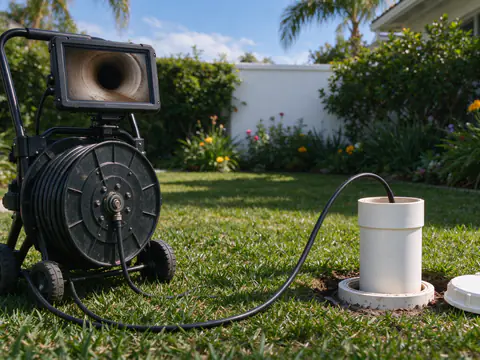
The useful question is not whether your pipe is old but how much wall it has left. A camera run after descaling shows us that, and it decides whether a run can be lined, needs a section replaced, or has to come out end to end.
Why does cast iron fail?
Cast iron is strong and quiet, which is why it was used inside houses, but it is iron, and it corrodes. The City’s lateral fact sheet lists cast iron with clay and concrete among the older lateral materials that may have deteriorated sections and need regular inspection or more frequent cleaning.
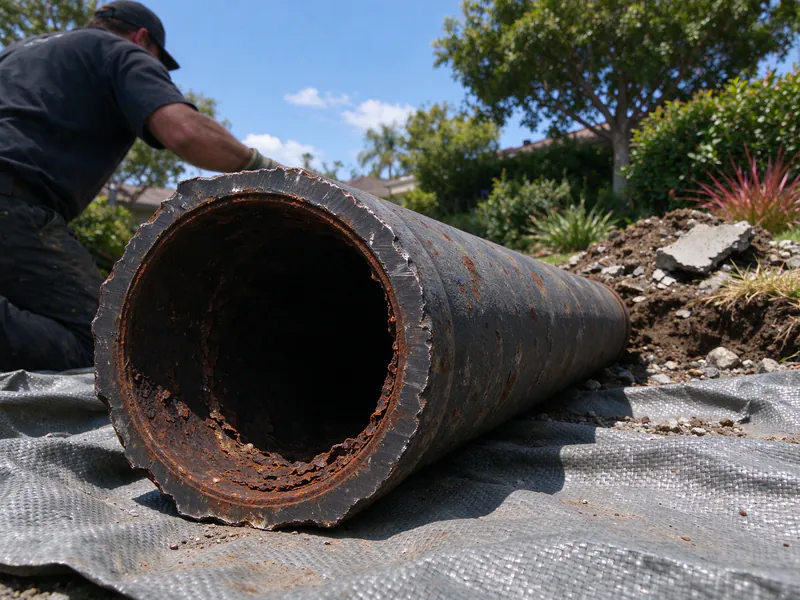
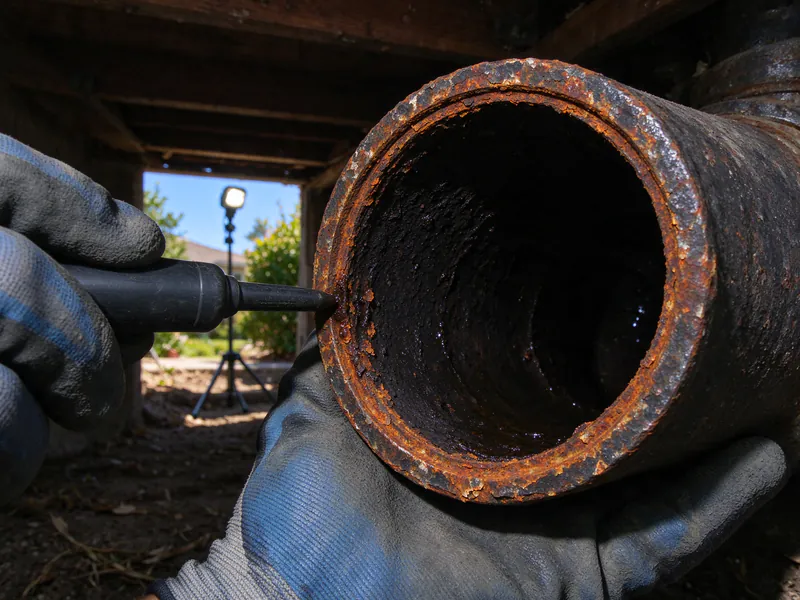
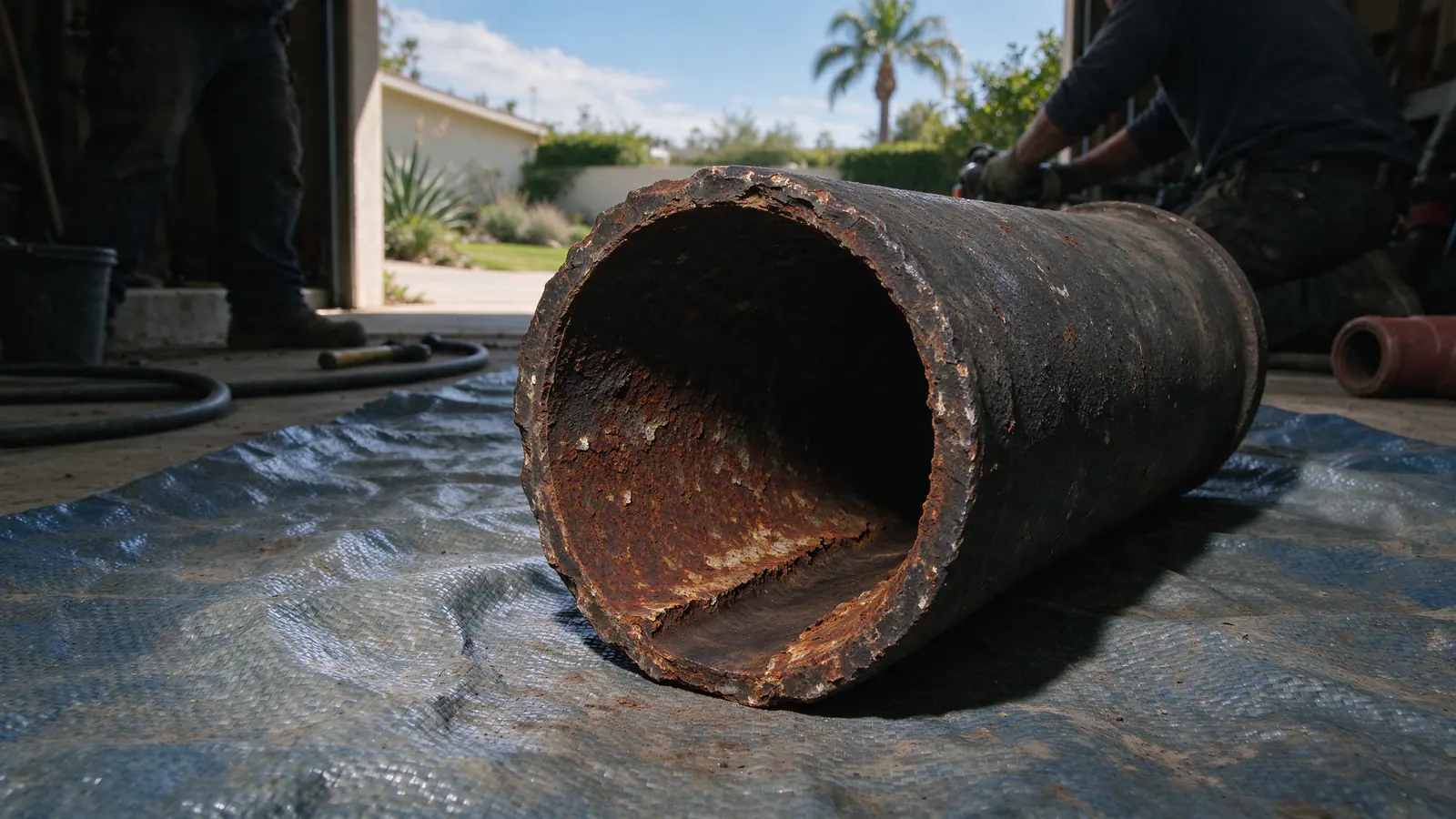
Corrosion works on the inside of the pipe in two places. Above the waterline, moist sewer gas attacks the upper wall and builds rust and scale. Along the bottom, constant flow and the grit it carries abrade the wall as it corrodes. Soil chemistry and moisture can attack the outside too, so a pipe can thin from both faces.
The result is a pipe that looks solid from outside and fails inside. Our guide to what sewer pipe your house has shows how cast iron compares with clay, fiber and plastic on camera.
What the camera finds inside cast iron
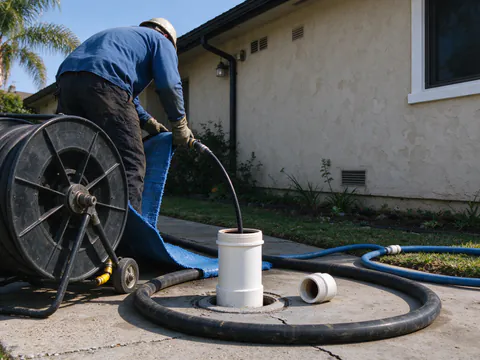
Scale and tuberculation. Rust builds up as hard, lumpy growths on the inner wall, called tubercles. They narrow the bore and give paper and grease something to catch on. A cast iron line that clogs again soon after cleaning is often a scaled line rather than a blocked one. A cable may punch a hole through the buildup without clearing it; our descaling tools grind it back to the wall.
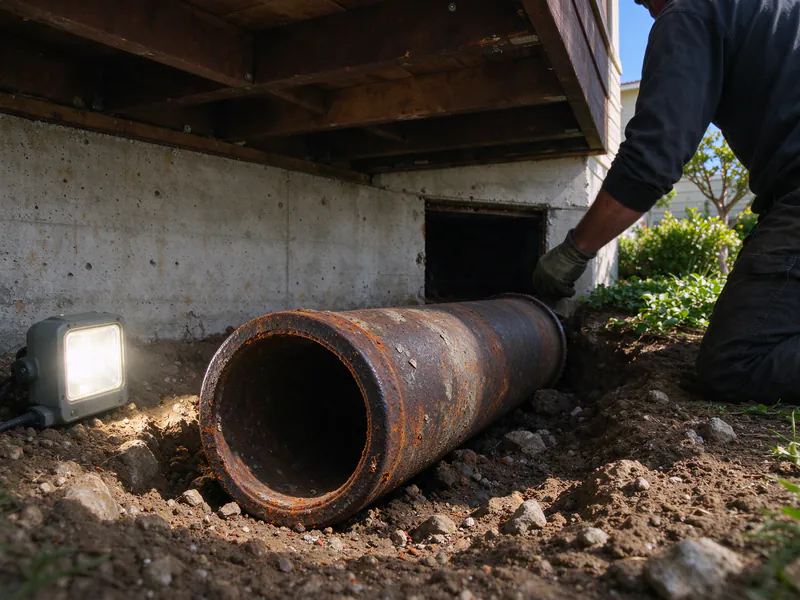
Channeling. Along the invert, the bottom of the pipe where water always runs, corrosion and abrasion wear a groove. Early channeling is a rough trough. Advanced channeling becomes a slot open to the soil below, and on a building drain under a slab that means wastewater leaking under the house and soil washing into the pipe. The top half of the pipe may look nearly intact on camera while the bottom is gone.
Cracks. Thinned walls crack, often lengthwise along the pipe. A longitudinal crack in cast iron usually marks a badly weakened wall.
Is the bad pipe under your slab?
In a house built on a concrete slab, the building drain runs beneath the floor, and in older slab homes that pipe can be cast iron. Problems there show up as backups in lower fixtures, sewer odor inside, damp flooring or a line that won’t stay clear. One painful version: a line jetted during escrow, a short close with no second scope, and backups soon after move-in that traced to eroded cast iron under newly installed cabinets. A home-buyer sewer inspection that looks back toward the house is the protection against that.
You have four ways to deal with failing pipe under a slab:
- Descale and line from a cleanout, where the wall is intact enough to carry a liner.
- Replace through the floor, cutting a trench in the slab along the run, laying new pipe at grade and patching the floor.
- Tunnel under the slab from outside, leaving floors and finishes alone. Depth and soil decide whether this is sensible, and it is excavation work with real collapse risk.
- Reroute, abandoning the old under-slab run and bringing new drains out by a different path.
We choose by what sits on top: a tiled kitchen with new cabinets argues for lining or tunneling; an unfinished garage floor makes cutting the slab simple.
Cast iron footage from a sale or a backup?
Send it over, and we'll point out the scale, channeling and cracks before anyone talks method.
Can your cast iron be lined?
Lining is attractive for cast iron because it avoids cutting floors. The process matters more than the product. We descale the pipe back to the wall, film the line again, and only then decide. A liner forms against the host pipe and relies on it for shape. It can bridge small pits and minor channeling in many systems, but where the bottom has rotted through to soil, pieces are missing, or the pipe has cracked along its length, we open and replace those sections before the rest can be lined. Lining also keeps the pipe’s existing slope, so any sag stays.
Our sewer pipe lining page explains the method, and trenchless sewer repair explains where it fits among the other no-dig options. A line that is too far gone for a liner is a replacement job, covered on our sewer line replacement page.
Replacing cast iron in the yard and under the street
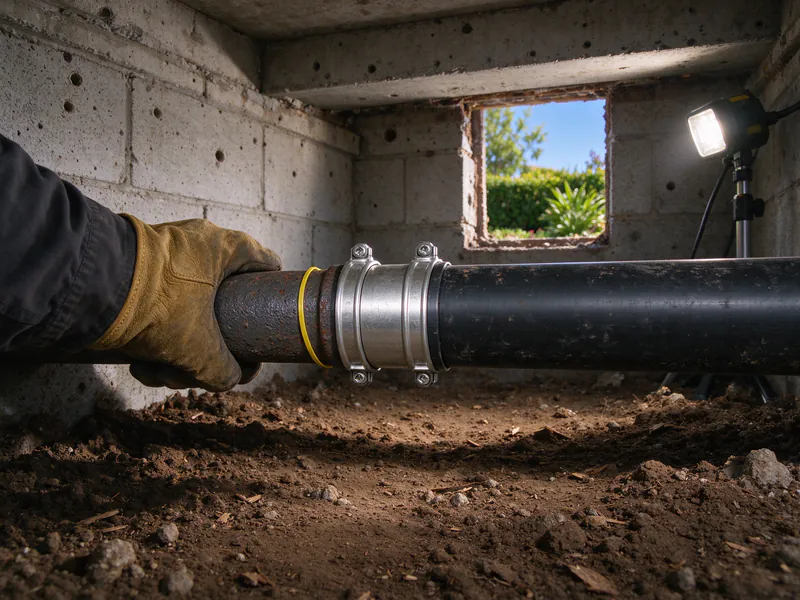
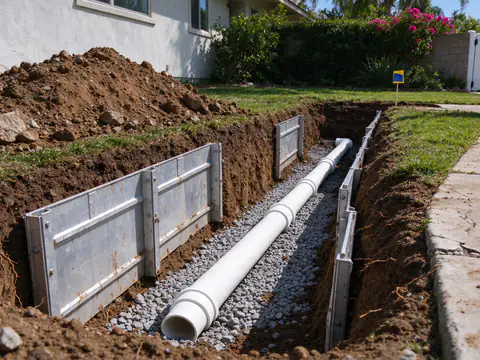
Outside the foundation, we replace a cast iron lateral much like any other: by trench, by pipe bursting where the path is usable, or by lining where the pipe allows. New pipe is usually PVC, joined to any remaining cast iron with listed transition couplings. In the City, you are responsible for the lateral to its connection at the main, so a cast iron section under the sidewalk or street is yours to fix, with a right-of-way permit. City projects have replaced cast iron and clay mains in neighborhoods such as La Jolla, but those are public mains, not private laterals.
Permits, apartment buildings and cost
For single-family and duplex homes, the City’s Simple No-Plan plumbing permit covers repair or replacement of drains and sewer piping on non-historic properties. Older apartment buildings with cast iron stacks and building drains are larger jobs with their own scheduling for residents; our commercial sewer line repair page covers that work.
Cost follows access more than material. Our typical ranges are $80 to $250 a foot for lining, $60 to $200 a foot for pipe bursting and $50 to $250 a foot for trench replacement, before permits and restoration; under-slab work adds floor cutting and patching. Your final price comes from a written quote after we see the job, and our replacement cost guide explains the ranges by method. When you have footage or an address, get an estimate.