 San Diego Swift
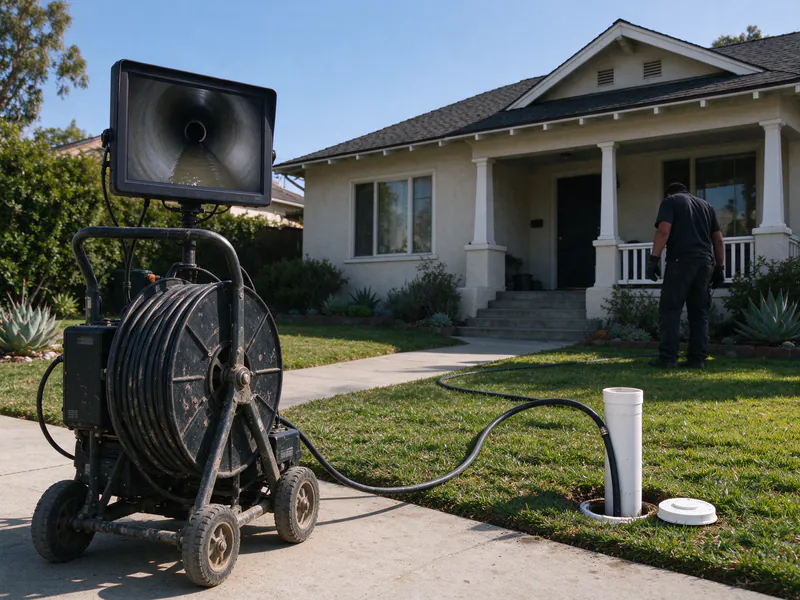
You’re in escrow, the contingency clock is running, and nobody has looked inside the sewer line. Buying a house in San Diego means buying its sewer lateral too, and in the City of San Diego that pipe belongs to the owner from the house to the City main, street section included. San Diego Swift Sewer Line Repair scopes sewer lines for buyers in escrow, so you know the condition of that pipe before the contingency deadline instead of after the first backup.
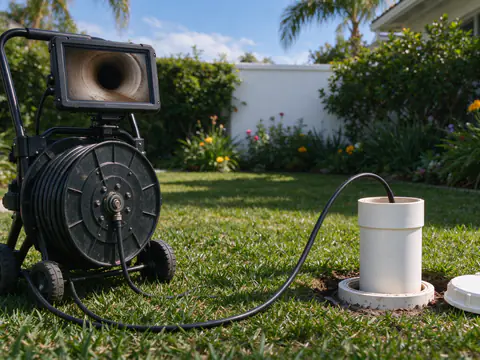
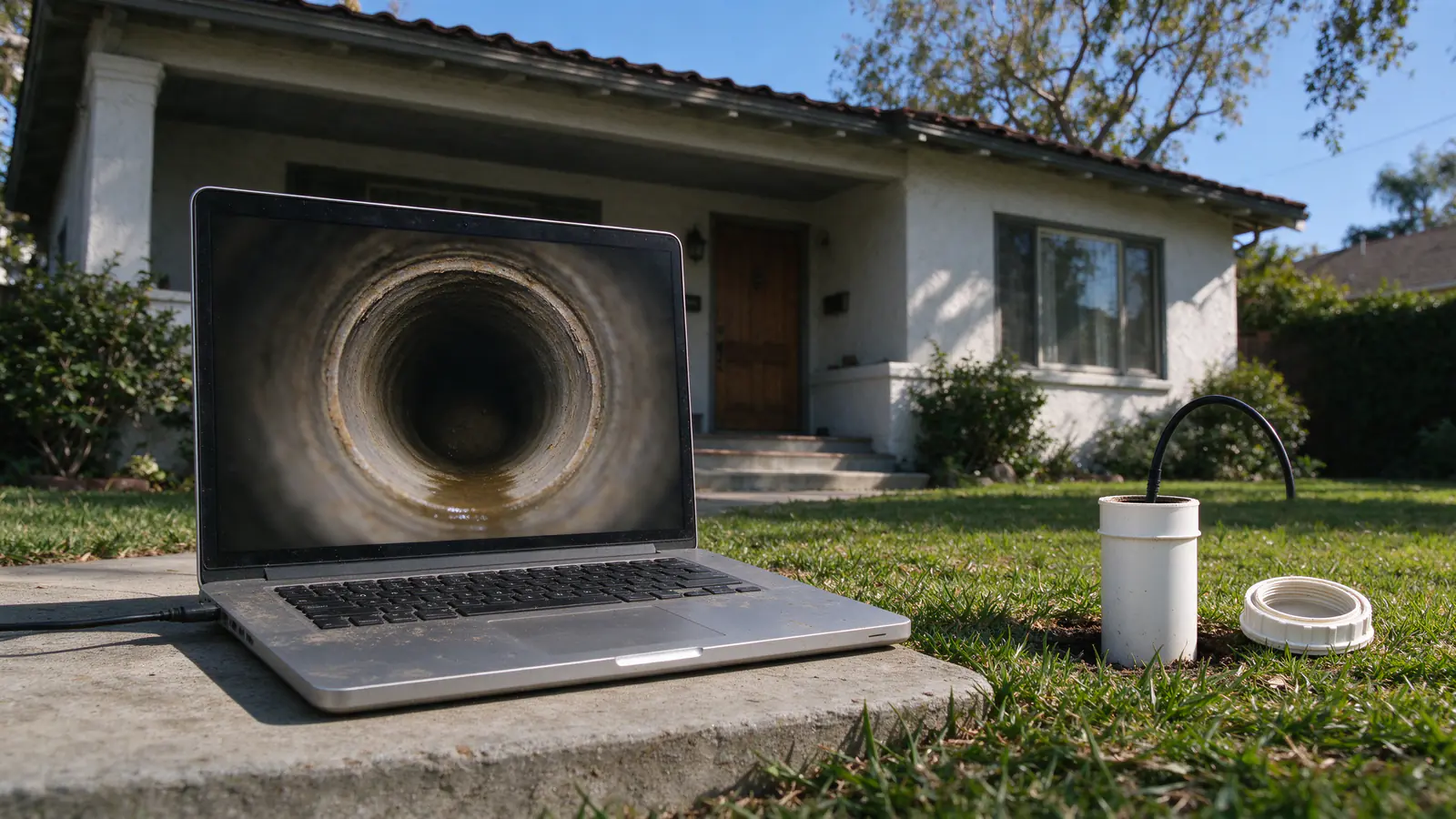
No ordinance requires the scope. The City has no point-of-sale lateral ordinance, and the other agencies in the county don’t require one at sale either; your city or district can confirm for the address. What the City’s Public Utilities Department does say is that it is a good idea for a buyer to get a licensed plumber’s report on the lateral. In practice that report is a sewer camera inspection with a locate, booked during your inspection period.
Should you get a sewer scope when buying a house?
Usually, yes, and especially on an older San Diego home. Our typical range for a scope is $100 to $500, while the repairs it can reveal run into the thousands. It also gives you evidence to negotiate with while the purchase can still change, which disappears at closing.
Age is a fair reason for extra caution. Census data puts about half of the City’s housing stock before 1980, and some older ZIP codes run much higher: 21.3 percent of homes in 92104 around North Park and 21.7 percent in 92103 around Mission Hills were built before 1940. A house from that era may still drain through its original clay or cast iron line. Age doesn’t tell you condition, but it does tell you the camera may find something worth knowing.
What your scope should cover
A buyer’s scope is only as useful as what it covers. Whoever you book, make sure you get:
- The full run to the main. A scope that stops at the property line misses the street section you will be responsible for. If the camera can’t reach the main, the report should say where it stopped and why.
- A locate. Distances on a counter mean little to a negotiation. Marks on the ground showing where a defect sits, under lawn or under the driveway, change the repair price.
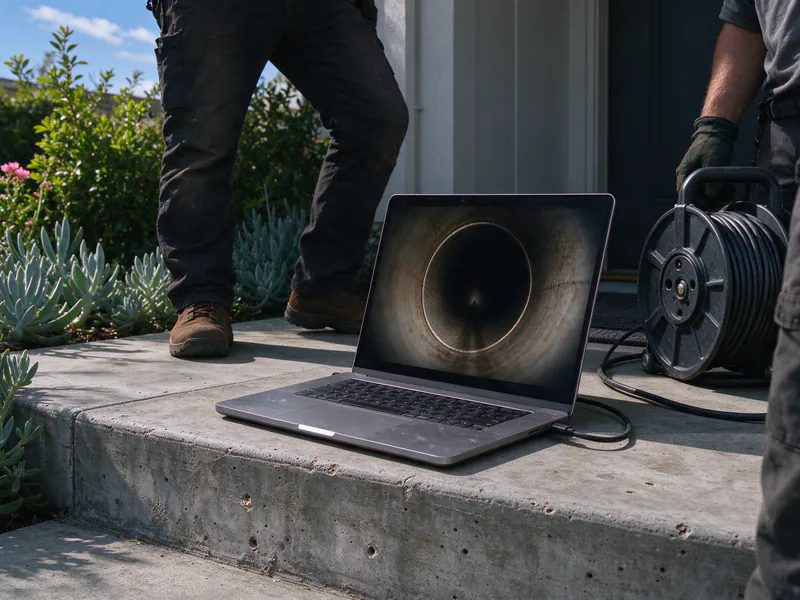
- The video file. A written summary is an opinion; the footage is the evidence. Keep a copy that you, a second contractor or a lender can watch.
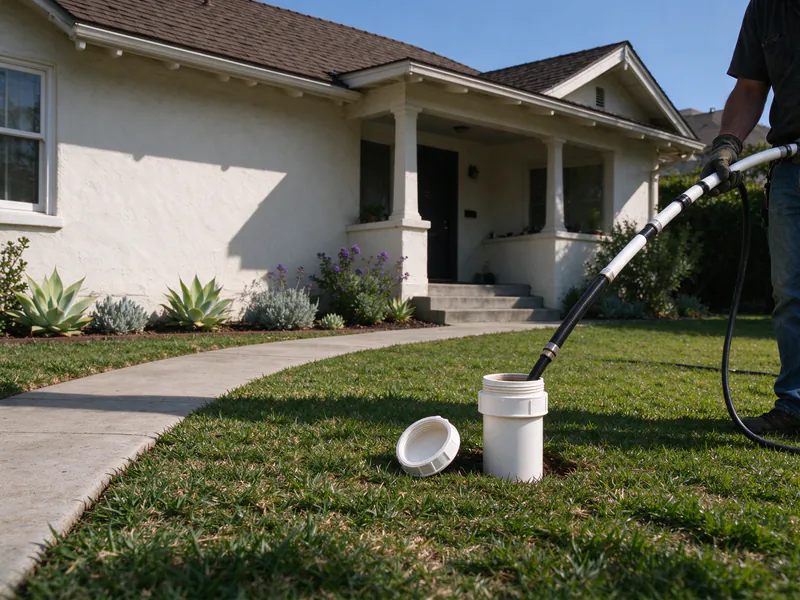
- Both directions where possible. From a two-way cleanout, the camera can look back toward the house as well. On an older home with cast iron under the slab, that look is worth having.
- A note on cleaning. If the line had to be cleared to see, the report should say so.
Was the line jetted just before your scope?
Jetting before a sale is common and not always sinister. It clears roots and buildup so the camera can see. But it also removes the most visible sign of a problem. A clay line with open joints can look clean on the day of the scope and fill with roots again before long.
That pattern plays out in San Diego sales: roots found during escrow, the line jetted but not rescoped because the close was short, and backups starting right after move-in that later traced to eroded cast iron under the slab. If the seller cleaned the line, ask for the pre-cleaning footage or a fresh scope after cleaning. Watch the joints, not the flow. Our guide to reading a sewer camera report explains what an open joint, an offset or a belly looks like on screen.
Contingency clock running?
Send the address and the deadline, and we'll tell you what a scope can cover in that window.
How do you turn the footage into a number?
A finding in escrow becomes a number only when it is written as a repair. A video showing “roots at 22 feet and an offset at 41 feet” needs a scope that names the method, the length and whether the street is involved before anyone can price it, and that is what our written quote gives you. With that in hand, buyers and sellers settle one of three ways, compared in the table above: the seller repairs before closing, the seller gives a credit or lowers the price, or the buyer accepts the line and plans for it.
Each has trade-offs. A seller repair is done on the seller’s timeline by the seller’s contractor, so ask for the City permit, the final inspection record and a post-repair scope. A credit lets the buyer choose the method later, but the repair can grow once digging starts, so the scope should be specific about depth and surface. Accepting the line makes sense when findings are minor, such as light roots in a sound pipe that root removal can manage.
Comparing two repair bids during escrow is its own skill; our guide on comparing sewer repair quotes lists what each should state.
Is the problem under the street?
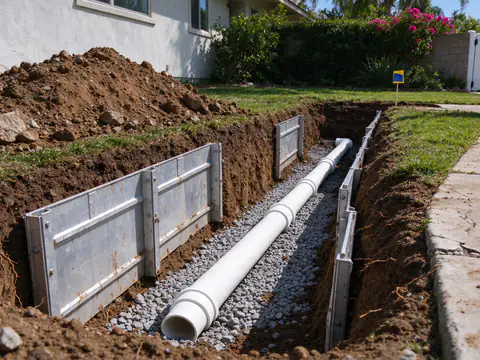
Plenty of buyers assume the City owns the pipe under the street. In San Diego it doesn’t. The owner is responsible to the connection at the main, and the City steps in only when service is completely lost and a plumber files a report. A defect found under the sidewalk or street therefore becomes your job after closing, with a right-of-way permit, a City inspection and traffic control if the street is opened. Our guide to who is responsible for the sewer lateral covers the details, and street sewer lateral repair covers the work itself.
Outside the City, the answer depends on the agency. Poway cleans from a property-line cleanout to the main, and Escondido puts the street section on the owner and requires a City permit even for private-side repairs.
Will insurance or a warranty cover it after closing?
Most homeowners policies cover sudden water damage inside the house and exclude the lateral itself. The service line warranty the City promotes is a private plan with its own terms, so read what it says about conditions that existed before you enrolled. Our insurance guide covers the gaps.
If you’re in escrow now, get an estimate with the address, the contingency date and any footage the seller has already shared.