 San Diego Swift
Trenchless sewer repair is worth it when the costly or disruptive part of the job is what lies on top of the pipe, and the pipe itself is a good candidate for lining or bursting. Under a driveway, a mature tree, a historic front walk or a recently paved street, it can save most of the restoration. Under a shallow lawn, or on a line that has lost its slope, a trench is often the better buy.
The honest answer depends on your lot and the footage, so San Diego Swift Sewer Line Repair prices both where both are possible. This guide explains how to weigh them. The two trenchless methods are compared in detail in pipe lining vs pipe bursting; this page is about whether to go trenchless at all.
Where the money in a sewer job actually goes
The pipe is rarely the expensive part. Per foot, our typical ranges overlap: $80 to $250 for lining, $60 to $200 for pipe bursting and $50 to $250 for open-trench replacement. With that much overlap, the price difference between methods is decided by everything around the pipe: digging, hauling, shoring, backfill and, above all, putting the surface back.
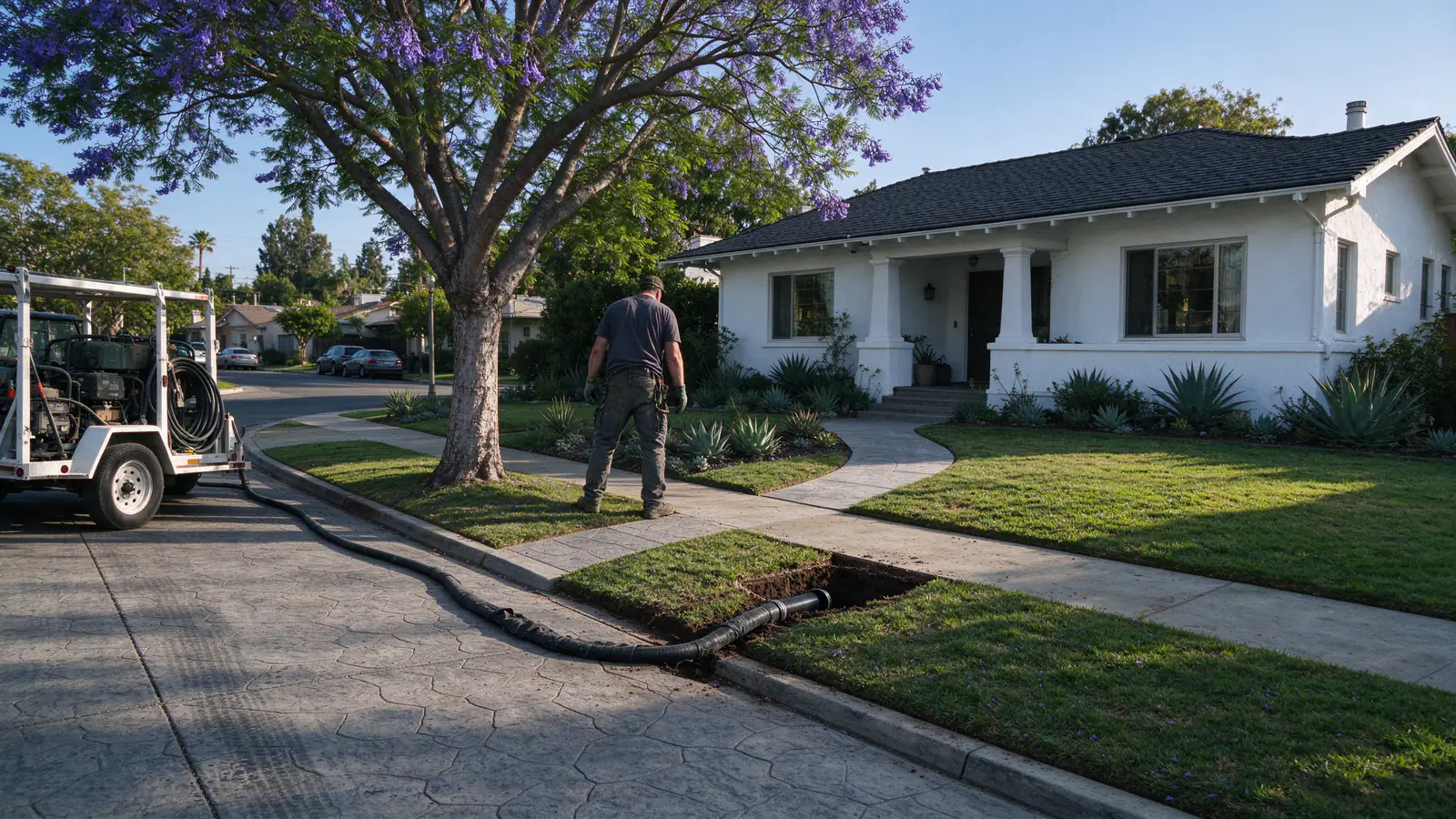
That is why the same 60 feet of lateral can favor different methods on different lots. A trench across a lawn is mostly soil and sod. A trench through stamped concrete, pavers, a block wall and the roots of a mature tree is mostly restoration, and restoration is where trenchless pays for itself. Our trenchless cost guide breaks the method prices down further.
When is trenchless worth it?
It earns its keep when the pipe is a good host for a liner or a good candidate for bursting, and the ground above it is costly or slow to disturb. Common cases are hardscape over the line, trees you want to keep, a historic setting, tight side yards, and street sections where the City’s resurfacing rules make a trench in the pavement expensive.
- Driveways, patios and walls. Concrete that has to be saw-cut, broken out and replaced, and walls that have to be shored or rebuilt, often cost more than the pipework under them.
- Mature trees. A trench through a root zone can harm the tree, and City design rules keep trees and large shrubs 10 feet from public laterals for good reason. Lining from the cleanout avoids the root zone entirely.
- Historic districts. In districts such as North Park Dryden, Burlingame or Mission Hills, smaller disturbance to the front yard and walk can matter for the review as well as the restoration.
- The street. Under San Diego’s Street Preservation Ordinance, a street resurfaced within three years (one year after a slurry seal) needs an excavation moratorium waiver to open, and the City expects full-lane or curb-to-curb restoration to waive its Street Damage Fee. Lining the street section from a cleanout can reduce how much pavement is opened. Work at the connection is still right-of-way work under a City permit, so confirm what the address needs.
- Wet ground. Where shallow groundwater means dewatering, which needs a Groundwater Discharge Permit before any discharge to the sewer, a method with less open excavation shortens that problem.
When isn’t it worth it?
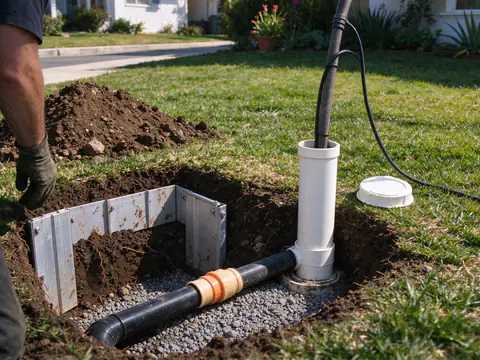
When the pipe can’t support the method, or when there is little on top to protect. A belly, several collapsed sections, a poor route, a lateral that runs too shallow or a line that needs to move all point to excavation. So does a short run under lawn, where a trench costs less and corrects the grade along the way.
- A belly or lost grade. A liner follows the shape of the old pipe, sag and all. Bursting can ease a shallow sag but not fully reset the slope. If water stands in the line on camera, belly repair comes first.
- Multiple collapses or severe offsets. Each one needs a dig before lining, or a pit for bursting. Enough of them and the “trenchless” job is a series of trenches.
- A route that needs to change. Both trenchless methods follow the existing path. A lateral under a planned addition, or one that does not meet the City’s standard design, may be better relaid where it should be.
- Shallow lines under soil. Little to restore means little to save.
What does “worth it” mean beyond the price?
Schedule and disruption count. A lined lateral usually has the house back in service sooner than a full trench, and the yard is usable sooner; our guide to how long sewer line replacement takes sets out what drives the timeline. Longevity is a fair question too, but no method comes with a guaranteed lifespan: a liner depends on the host pipe, the resin and how the cure was checked, and a trench depends on bedding and compaction. A final camera run after any method is the record of what you paid for.
Want both options priced?
Send the address, the footage and a photo of what sits over the line; we'll say whether trenchless is a real option and what it saves.
How to decide on your own lot
Start with footage from a camera inspection and a locate that marks the path and depth on the ground. Then list what sits on top of the line, foot by foot. If the pipe qualifies and the list is expensive, get a trenchless sewer repair price. If the pipe has a belly or a bad route, or the list is mostly lawn, compare it against sewer line excavation. Two quotes are easiest to judge side by side using our guide to comparing sewer repair quotes, and the sewer line assessment walks through the same questions. Get an estimate and we’ll price both methods where both are possible.