 San Diego Swift
Usually not for the pipe itself. Many homeowners policies are written around sudden, accidental damage to the house, and they treat a lateral that cracks, sags or fills with roots as wear, deterioration or a maintenance problem. What a policy is more likely to pay for is the mess a backup leaves inside, and often only if a backup endorsement was added.
That gap catches San Diego owners out because of who owns the line. In the City of San Diego the lateral is yours all the way to the connection at the City main, street section included, so a failure anywhere along it is your repair and, unless a policy says otherwise, your bill. San Diego Swift Sewer Line Repair is not an insurer and we can’t tell you what your policy covers, but we can give you the evidence an adjuster asks for: camera footage showing where the line failed and why.
Four kinds of “sewer coverage” that get confused
When someone says their sewer is covered, they can mean any of four different things, and only some of them pay for the pipe.
| Coverage | What it is for | Pays to fix the lateral? | Pays for damage inside? | What to check |
|---|---|---|---|---|
| Base homeowners policy | The house and belongings against sudden covered events | Rarely; many exclude wear, roots and settling | Often not for water that backs up through drains | The exclusions section |
| Water or sewer backup endorsement | Water that comes up through drains and fixtures | Usually not | Yes, up to the endorsement limit | The limit and deductible |
| Service line endorsement | Buried utility lines on the property, the sewer lateral among them | Yes, up to its limit | Varies | Whether the street section and restoration count |
| Separate service line warranty plan | A private repair plan outside your homeowners policy | Within plan limits | Usually not | Exclusions, waiting period and per-incident cap |
The difference between the second and third rows is the one most owners miss. A backup endorsement pays to dry out a bathroom; a service line endorsement pays to dig up or line the pipe that flooded it. A household can have one, both or neither, and the methods an endorsement might pay for are compared on our sewer line replacement page.
Does homeowners insurance pay to fix a broken sewer line?
Usually not under the base policy. Many policies exclude the slow causes behind most lateral failures, such as root intrusion, corrosion, settling and general deterioration. Some will respond to a line damaged by a sudden covered event, and some insurers sell a service line endorsement that pays for the pipe. Your policy’s exclusions page is where the answer lives.
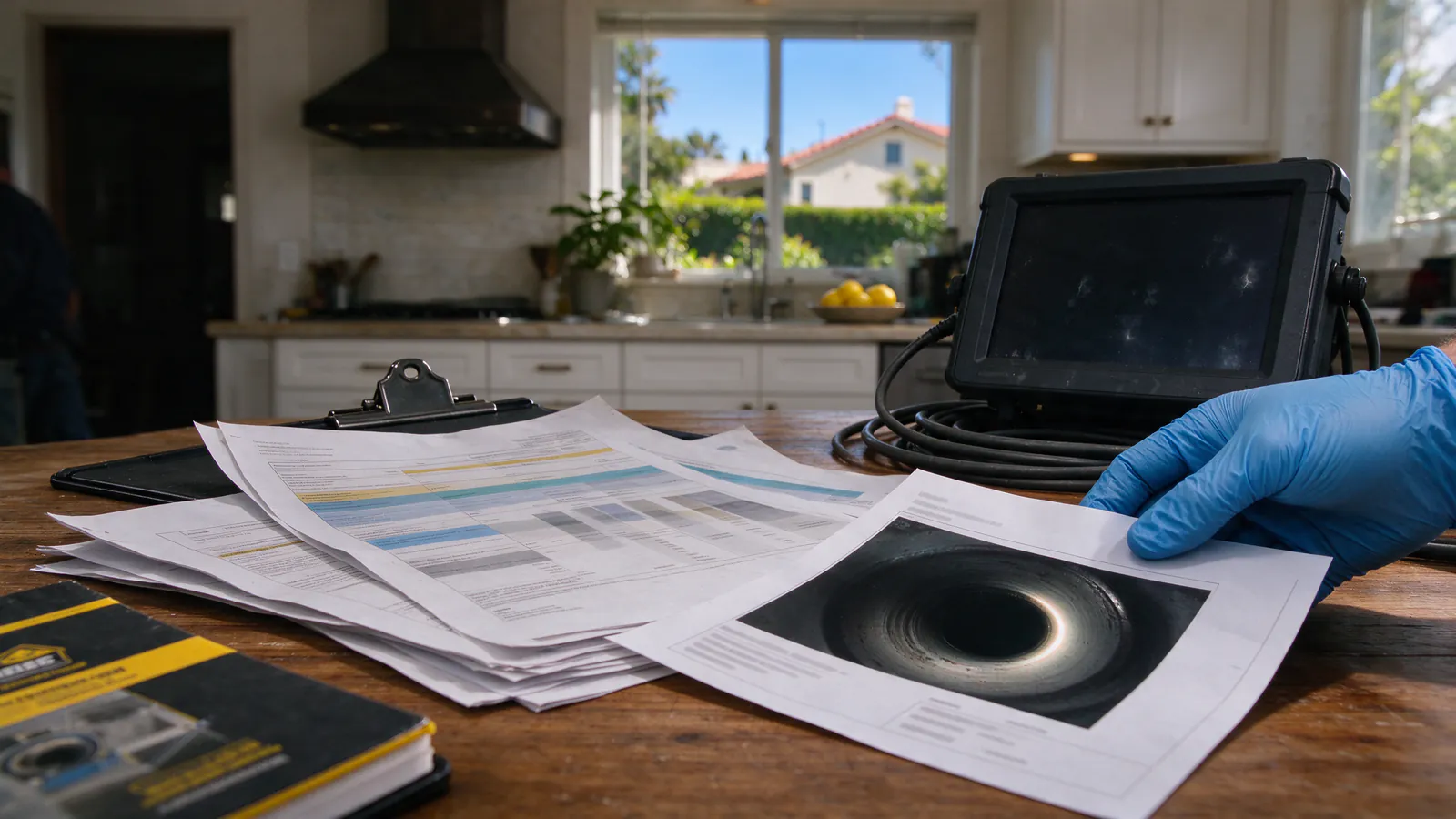
The reason is how a claim gets classified. An adjuster looks at the cause, and the cause is on the camera. Footage of roots packed into every joint of an old clay line, or of cast iron that has scaled and thinned from the inside, reads as deterioration over years. A clean break at one point with sound pipe on either side may read differently, depending on what caused it. That is why the footage and a written description of each defect matter more to the claim than the symptoms that sent you looking. Our guide to reading a sewer camera report explains what those descriptions mean.
Keep the distinction between cleaning and repair in mind too. A policy that pays nothing toward the pipe will not pay for root removal either, because clearing roots is upkeep. And clearing them restores flow without closing the joint they came through.
Does insurance cover sewage that backs up into the house?
Often only if the policy includes backup coverage. Many base forms exclude water that comes up through sewers or drains, and the endorsement that adds it back is sold separately with its own limit, which can be lower than the rest of the policy. The damage inside is one claim; the lateral that caused it is a separate repair.
In the first hours, what you document helps whichever claim follows: photos of the water line on walls and floors, the fixtures that overflowed, damaged belongings, and the plumber’s findings on where the blockage was. Our guide to what to do when your sewer backs up covers the first steps, and emergency sewer repair covers what happens when the house has no working drain at all.
When the City’s main caused the backup
Not every backup starts in the lateral. If the public main in the street stops up, sewage from the whole block can rise into the lowest drains on the street, and the City of San Diego has a written policy for that case. Council Policy 400-10 covers damage from main stoppages, pump station failures and water main breaks where the City had control and the owner was not at fault.
Where it applies, the policy provides emergency cleanup, adjustment for damaged real and personal property (depreciation can be applied), additional living expense if the home is unfit to live in, and reimbursement of reasonable plumbing bills tied to finding the problem once a main stoppage is confirmed. It excludes stoppages in the lateral, including roots “from any source,” as well as lost business or rent, your own labor, bodily injury and general damages.
The process is formal. Claims go to the City’s Risk Management in writing under the Government Code, most within six months of the incident, through the City’s Public Liability claims portal or on form RM-9; email is no longer accepted. A property claim needs an estimate and photos. A claim against the City and a claim on your own policy are separate filings, and making one does not make the other. Our guide to who is responsible for the sewer lateral in San Diego explains how a plumber establishes which pipe failed.
Need footage for a claim?
A camera inspection records where the line failed and what the defect looks like, which is what an adjuster or the City asks to see.
The service line warranty the City promotes
The City’s Public Utilities pages link a service line warranty as a preferred partner through the City’s corporate partnership program. It is a private plan, not City insurance and not a City repair program: the City does not run the plan or pay its claims.
Whether a plan like this is worth it depends on its terms, so read them with San Diego’s ownership rule in mind. Because the owner is responsible for the lateral to the main, the most expensive failure is often the one under the sidewalk or street, where a street lateral repair brings City permits, inspection and resurfacing. Check whether the plan covers that section, what the per-incident cap is, whether concrete and landscaping restoration count, whether known or pre-existing problems are excluded, and whether there is a waiting period after enrolling. Some policies offer no sewer line coverage at all, and if yours does, compare it with the warranty before keeping both.
Can you add coverage once the line is already failing?
Usually it won’t help with the problem you already know about. Many endorsements and warranty plans exclude pre-existing conditions, and some apply a waiting period before a claim can be made. Coverage added now may protect against the next failure, but a defect already on camera is typically treated as known. Ask the insurer to confirm in writing.
That is also why a scope during a home purchase matters. A buyer who learns about a cracked lateral in escrow can negotiate it there, while it is still the seller’s problem; after closing, it is a known condition. Our home-buyer sewer inspection page covers what to ask for.
How to read your own policy for the lateral
A few minutes with the declarations page and the exclusions will answer most of this.
- Look for endorsements by name. “Water backup,” “sewer backup” and “service line” are the usual labels. If none appears on the declarations page, you probably don’t have them.
- Read the exclusions. Look for wear and tear, deterioration, settling, roots, and water that backs up through drains or comes from below the surface.
- Note the limits. Endorsements usually carry their own limit and deductible, separate from the rest of the policy.
- Ask two questions in writing. Does the policy pay to repair or replace the sewer lateral, including the part under the street? Does it pay for damage inside from a backup, and up to what amount?
- Keep the evidence. Save the camera footage, the plumber’s written findings and any quote. A claim without them is a claim on symptoms.
What insurance doesn’t change in San Diego
Whatever your policy says, the City’s rules stay the same. The owner is responsible for the lateral to the main. The City of San Diego doesn’t list a lateral rebate, and its fact sheet states there is no reimbursement for plumbing expenses and no limit on the number of cleanings an owner pays for. The City acts on the street section only when all sewer service is lost and a licensed plumber files a report, and it bills the owner when the cause was roots or grease.
So for most owners, insurance is one piece of the budget rather than the whole of it. Our guide to paying for a sewer line replacement covers the other pieces, the sewer line replacement cost guide shows what the work typically runs, and the sewer line cost estimator lets you try your own length and method. When you know what your policy will and won’t do, call us or get an estimate with the address and any footage, and our scope will describe each defect in terms you can hand to an adjuster.