 San Diego Swift
When your sewer backs up, stop using water anywhere in the house, keep people and pets away from the overflow, and photograph the damage before anything is moved. Then get the line cleared and find out where the blockage was. In San Diego the answer to that second question decides who pays, whether the City is involved and whether there is a claim to file.
San Diego Swift Sewer Line Repair handles emergency sewer repair across the City and nearby county, and these are the steps that protect the house, your health and your options in the hour after a backup. Why it happened, and whether the pipe is broken, comes after.
What should I do in the first few minutes?
Stop the water first. Tell everyone in the house not to flush, shower, run the dishwasher or start the washing machine, because every gallon that goes down any drain comes up at the lowest one. If an appliance is mid-cycle, stop it. Then keep people, especially children, and pets out of the affected rooms.
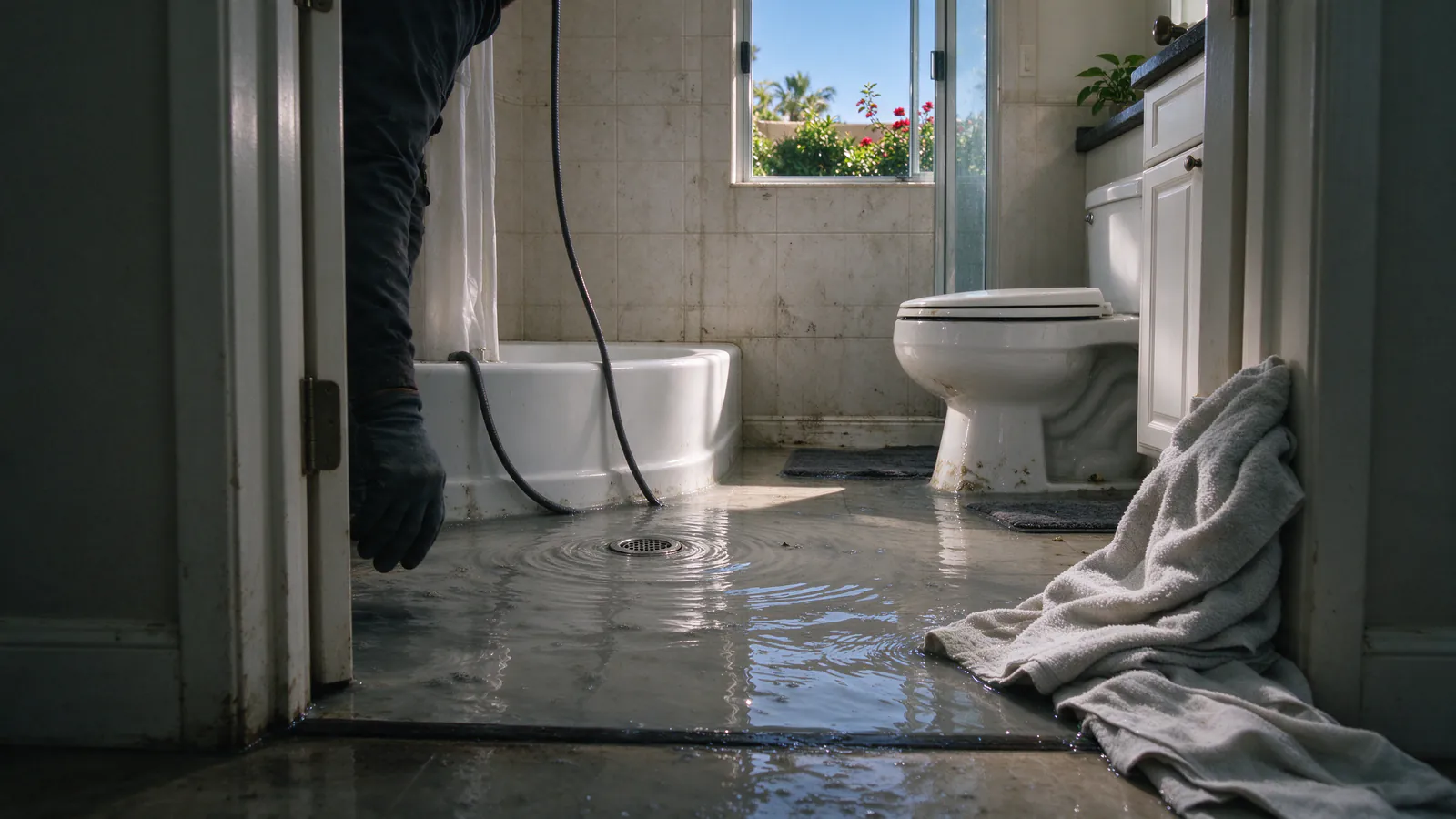
A backup shows up at the lowest opening in the plumbing, usually a ground-floor shower, a floor drain or a toilet. Moving towels to keep it from spreading is reasonable. Wading through it to reach the far side of the room is not.
Staying safe around sewage
Sewage carries bacteria, viruses and parasites, so treat anything it touched as contaminated. Wear waterproof gloves and boots, avoid touching your face, and wash thoroughly afterward. Open windows for air.
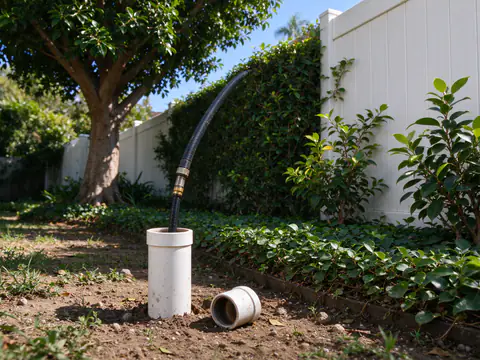
Do not open a cleanout cap to “relieve pressure” yourself. A cleanout on a backed-up line can be holding several feet of sewage behind it, and it releases all at once. Leave that to whoever comes to clear the line, and never climb into a trench or an open sewer for any reason.
Is the blockage in my lateral or in the City main?
The quickest clue is the neighbors. A single house backing up points to that house’s lateral; several houses on the same block at once points to the main. The confirmation comes from the drain professional who clears the line.
That answer matters because the rules split there. In the City of San Diego the owner is responsible for the lateral all the way to the main. If the plumber finds a total blockage or break beyond the property line and the house has lost all service, the plumber can file a Plumber’s Report on the City’s line, 619-515-3525, and the City says it investigates within 24 hours. The City bills the owner when the cause was roots or grease. Who owns which section, and the exceptions, are set out in who is responsible for the sewer lateral.
Other agencies run their own process. Escondido takes backup calls at 760-839-4668 around the clock and inspects the main at no charge. La Mesa sends a crew to check whether the stoppage is in its main or the private lateral, and if the main is clear, the owner calls a licensed plumber.
When sewage leaves the property
If sewage is flowing from a cleanout onto the sidewalk or into the street, call the City at 619-515-3525. City crews clean the right-of-way, but the owner is held responsible for those response costs when the spill came from a blockage or break in the lateral under the property. Keeping sewage out of the gutter matters beyond the bill: the gutter leads to the storm drain system, which is separate from the sanitary sewer and is no place for sewage.
Documenting for a claim or insurance
Before anything is cleaned or thrown out, take photos and video of the water, the fixtures it came from and every damaged item. Keep the drain professional’s invoice and ask them to write down where the blockage was and what caused it. If they ran a camera, keep the footage.
If the stoppage was in the City’s main, Council Policy 400-10 can cover emergency cleanup, damaged personal and real property (depreciation may apply), additional living expense if the home is unfit, and reasonable plumbing bills tied to finding the problem. Lateral stoppages, including roots from any source, are excluded, as are lost rent or business income and the owner’s own labor. Claims go to Risk Management in writing, generally within six months, through the Public Liability claims portal or form RM-9, with an estimate and photos. Your own homeowners policy is the other route; the insurance guide covers what policies usually include and exclude for backups.
Sewer backed up?
Call, or send the address and what happened, and we'll arrange for the line to be cleared and inspected.
What not to do
- Don’t keep flushing to see whether it has cleared. Test with a single sink after the line is cleared, not before.
- Don’t pour chemical drain openers into a backed-up line. They rarely reach a lateral blockage and leave caustic water for whoever opens the line next.
- Don’t rent a drain machine for a main line you can’t see into. A cable can snag on a broken section or a root mass, and a stuck cable becomes a dig.
- Don’t sign the first full replacement quote under pressure. With the toilet out of action, it is easy to feel rushed into a single quote. Clearing the line and getting footage first gives you time, and a portable toilet can bridge the gap while you compare bids.
After the line is cleared
Clearing restores flow; it does not explain the backup. Ask for a camera inspection once the line is open, so the cause has a distance and a name: roots, grease, a belly, an offset or a break. Roots are the most common reason for a repeat, and cutting them is a cleaning step, not a repair; root removal and our guide to getting rid of roots explain the difference. If you don’t know where your cleanout is, find your sewer cleanout before the next one, and if the footage shows structural damage, the signs of a broken sewer line help you read it. You can get an estimate from us with that footage in hand.