 San Diego Swift
Roots back every year, a scope that shows open joints, or a line that clogs at the same distance again and again: in an older San Diego house, the pipe behind it is often clay. Clay sewer pipe repair in San Diego is mostly joint repair. Vitrified clay is a fired ceramic that resists corrosion and wear, but it was laid in short sections, and every joint between them is a place where the line can open, shift or let roots in. San Diego Swift Sewer Line Repair repairs clay laterals across the City and nearby San Diego County.
The right repair depends on how many joints have failed and how. One bad joint is a small job. Thirty bad joints is a different decision. We start every clay repair with a camera inspection that counts them.
Is your line clay?
We confirm the material of your line by camera, because the City keeps no inventory of private lateral materials. Clay is common in the public system, though: City capital projects keep replacing or relining vitrified clay mains, and DSD Information Bulletin 166 allows saddle connections only on clay mains. Plenty of older private laterals are likely clay too.
House age is the best clue. Census data shows that about one in five City homes was built before 1960, and the share is higher in older ZIP codes: 21.3 percent of homes around North Park and 21.7 percent around Mission Hills date from before 1940. A house from that period may still drain through its original clay line. Our guide to what sewer pipe your house has explains how clay looks on camera next to cast iron, fiber and plastic.
Why do clay joints fail?
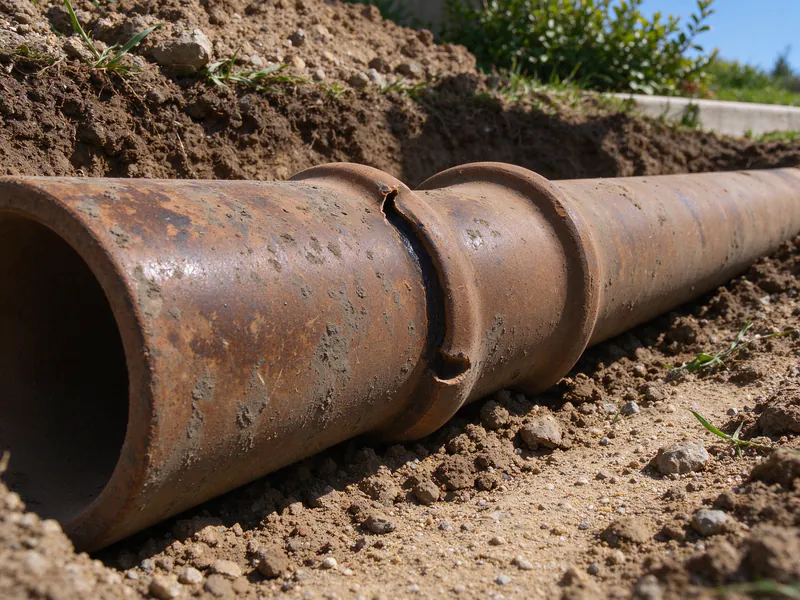
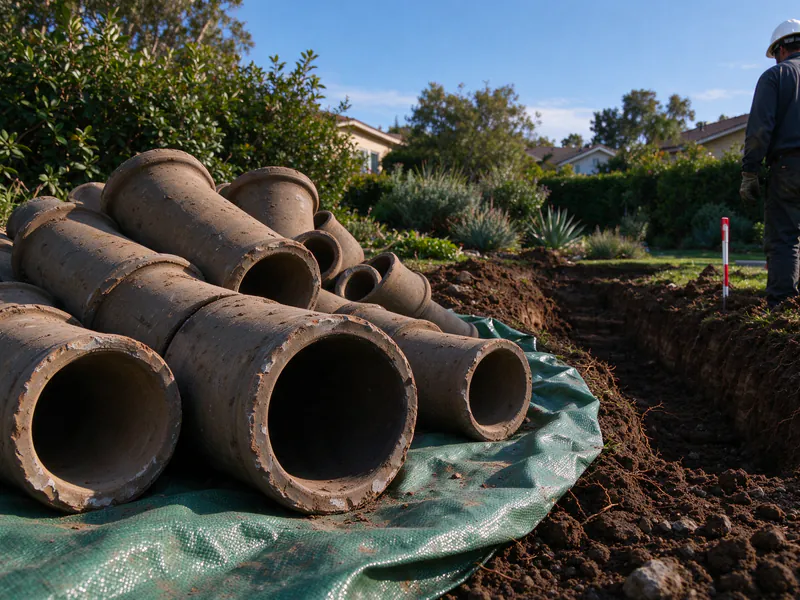
Clay sections were joined with a bell on one end that received the plain end of the next piece. Older joints were sealed with mortar or early compression gaskets. Mortar cracks with time and ground movement, and early gaskets harden. Three things follow.
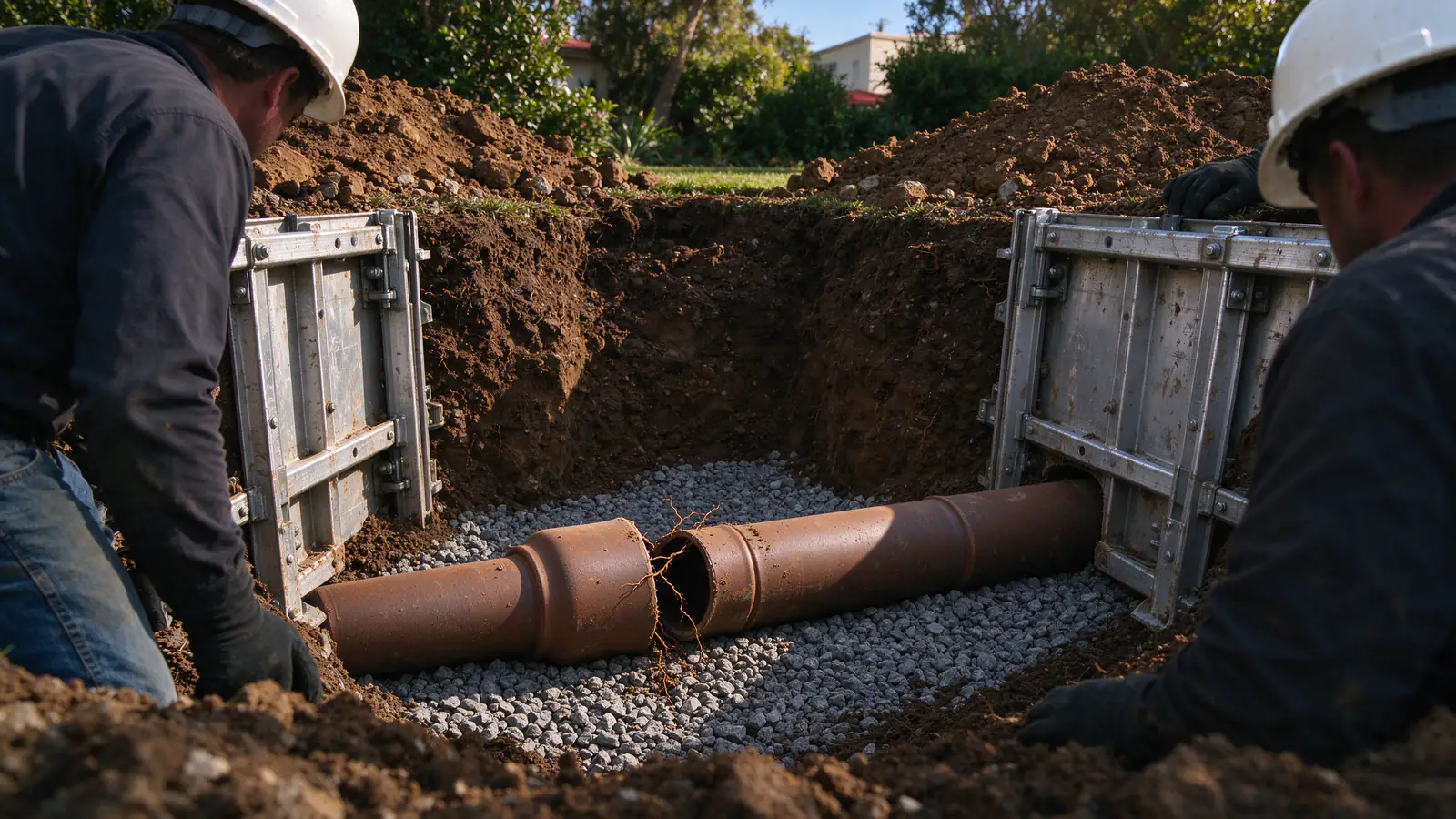
Gaps. A joint that has lost its seal leaks a little water and vapor outward. Roots find that moisture and grow in, which is why clay laterals are so often the ones that need root removal year after year.
Offsets. Each section is rigid, and the joints are where the line flexes. When soil settles or swells, a section can drop or shift so its end no longer lines up with the next. The lip catches paper and solids, and a large offset can stop a cleaning head.
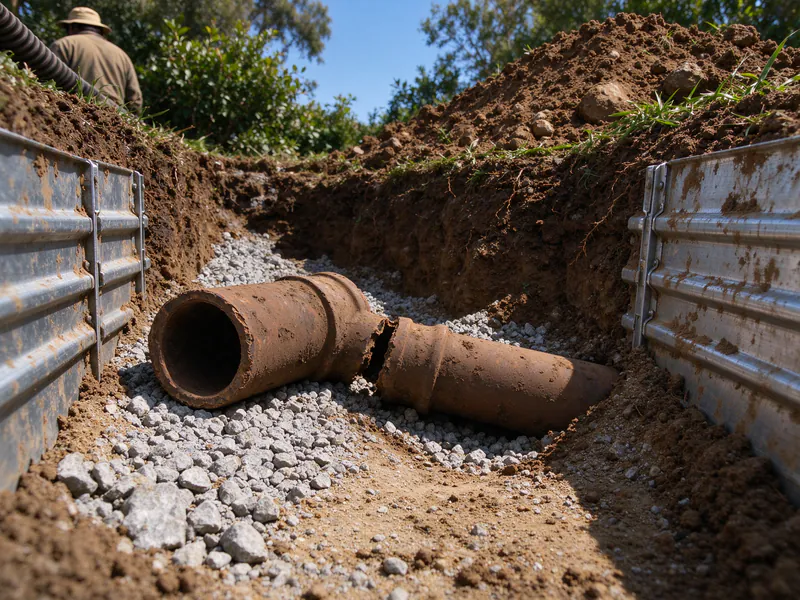
Cracks and breaks. Clay is hard but brittle. Point loads from a rock in the backfill, a heavy vehicle over a shallow line, or root pressure inside a joint can crack a bell or break a section out entirely.
Ground conditions shape which of these shows up first. USDA soil samples at points in Encanto, Lemon Grove, Spring Valley and Escondido found clays with high shrink-swell potential, the kind that move a rigid joint every wet and dry cycle. Sandier ground moves less but washes into open joints more readily. Neither soil type tells you what a specific line looks like, but each explains why two clay laterals of the same age can fail in very different ways.
What gets in through the joints?
Open joints work in both directions. Wastewater can leak out into the soil, and groundwater and fine soil can seep in. Irrigation and winter rain, which falls mostly between November and March at Lindbergh Field, wet the soil around the pipe and give that seepage a source.
The soil that washes in matters more than the water. Each grain drawn through a joint leaves a little less support outside it, and over time that can open a void under the pipe. The pipe then settles into the void, the joint opens wider, and a belly can start to form. A camera that shows soil or sand at the bottom of the pipe downstream of a joint is showing that process.
Roots at every joint?
Send the footage and we'll tell you whether a spot repair, lining or replacement fits the count.
Which repair fits your clay line?
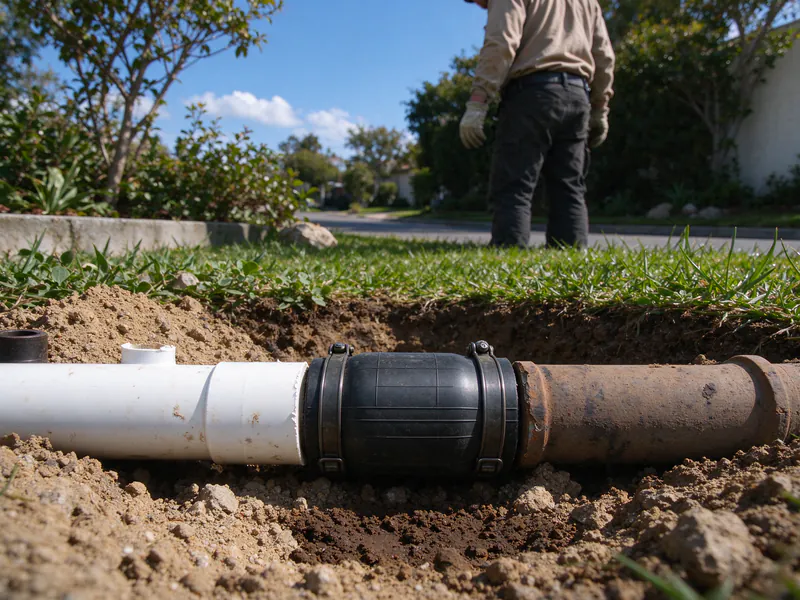
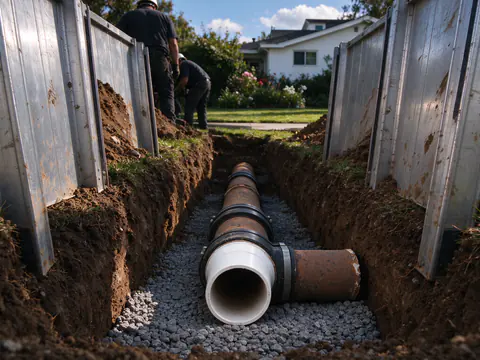
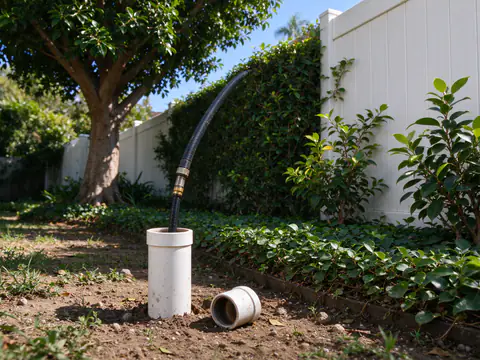
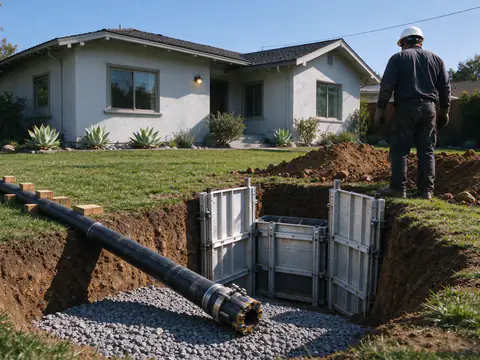
One or two failed joints, sound pipe elsewhere. We excavate the bad joint and replace a short length with PVC, joined to the clay with listed transition couplings; that is a spot repair. A sectional point liner can seal a single open joint from inside without digging, provided the joint is aligned and round. Either way, we check the rest of the line on camera, because joints laid at the same time tend to fail one after another.
Many open joints, but the line holds its shape and grade. Full-length lining seals every joint at once. We cut heavy roots and clean the pipe first, and we reset offsets large enough to block the liner by digging before the liner goes in. Lining follows the old pipe’s profile, so a sag stays a sag.
Broken, offset or sagging along much of the line. Clay breaks cleanly under a bursting head, which makes pipe bursting a natural fit where the old path is usable and nearby utilities allow it. Where the line has lost grade or runs a poor route, open-trench replacement with PVC is the method that resets the slope. Our sewer line replacement page compares those methods.
Repairing clay in pieces can be the right call, but we judge each partial repair against the joints left behind. If ten joints are open and two are fixed, the other eight are still a backup waiting to happen. Our typical ranges are $1,500 to $5,000 for an excavated spot repair and $80 to $250 a foot for lining, so a handful of spot repairs can approach the cost of lining the whole line. Your final price comes from a written quote after we see the job. Our guide to sewer line repair vs replacement covers that trade-off.
What permit does a clay repair need?
On your property, clay repairs in the City use the Simple No-Plan plumbing permit for single-family and duplex homes, unless the property is in a designated historic district, where historic review may apply. A repair that reaches the connection at the main, under the sidewalk or street, needs a Right-of-Way Permit and City inspections. Because plenty of City mains are clay, the connection itself may be a saddle on a clay main, and the City’s own projects to replace or reline clay mains sometimes rebuild those connections. Ask whether a capital project is planned on your street before committing to work at the main.
If your line is clay and has started to cause trouble, get an estimate with any footage you have. Our guide on how long a sewer line lasts also explains why age alone doesn’t settle the question.