 San Diego Swift
Backups in a ground-floor unit, a restaurant drain that won’t stay clear, or a scope on a building you’re buying that shows a broken lateral: on a larger property, every hour the line is down affects people. A sewer lateral serving twenty apartments, a restaurant row or an office building fails in the same ways as one serving a single house: roots, cracked joints, sags, corrosion, collapse. What changes is everything around the pipe. San Diego Swift Sewer Line Repair takes on commercial and multifamily sewer line repair in the City of San Diego and nearby San Diego County, and we build the scope around the building as much as the line.
Ownership doesn’t change with the building type. In the City of San Diego the lateral is private from the building to its connection at the City main, whether that is a duplex or a hundred-unit complex, and the street section is yours to repair. The street sewer lateral repair page sets out that process; this page covers what is different when the property is bigger.
How is your building’s line different from a house lateral?
Mostly in size, flow and access. A larger building can need a larger lateral, and an 8 inch or bigger lateral connects to the City main at a manhole rather than a simple wye, which brings in plans. More fixtures mean more flow and less tolerance for a partial blockage, and the line often runs under a parking lot rather than a lawn.
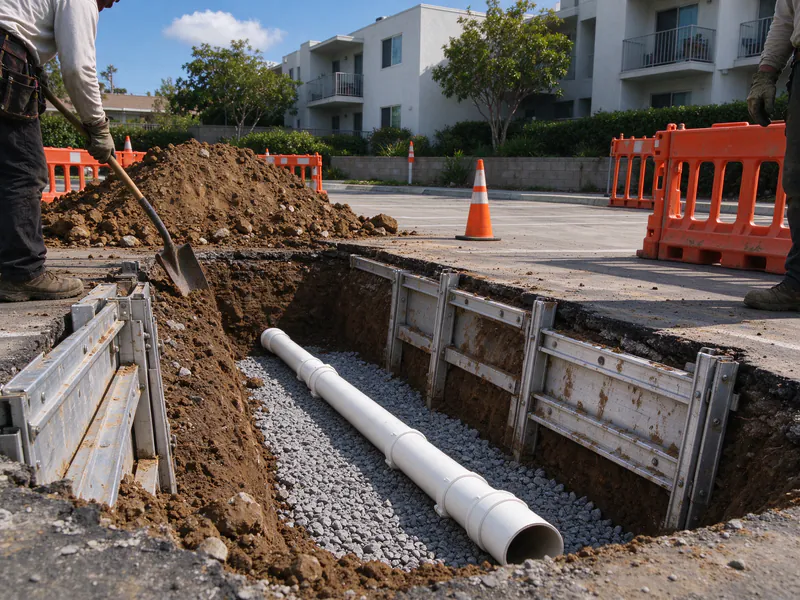
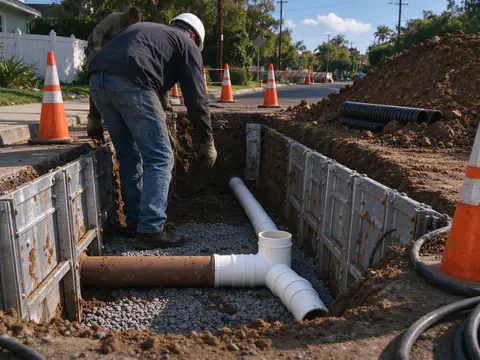
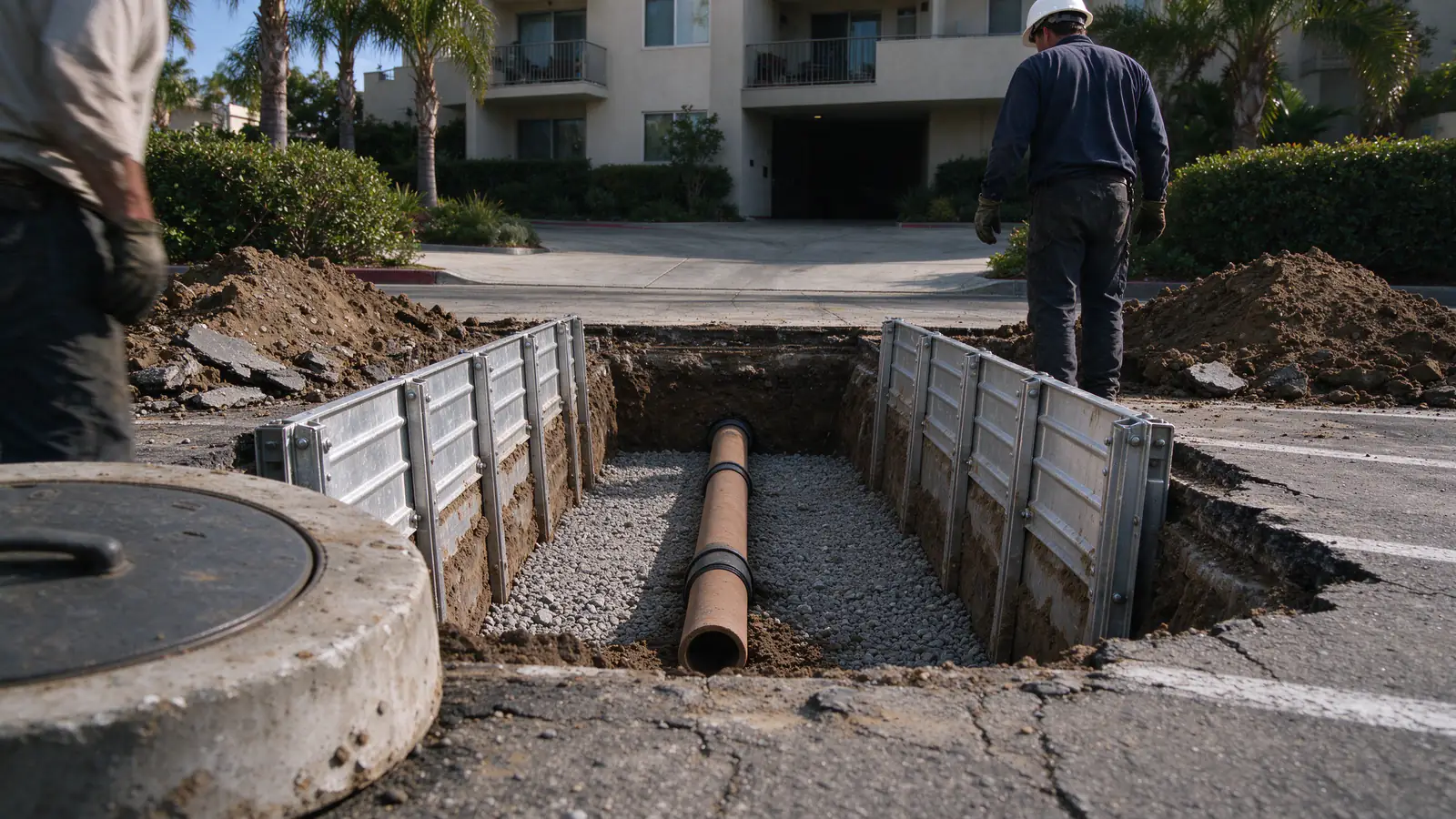
The City’s minimum lateral is 4 inches. Under Development Services Information Bulletin 166, a 4 to 6 inch lateral joins the main by a wye or, on a clay main only, a saddle. A lateral of 8 inches or more needs a manhole connection, with one exception: an 8 inch lateral on an 8 inch main can connect by wye. The extra depth matters too. The City’s wastewater review standards set a drop to the main of 1.2 feet on 6 to 8 inch mains, rising to 1.8 feet on 15 inch mains, and a deeper connection means a deeper, shored excavation.
A building can also have more than one lateral. Bulletin 166 treats laterals beyond the number allowed as non-standard, which makes them private encroachment laterals that need an Encroachment Maintenance and Removal Agreement. On an older property, it is worth knowing how many laterals there are, and which part of the building each one serves, before any of them is touched.
Does your connection need plans?
A lateral with a direct wye or saddle connection can qualify for the City’s Minor Right-of-Way Rapid Review under Bulletin 165. A lateral that connects at a manhole cannot; it is submitted with plans. That changes the timeline and the fees. Under Bulletin 502, right-of-way plan check starts at $3,179.40 for up to five sheets, the right-of-way inspection is $1,412.54 per sewer lateral, and projects not cleared by the third review cycle pay an added hourly fee. A clean, complete plan set is the cheapest way through.
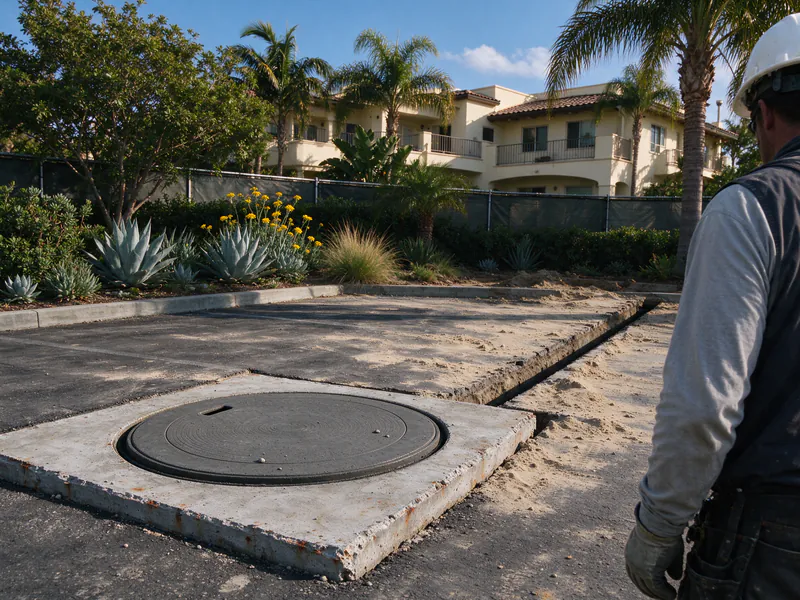
Plans also have to meet the San Diego Regional Standard Drawings and the Standard Specifications for Public Works Construction, and we resurface the trench in the street to the standard drawings once the City has inspected the connection. Larger buildings tend to sit on busier streets, so the paving history matters as well; a recently resurfaced street can be under an excavation moratorium, which needs a waiver before it is opened.
What permit does work on your lot need?
On a single-family house or duplex, a sewer repair on the lot goes through the City’s Simple No-Plan plumbing permit, $264.25 for a residential repair under Bulletin 103. That simple path is written for single-family and duplex buildings on non-historic properties. For a larger apartment building, a mixed-use property or a commercial site, we confirm with Development Services whether the work needs plans, and the permit reflects the number of units. Buildings in a designated historic district, which includes much of the pre-war housing in neighborhoods like North Park, may need historic review first.
Is your building on a busy street?
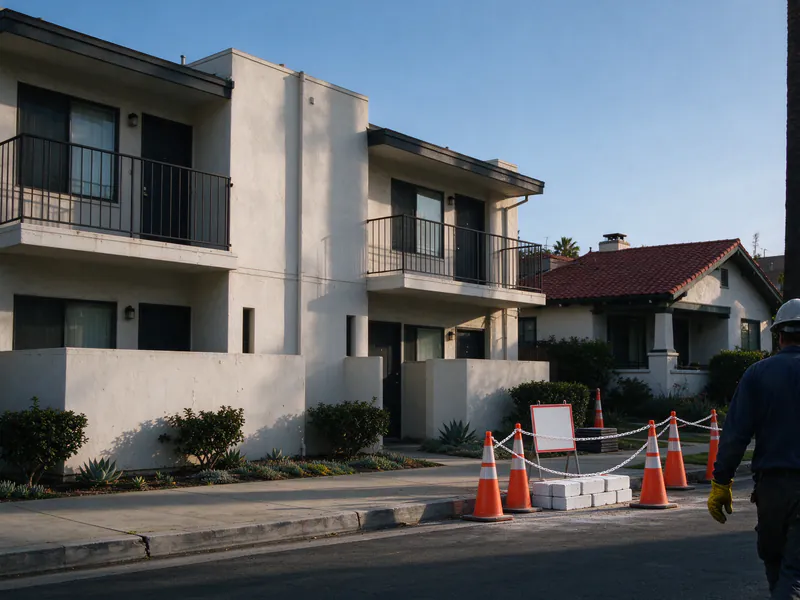
A residential street might need a few cones and a lane closure. A connection on a commercial corridor or a multi-lane street usually needs a full traffic control plan and a Traffic Control Permit under Bulletin 177. Plan review starts at $353.13, and the permit is $131.52 per block for up to three weeks, with weekly extensions after that. Bus stops, loading zones, driveways into other businesses and pedestrian routes all go into the plan. Inside the property, the same thinking applies to the parking lot: which spaces close, where the excavator and spoil pile sit, and how deliveries and residents get in and out while the trench is open.
How do residents and customers keep using the building?
The hardest part of a commercial sewer job is often not the pipe but the people using it. A lateral can’t carry sewage while it is being cut, lined or replaced, and a building full of residents, diners or staff keeps producing it. So we start with mapping: which units, stacks, kitchens and restrooms drain to which line, and what has to stop when that line is out of service.
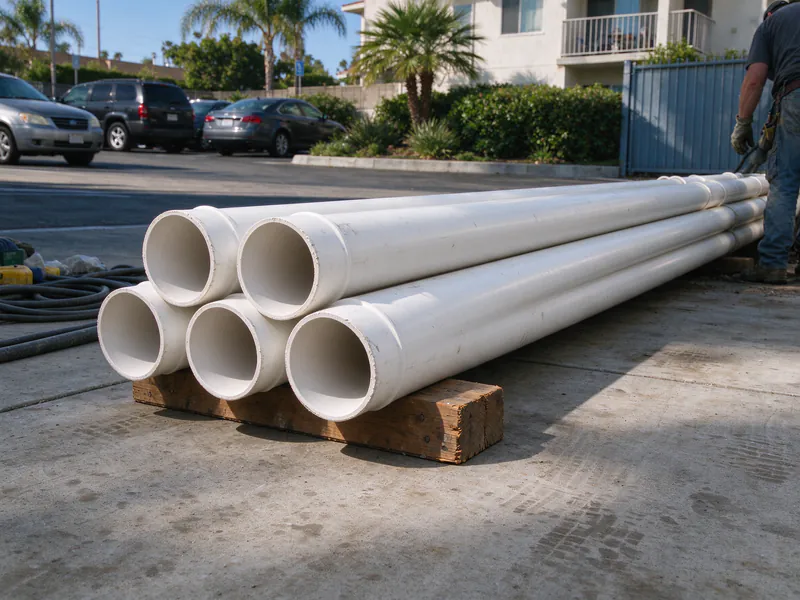
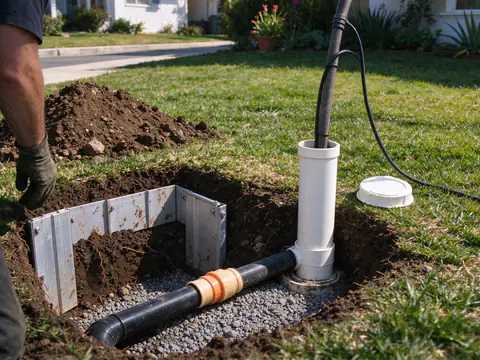
From there we build the schedule around use. Where a building has more than one lateral, we can stage the work so one is out at a time. Residents and occupants get written notice of when drains can’t be used. Where flow can’t stop, a temporary bypass is planned to carry sewage around the work area. The method affects this too: a lining job keeps the line out of service for the curing window rather than for the days a trench stays open, while pipe bursting replaces the line from two pits. Neither fits every line. A liner follows the shape of the old pipe, so it won’t fix a sag, and a badly collapsed section still has to be dug; the trenchless sewer repair page explains where each method stops working. Our guide on how long sewer line replacement takes covers the schedule side.
Backing up again after jetting?
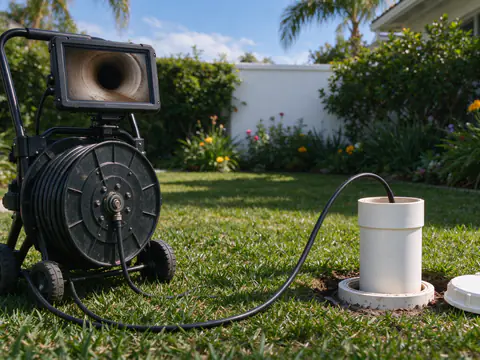
Commercial kitchens put far more grease into a line than a household does. It cools on the pipe wall, narrows the bore and catches solids until the line backs up, and the City bills the owner when a stoppage in the street section was caused by grease or roots. Cleaning restores flow, and on a busy line it may need to happen on a schedule, but cleaning is not structural repair. A line that keeps backing up after jetting has a cause the camera should find, whether that is a root-filled joint, a sag or a crack. The root removal page covers that line between maintenance and repair.
Recurring backups in a multifamily building?
Send the service records and any footage; we'll tell you whether the camera points to cleaning, a repair or a replacement.
Is your site low-lying or wet?
Mission Valley is mostly commercial and multifamily, and it sits on thick, saturated alluvium along the San Diego River: a City-filed geotechnical report records groundwater about 7.8 feet down in one boring, with levels that move with rainfall and irrigation. Near Mission Bay, City-hosted studies put groundwater at about sea level. An excavation that fills with water has to be pumped, and pumping into the sewer needs a Groundwater Discharge Permit from Public Utilities. The City says no discharge may occur until the permit is issued, so we file the application early, alongside the right-of-way plans.
What records should you keep?
Commercial and multifamily owners answer to more people than a homeowner does: a board, an association, lenders, insurers, buyers and residents. The paperwork is part of the job. A complete closeout file includes the camera footage before and after, with the footage counter and defect locations; the written scope and any change orders; the permits, plans and inspection records; and a marked-up drawing of where the lateral runs and connects. Development Services can confirm where a property’s lateral meets the main, and as-built plans can be requested through DSD Records, but the City keeps no drawings of private lines on the lot, so the record of your job is often the only one. Our guide to reading a sewer camera report explains what a usable report contains.
The same file helps when a building is sold. There is no point-of-sale lateral ordinance in the City of San Diego, but buyers of larger properties scope the sewer just as house buyers do, and a documented repair answers questions before they become a price reduction. When it is time to decide between fixing a section and replacing the whole line, sewer line repair vs replacement walks through the trade-offs, and how to compare sewer repair quotes helps when two bids describe different jobs.
The typical ranges on this site are for residential laterals; we price commercial and multifamily work per job from the lateral size, the connection, the traffic control and the hours the building needs its drains, and your final price comes from a written quote after we see the job. Get an estimate with the address, the building type and any footage you have, or call us to talk through the scope.