
 San Diego Swift
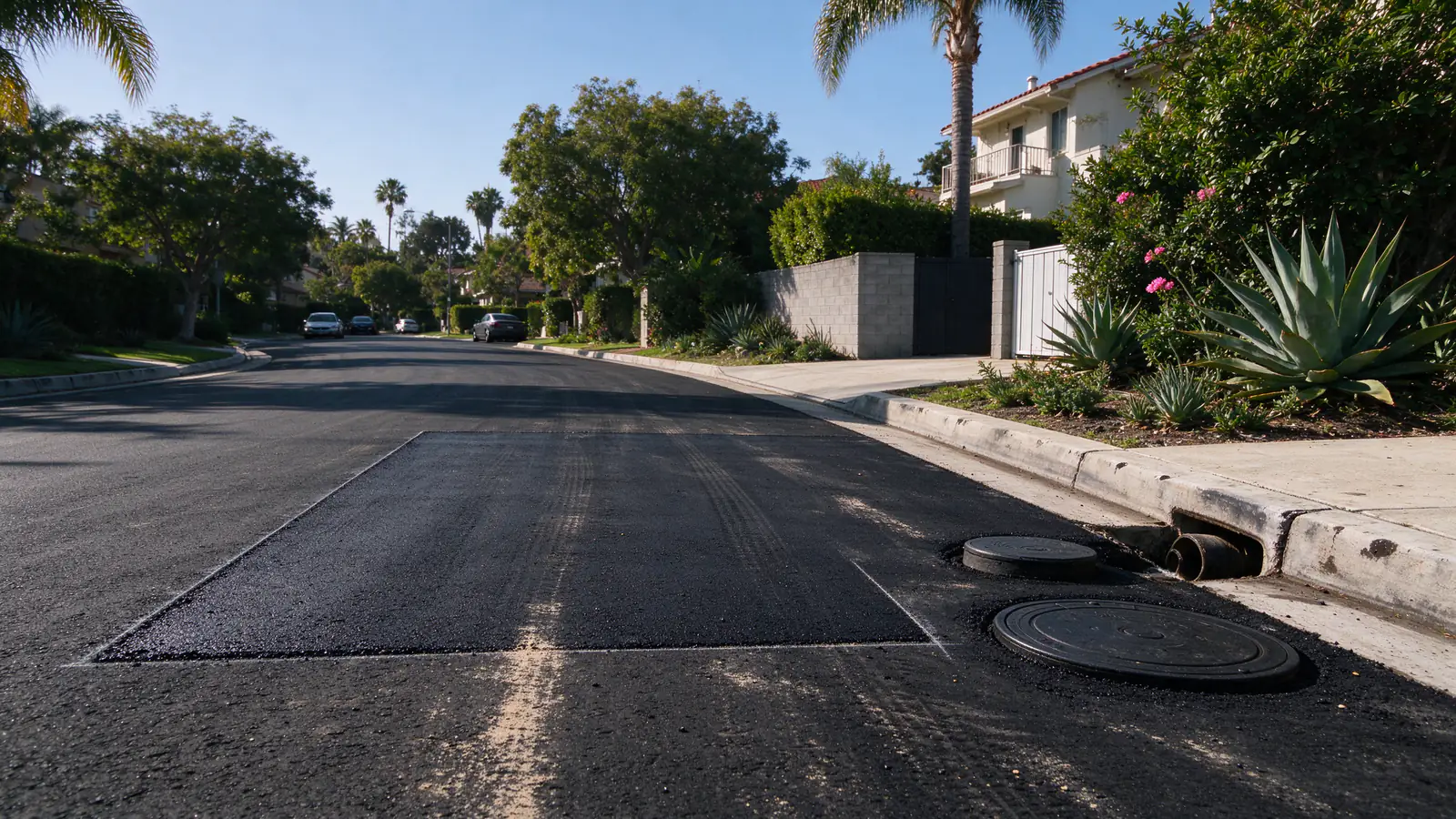
On January 1, 2024, the City of San Diego’s updated Street Preservation Ordinance (San Diego Municipal Code sections 62.1101 to 62.1219) took effect, changing the rules for anyone who cuts into a City street. That includes owners whose sewer lateral needs work under the pavement. San Diego Swift Sewer Line Repair handles lateral repairs in the City and nearby San Diego County, and street rules are often the part of a quote owners understand least.
Why does a street ordinance land on a homeowner? Because in the City of San Diego the lateral belongs to the property owner all the way to its connection at the City main, and that connection usually sits under the street. When the section beyond the property line fails, the owner pays to open the street, and the ordinance sets the terms. Our guide on who is responsible for the sewer lateral explains that ownership line.
What changed on January 1, 2024?
Four things. Moratoriums on digging into newly treated streets got shorter, from five years to three after an asphalt overlay and from three years to one after a slurry seal. Most trenching and restoration must now be finished within 180 days. And a Street Damage Fee applies, with a waiver for full-lane resurfacing.
| Rule | Before the update | From January 1, 2024 |
|---|---|---|
| Moratorium after an asphalt overlay | 5 years | 3 years |
| Moratorium after a slurry seal | 3 years | 1 year |
| Completion of trenching and restoration | No 180-day rule described | Most work within 180 days |
| Street Damage Fee | Not described | Applies; waived for full-lane resurfacing |
For lateral owners, the shorter moratoriums are mostly good news: a street that got a slurry seal two years ago no longer needs a waiver to open. The fee and the deadline cut the other way, because they make street restoration a bigger, firmer part of the scope.
What is an excavation moratorium?
It is a period after the City resurfaces a street during which that street can’t be dug into without special approval. A 2016 City memo defines a moratorium section as the new pavement from intersection to intersection and curb to curb. The point is to protect a fresh surface, since every trench patch is a seam in pavement that was laid as one piece.
Can a lateral be repaired under a moratorium street?
Yes, but the waiver comes first. Excavating a moratorium street needs an approved Excavation Moratorium Waiver under SDMC 62.1207, using form DS-350, before the right-of-way work proceeds. Restoration on a moratorium street can mean resurfacing curb to curb, which is a different scale of job from patching a trench.
That makes the waiver part of the schedule, not paperwork to file later. The City sources we rely on don’t describe a separate fast track for urgent repairs, so if a lateral under a moratorium street has failed outright, ask Development Services how the waiver applies to that situation before assuming either way. Our permit guide covers the other permits that come with street work.
How do the Street Damage Fee and its waiver work?
The fee applies to street excavations under the updated ordinance. A City Engineer memo dated July 2, 2024 says it is waived when the excavator resurfaces the full width of the impacted lane, or restores curb to curb on a moratorium street. The amount isn’t stated in the sources we use, so ask for it in writing as part of the quote.
The waiver sets up a real trade-off. A narrow trench patch plus the fee, or a full-lane repave and no fee: which costs less depends on the street’s width, the trench location and the pavement type. A quote that includes street work should say which path it assumes. Our guide to sewer line replacement cost shows where restoration sits among the other costs.
Is your lateral under a freshly paved street?
Send the address and any camera footage, and we'll explain how the street rules apply before any digging is scoped.
The 180-day completion rule
Most trenching and restoration must now be finished within 180 days. For a single lateral that’s usually comfortable, but it does mean a temporary patch can’t be left in place indefinitely while a permanent resurfacing waits. The schedule has to include the right-of-way inspection after the trench is dug and before the connection, the final inspection, and resurfacing to San Diego Regional Standard Drawing SDG-107 for asphalt or SDG-108 for concrete.
Why trenchless options matter more on a protected street
If the street section of the lateral is continuous and holds its shape, sewer pipe lining from the cleanout can sometimes renew it without opening the pavement at all, which sidesteps the moratorium question. But a liner doesn’t fix a collapsed section, a badly offset joint or a sag, and a failing connection at the main may still need excavation at the street. Pipe bursting needs a pit at each end, and one may fall in the roadway. Our guide on whether trenchless sewer repair is worth it weighs those trade-offs, and the trenchless sewer repair page explains each method.
One older rule works alongside the ordinance: under SDMC 64.0402, where a lateral already serves a lot and the street has been paved, that lateral must be reused unless the City grants an exception. Replacements generally reconnect at the existing point rather than cutting a new connection into the main.
The other street costs still apply
The ordinance adds to, rather than replaces, the City’s usual right-of-way requirements. Those include a Right-of-Way Permit with a construction plan, a $1,412.54 inspection fee per sewer lateral under DSD Information Bulletin 502, traffic control plan review from $353.13, and a traffic control permit of $131.52 per block for up to three weeks under Bulletin 177. City crews no longer install laterals, so street work goes to a Class A licensed contractor. Our page on street sewer lateral repair covers the work itself, and how deep a sewer line is explains why the street end is often the deepest part of the dig.
What to do if your street was just resurfaced
Start with footage. A sewer camera inspection shows whether the problem is on your side of the property line, in which case the ordinance doesn’t apply, or under the street. If it is under the street, find out when the street was last treated and whether a moratorium is in force before the scope is written. Get an estimate with the address and any footage you have, or call, and the street rules will be part of the plan from the start.