
 San Diego Swift
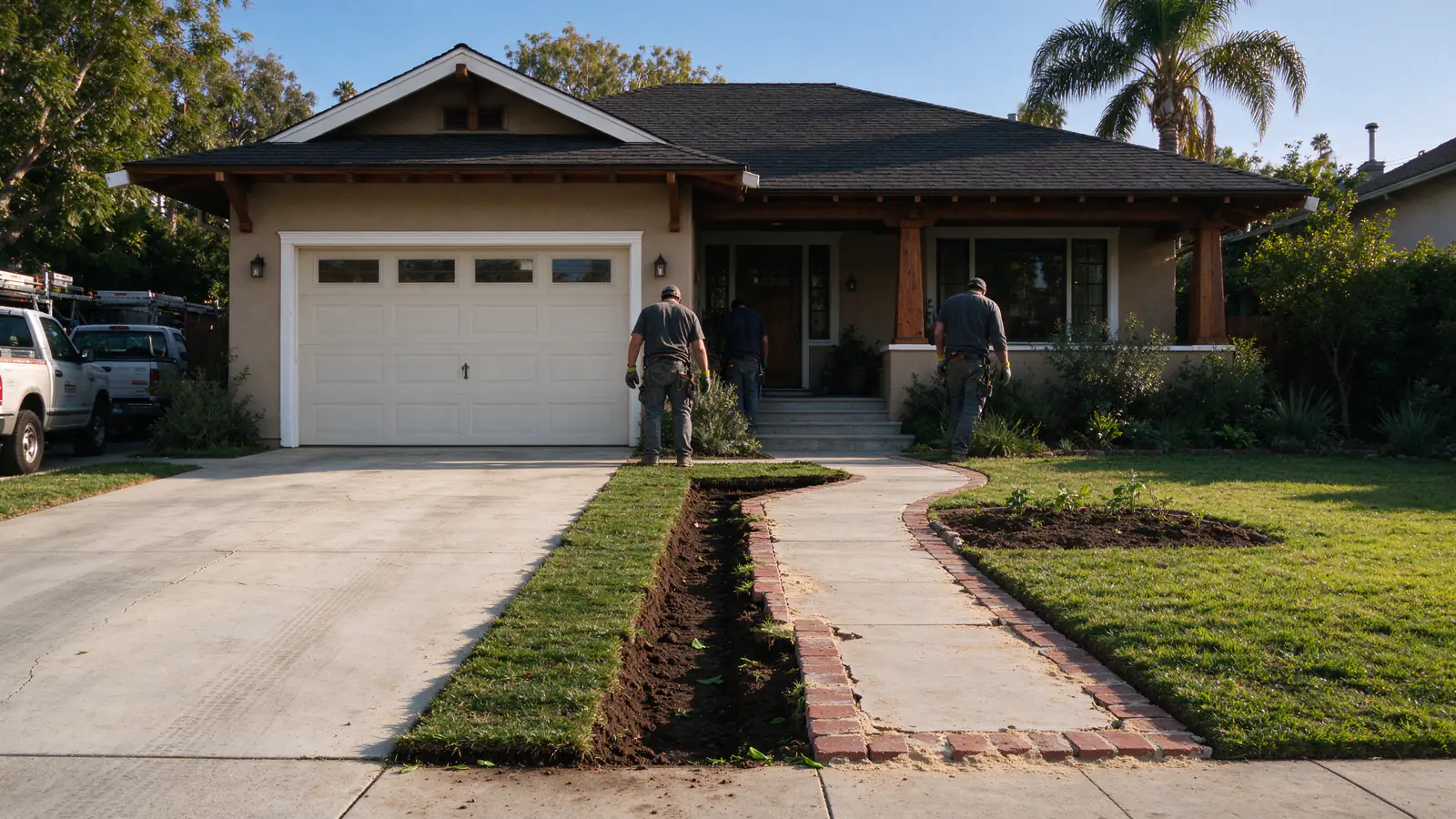
Most lateral repairs in the City of San Diego start with a quick, no-plan plumbing permit. A house inside a designated historic district may not get that path, and owners in older neighborhoods are often surprised to learn it after a scope is already written. San Diego Swift Sewer Line Repair handles lateral work across the City and nearby San Diego County, and this post explains what changes, which districts are involved and how to plan around it.
Which permit does an ordinary San Diego house use?
The Simple No-Plan plumbing permit from Development Services. It covers water or sewer piping repairs and repair or replacement of drains, and single-family homes and duplexes use the No-Plan Residential Combination version. The fee for a residential repair or replacement is $264.25 under DSD Information Bulletin 103, and the permit normally issues within two business days.
That speed is why the permit is rarely the long pole in a private-side repair. The camera, the method and any street work usually set the schedule. Our permit guide covers the full set of permits by situation.
What changes in a designated historic district?
The simple path is limited to non-historic properties. Where a property is a designated historic site or sits in a historic district, the City says it may need historic review under Information Bulletin 581. In practice that means an extra step before the plumbing permit, with its own timing, which the scope and schedule should account for.
What the City’s sources don’t spell out is exactly what historic review looks at for a buried sewer line on a given parcel. So treat the details as a question for Development Services, asked with the address in hand. Useful things to ask:
- Is this parcel a designated site, a contributor in a district, or neither?
- Does the planned work need historic review before the plumbing permit, and how long does that review usually take?
- Does it matter whether the work is trenched, burst or lined?
- Are front-yard features over the line, such as an original walk, steps or a low wall, part of what the review considers?
The ownership rules don’t change with historic status. The owner is still responsible for the lateral all the way to the City main, as our guide on who is responsible for the sewer lateral explains, and work under the street still needs its own right-of-way permit.
Which San Diego neighborhoods have designated districts?
A 2017 Historical Resources Board memo lists City-register districts that include these residential ones, mostly in the pre-war core:
| District | Size | Period | Area |
|---|---|---|---|
| North Park Dryden | 136 parcels | 1912-1941 | North Park |
| Burlingame | 188 parcels | 1912-1952 | North Park |
| Mission Hills | 174 parcels | 1908-1942 | Mission Hills |
| Fort Stockton Line | 109 parcels | 1910-1939 | Next to Mission Hills |
| Golden Hill | 115 parcels | 1890-1940 | Golden Hill |
| Grant Hill Park | 136 parcels | 1906-1936 | Grant Hill |
| Sherman Heights | 544 parcels | 1868-1937 | Sherman Heights |
| Islenair | 113 parcels | 1926-1952 | Not stated in the memo summary |
| Shirley Ann Place | 25 parcels | 1925-1927 | Not stated in the memo summary |
| Ocean Beach Cottage Emerging | 72 resources | 1887-1931 | Ocean Beach |
Talmadge Gates is also on the register, but it covers the 1927 gates and lights, not the houses. The list isn’t exhaustive, so check any address rather than relying on a neighborhood name.
What about potential historic districts?
The City’s Planning page says 13 potential districts identified in the North Park and Golden Hill surveys are being processed. Examples include Park Boulevard Residential (87 parcels, 1900-1967), Altadena (about 400 parcels, c.1907-1945), Kalmia Place (23 parcels, c.1923-1959) and Culverwell & Taggart’s (about 245 parcels, 1869-c.1945). The sources we use don’t say whether a potential district affects a plumbing permit before designation, so if your house sits in one, ask when you ask about status.
Older house in a historic district?
Send the address and any camera footage, and we'll flag the permit questions to settle before the scope is written.
Why historic-district laterals tend to be older
The districts and the oldest housing overlap. In the Census Bureau’s 2020-2024 American Community Survey, 28.5 percent of homes in ZIP area 92102 (Golden Hill and Sherman Heights) were built before 1940, 21.7 percent in 92103 (Mission Hills and Hillcrest) and 21.3 percent in 92104 (North Park), against 6.4 percent citywide. A house’s age suggests what era its lateral dates from; it doesn’t say what the pipe is made of or what shape it’s in, and the City keeps no inventory of private lateral materials. Our guide to what sewer pipe your house has explains how the camera tells clay, cast iron and plastic apart, and clay sewer pipe repair covers the joint problems older clay lines tend to have.
How historic review fits into a lateral job
The sequence doesn’t change much; one question just moves earlier.
- Camera and locate. A sewer camera inspection shows the material, the defects and the path, and whether the failure is on the private side or under the street.
- Historic status. Confirm the parcel’s status and whether review applies before the scope is final.
- Method. Where the line qualifies, trenchless sewer repair disturbs less of the front yard, but not every line can be lined: a collapse, a bad offset or a sag usually needs bursting or excavation. Our guide on whether trenchless repair is worth it covers the trade-offs.
- Permits and work. Historic review if required, then the plumbing permit, plus a right-of-way permit for any street section.
If sewage is backing up now, clearing the line is cleaning, not a structural repair, and it comes first. How the permit rules treat an urgent structural repair on a historic property is something to confirm with Development Services; our emergency sewer repair page covers the immediate steps. For the bigger picture, what a sewer lateral is explains how the whole line works.
If your house is in one of these districts and the line needs work, get an estimate with the address and any footage, or call, and the historic question will be on the list from the first conversation.